

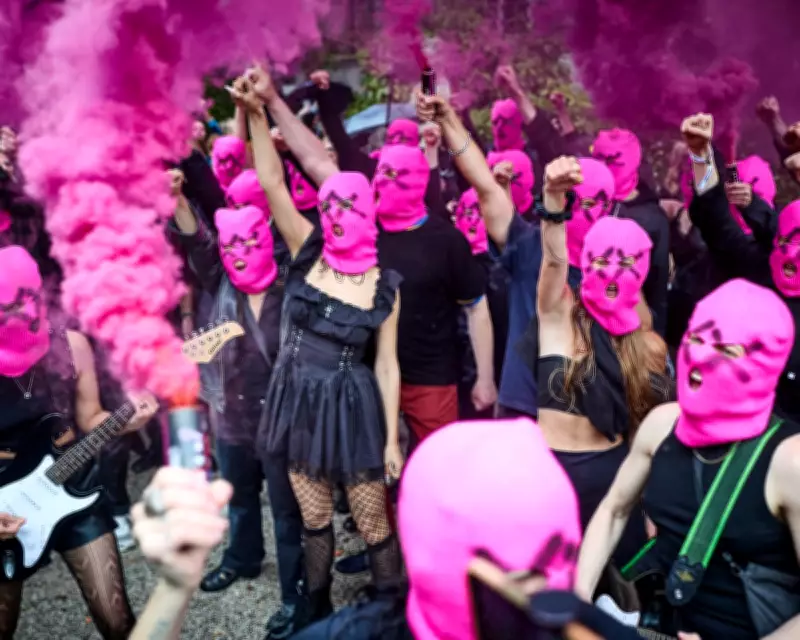
On 6 May 2026, Pussy Riot staged a protest at the Russian pavilion during the Venice Biennale, highlighting the intersection of art and geopolitics. The festival, often a stage for global tensions, this year feels on the verge of collapse.
Russia's Return Amid Controversy
The Russian pavilion was bustling with activity, including deliveries of prosecco and gin, and performances by Ensemble Toloka, a folk group. Critics saw this as a distraction from war crimes, especially as the same day saw a bombing in Kramatorsk, Ukraine, killing six. Russia's return after a 2022 hiatus has sparked debate, with protests like Pussy Riot's drawing attention.
Biennale Leadership Under Fire
President Pietrangelo Buttafuoco, a rightwing appointee, supports Russia's and Israel's participation despite appeals for exclusion. He opposes preemptive bans, claiming neutrality, but leaked documents suggest aid for Russian visas. The European Commission investigates sanctions breaches, and Italy's Prime Minister Meloni has distanced herself without intervening.

In protest, no UK arts minister attended the British pavilion opening, featuring Lubaina Himid. Conversely, ministers from Ukraine, Poland, Moldova, and Baltic states attended, condemning Russia's presence. Poland's culture minister called it propaganda, while Estonia's accused the Biennale of yielding to the aggressor.
The Jury's Resignation
The Biennale's artistic director Koyo Kouoh died of cancer last year, leaving a void. Her nominated jury stated they would ignore countries whose leaders face ICC charges for crimes against humanity, implicitly Russia and Israel. After pressure and legal threats from Israel's artist, the jury resigned, the only ethical path.
Legitimacy and Propaganda
Such events matter deeply to nations like Russia and Israel, offering legitimacy and distraction from conflict. The Biennale's history includes shifts, like 1974's solidarity with Chile and post-war debates on national pavilions. Buttafuoco's call for a "truce in the name of art" echoes fascist-era rhetoric when pavilions were propaganda tools under Mussolini, often called the "Geneva for the arts." This year, the Biennale reflects a fractured international order.






