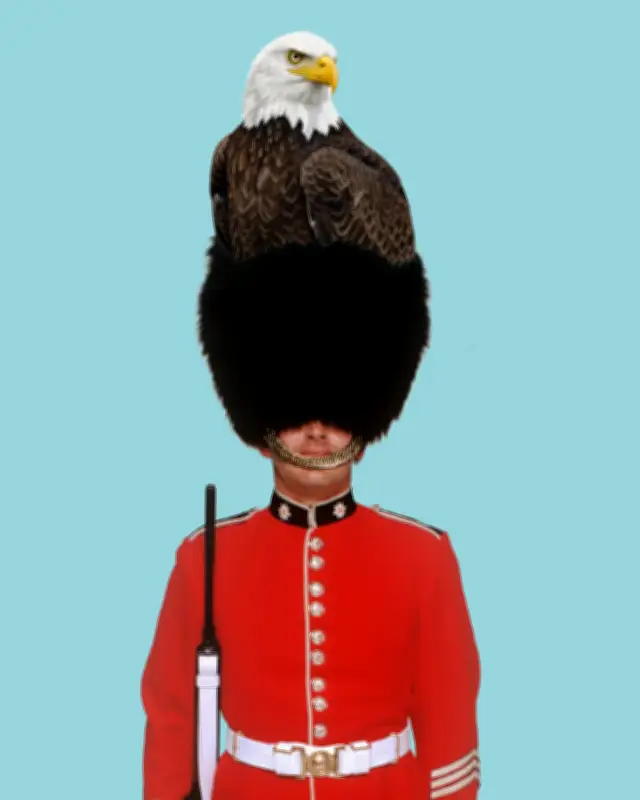
On 1 June 1785, John Adams, the first US ambassador to Britain, met King George III at St James's Palace, bowing three times and expressing hope to recommend his country to the king's benevolence. Two hundred and fifty years later, the duality of American supremacy and obsequiousness toward British traditions persists, embodied by President Donald Trump, who neither bowed to King Charles nor Queen Camilla during their recent state visit but invoked the 'special relationship,' calling Britons America's closest friends.
Economic and Military Divergence
Trump has repeatedly ridiculed UK Prime Minister Keir Starmer, belittling him as 'not Winston Churchill' and claiming 'the UK is dying.' The economic gap between the US and UK has widened: US per capita GDP rose from $48,000 in 2007 to $85,000 in 2024, while UK per capita GDP stagnated from $51,000 to $53,000, compounded by Brexit, according to World Bank figures. Military spending also diverges sharply, with the US allocating $921bn compared to the UK's $94bn this year.
Historian David Reynolds of Christ College, Cambridge, notes that the UK lacks its former clout in the US. 'Anybody can see that the UK doesn't have the clout in the US that it used to, that's a fact of life,' he said. 'There's been a growing sense of British subordination, of Britain on the slide into close to diplomatic marginality.'

Cultural Influence Endures
Despite economic and military disparities, British cultural influence in the US remains potent. Joanna Coles, chief content officer of the Daily Beast and a former Guardian journalist, highlights Hollywood: Christopher Nolan, whose film 'The Odyssey' is a summer blockbuster, is 'the most influential and important director in Hollywood right now, bar none,' she said. Other British talent includes Emerald Fennell, Florence Pugh, Benedict Cumberbatch, and Cynthia Erivo. On television, Jesse Armstrong's 'Succession' and Mickey Down and Konrad Kay's 'Industry' are HBO hits, while John Oliver's 'Last Week Tonight' thrives.
Coles attributes this to Britain's outward-looking cultural industries and its dense ecosystem of elite universities, drama schools, the BBC, and a national culture that prizes wit and storytelling. 'Britain is a small country whose cultural industries have always looked outwards,' she said.
British Leaders in US Media
British figures lead major US media outlets: Emma Tucker as editor-in-chief of the Wall Street Journal, John Micklethwait as head of Bloomberg News, and Keith Poole at the New York Post. Tina Brown, founder of the Daily Beast, imported UK talent to Vanity Fair and The New Yorker. However, not all British appointments succeed; Will Lewis's tenure as publisher of the Washington Post led to hundreds of layoffs and his abrupt departure.
David Folkenflik, NPR media correspondent, notes that the prevalence of Britons in US media reflects America's search for clarity amid ideological uncertainty. 'At a time of ideological uncertainty, when our standing is shaky and our groundings unclear, it's not surprising to me that our institutions look east,' he said.
American Indifference?
Simon Johnson, a Nobel laureate in economics at MIT originally from Sheffield, England, observes that Americans are largely indifferent to the UK. 'I think the US is a bit oblivious,' he said. 'They don't pay a lot of attention to the UK.' He cites confusion among his American friends about the World Cup, asking why Scotland has its own team. Johnson attributes this to American exceptionalism and insularity, though he notes parallels in public-private partnerships between the US and UK, such as in space exploration.