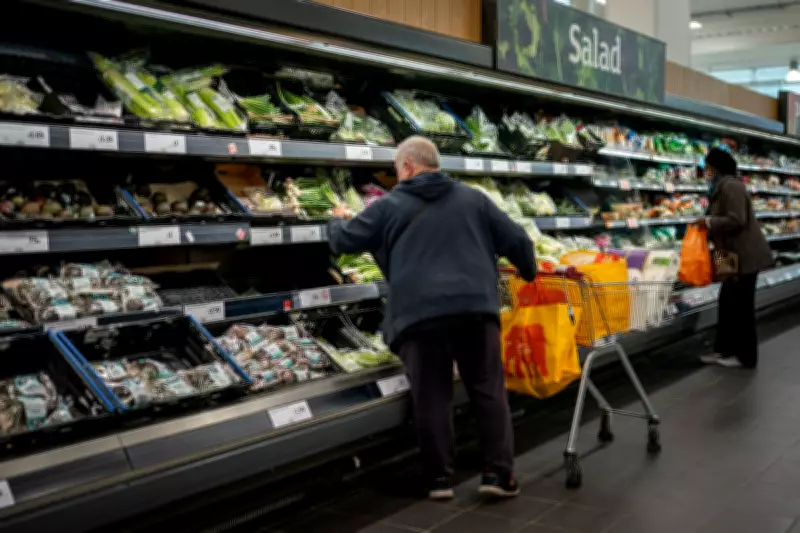
Supermarket bosses have strongly criticised reported government pressure to cap the cost of essential food items, labelling the proposals as 'completely preposterous' and 'idiotic'. The backlash follows reports that the government has urged supermarkets to limit prices on products such as eggs, bread, and milk in exchange for easing certain regulations.
Government Denies Mandatory Price Caps
A government minister has denied plans for mandatory price caps but confirmed ongoing discussions with supermarkets amid rising inflation concerns. Treasury minister Dan Tomlinson stated, 'This isn't something we're looking at,' when asked about price cap talks. However, he later clarified that while the government is not implementing a mandatory price cap, it is exploring ways to support households through industry cooperation.
Industry Leaders React
M&S boss Stuart Machin expressed strong opposition, saying he had 'no direct communication' with the government on the matter. He urged ministers to reduce tax and regulatory burdens instead of interfering in business operations. 'It's completely preposterous. I don't think the government should be trying to run business,' Machin told reporters, noting that food inflation at 3% demonstrates retailers' efforts to minimise price increases.

Former Asda chairman Lord Stuart Rose branded the potential cap as 'stuff and nonsense', warning it smacks of state control. 'It is idiotic. It is dangerous and it will never work,' he told BBC Radio 4's Today programme.
Voluntary Agreements Under Consideration
Despite ruling out mandatory caps, Tomlinson left the door open for voluntary agreements with supermarkets to control prices on essential items. He acknowledged rising prices at petrol pumps and the need for government to look across the board at measures to support people with the cost of living.
The Financial Times reported that the Treasury had discussed offering 'incentives' to supermarkets, such as easing packaging policies and delaying changes to healthy food rules, in return for price freezes. The Treasury also sought guarantees that British farmers would not lose income from any price caps.
Retail Sector Warns Against 1970s-Style Controls
Helen Dickinson, chief executive of the British Retail Consortium (BRC), warned against introducing '1970s-style price controls'. She urged the government to focus on reducing public policy costs that are pushing up food prices, including higher energy and commodity costs from the Middle East conflict and domestic policy expenses. Dickinson highlighted that the UK has the most affordable grocery prices in Western Europe due to fierce supermarket competition.
Political Context
The controversy comes after Scotland's First Minister John Swinney pledged to cap essential item prices. Meanwhile, UK food inflation rose to 3.7% in April, and the Foreign Secretary warned of a potential global food crisis due to Iran's blockade of the Strait of Hormuz.
Chancellor Rachel Reeves is set to announce new cost-of-living measures on Thursday. Writing in The Times, she vowed to clamp down on price gouging and give regulators new investigatory powers to name and shame exploitative practices.