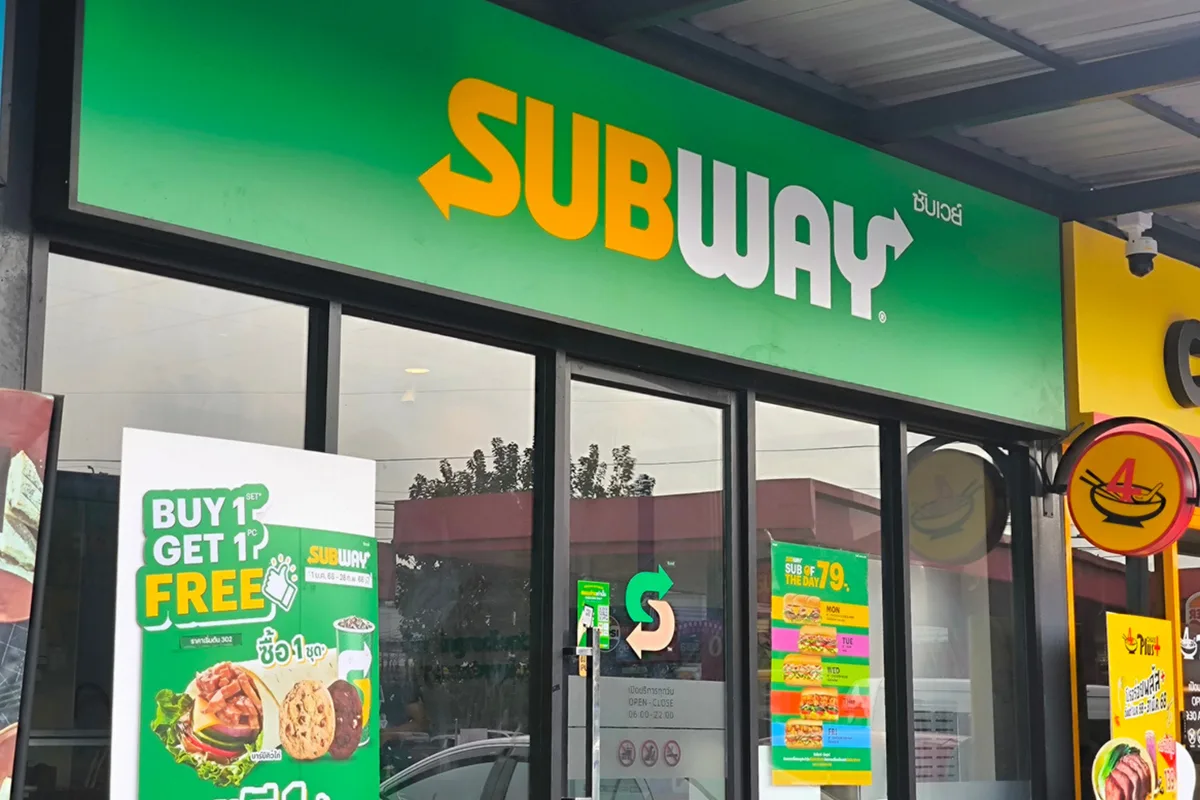
McDonald's is pulling further ahead of its rivals without even lifting a finger. That is because Subway, long the largest fast food chain in the US by store count, has been quietly shutting locations across the country, shrinking its once-dominant footprint.
Subway's Decline Continues
Subway's struggles on home turf show no sign of slowing, with the sandwich giant shrinking its US footprint for a staggering 10th year in a row. The chain quietly closed a net 729 locations in 2025, leaving it with 18,773 restaurants nationwide, all run by franchisees. That is a sharp comedown from its heyday in 2015, when Subway boasted more than 27,000 stores across America. In the decade since, it has shed a net 8,345 outlets, a figure so large it would place among the country's top five biggest chains on its own.
Despite the decline, Subway still clings to the top spot as America's largest chain by store count. Starbucks trails in second place with 16,860 locations, followed by McDonald's with 13,706.
Subway's Plans for Recovery
Looking ahead, the brand is attempting to steady the ship. Franchise documents reveal plans to open around 100 new US locations in 2026, though they remain tight-lipped on how many closures are still to come, with industry watchers expecting hundreds more. Subway has insisted its sweeping US closures are part of a bigger plan to strengthen the brand, not a sign of retreat. 'In the US, Subway is focused on ensuring restaurants are in the right locations, with the real estate, visibility and operations that set franchisees up to succeed long-term,' the company said in a statement. It added that the strategy is already delivering results, with internal evaluation scores and Google reviews climbing to their highest levels in two years.
International Growth and Value Menu
While the chain trims back at home, it is a very different story overseas. Subway is booming internationally, opening more than 1,000 new locations around the world in 2025 alone. With over 30 master franchise agreements set to deliver a staggering 12,000 additional restaurants in the coming years, the brand has been aggressively expanding across Europe, the Middle East, Asia and beyond, striking deals in countries including Sweden, Spain, South Korea and Qatar, with fresh agreements already inked in Panama and Taiwan this year. All told, Subway now boasts more than 35,000 restaurants globally.
At the same time, Subway is betting on budget-friendly bites to lure customers back, rolling out a new value menu featuring 15 items, all priced under $5. This method is being adopted by several other fast food giants. McDonald's launched its 'Under $3 Menu' on April 21, featuring the chain's cheapest staples. The improved value menu aims to offer 'more choice, more flexibility and more ways to build a meal that fits their day and budget' to customers, according to a press release. Morning options include the $1.50 Sausage McMuffin. For lunch and dinner, the Under $3 Menu offers a McChicken, McDouble, 4-piece Chicken McNuggets, small fries and a small drink. New budget options replace the previous buy-one, get-one-for-$1 promotion, but McDonald's 'Meal Deals' bundling a McChicken or McDouble with a 4-piece McNuggets, fries and a drink remain. The new deals, internally dubbed 'McValue 2.0,' are designed to bring budget-sensitive diners back to the chain, but some still believe the chain is falling behind in terms of customer loyalty.
Behind-the-Scenes Changes
Back on home soil, Subway is also leaning into delivery and store upgrades to drive growth. Executives say third-party delivery is surging, while cheaper, modernized remodels are helping give restaurants a fresh, updated look in line with its 'Fresh Forward' revamp. Looking ahead, Subway says it is doubling down on new menu items, drinks partnerships and improved customer experience in a bid to win back diners and boost franchisee profits.
The company has undergone major changes behind the scenes as well. Founded in 1965 by 17-year-old Fred DeLuca and Dr Peter Buck, Subway remained family-owned for decades before being snapped up by private equity giant Roark Capital in 2024 for a reported $9.6 billion. In a further shake-up, the chain tapped industry veteran Jonathan Fitzpatrick as its new CEO in July, a former senior executive at Burger King, as it looks to steer the business into its next chapter.