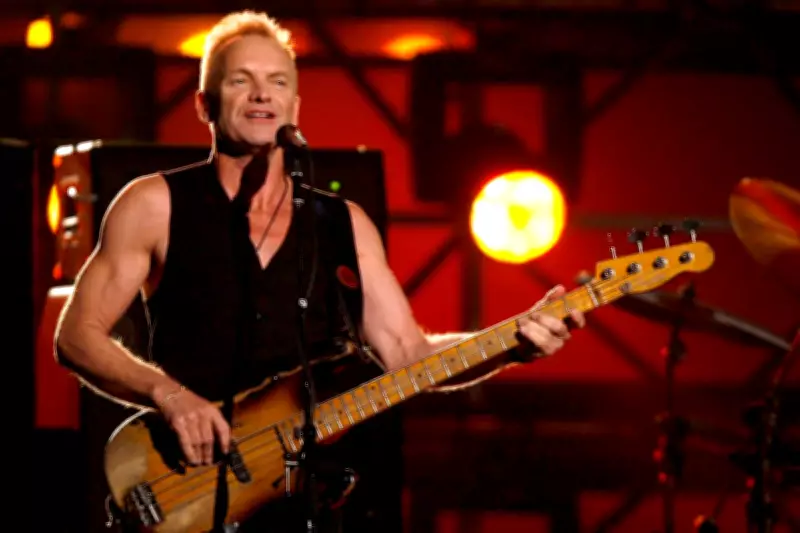
Sting has suggested that the decline in physical productivity for men might be linked to toxic traits in modern masculinity. The former Police frontman made his remarks as he announced that his musical, The Last Ship, is coming to the West End this autumn.
“I work with my hands every day as a musician, and I’m lucky,” he told The Guardian. “It’s a rare thing for modern men to actually use their hands and use their strengths to do anything. We’ve lost something there.”
Sting continued: “I don’t have answers, but maybe the toxicity in society and the moment is [a result of the fact] that we’ve lost that direction for our energy, that male strength. It’s rare we have to use it.”

The Manosphere and Online Misogyny
Concerns have grown in recent years over what has been dubbed the “Manosphere”, an online ecosystem of misogynist and anti-feminist views in which men peddle advice on dating, business and self-improvement. There, women’s value is reduced to their beauty, sexuality and other regressive ideals, while gender equality is blamed for cultural decline – and misogyny is promoted as a business tool.
The Last Ship: A Story of Deindustrialisation
The Last Ship, which debuted in Chicago in 2014 before moving to Broadway, follows a group of men working at a shipyard threatened with closure amid the deindustrialisation of the Seventies and Eighties. Sting grew up near a similar shipyard in Northumberland, Swan Hunter in Wallsend, which was responsible for building some of the most renowned ships of the early 20th century – including the RMS Carpathia, which rescued passengers from the sinking of the RMS Titanic.
“Britain’s wealth was created in the coalfields and the steel towns and the mill towns and the shipyards,” the musician born Gordon Sumner said. “All of those skill sets were thrown on the scrapheap [for] Thatcher’s dream of a service economy.”
Many of the show’s male characters are shown going through crisis as their identity is stripped away from them, with one asking: “For what are we men without a ship to complete?”
Community Pride Over Romanticisation
Yet Sting, who will star in a run at the Theatre Royal Drury Lane in September, said he wasn’t attempting to romanticise what was frequently a dangerous or even deadly industry. Instead, he was nostalgic for “the sense of community that I was brought up in”.
“That environment was so rich with symbolism,” he said. “The town, although it was depressed a lot of the time, was extremely proud of the ships that were built there. The work was awful and dangerous and hard, but those guys could look back and say, ‘Well, I built that.’ The civic pride was massive.”
Critical Reception and Revival
Sting stepped in to star in the Broadway production of The Last Ship in 2014, after it opened to middling reviews. While critics praised his music and the “hearty, stomp-heavy choreography”, the story was panned as “dull” as well as “predictable and depthless”. “The displaced shipbuilders in Wallsend pulsate with emotion and vitality but the community spirit can’t hide the lack of creativity in the show’s story,” The Independent’s review said at the time.
Since its opening, it has toured around the world and been revised, with some characters cut. Sting is returning to star in the West End version alongside his longtime collaborator Shaggy.
Royalty Dispute with Former Bandmates
In the same interview with The Guardian, Sting briefly addressed the high court battle with his former Police bandmates over alleged unpaid royalties. The high court in London has been told that Sting has paid more than £500,000 to Stewart Copeland and Andy Summers since they brought the legal action. “It doesn’t make any sense,” Sting said of the case, “that’s all I’m willing to say.”