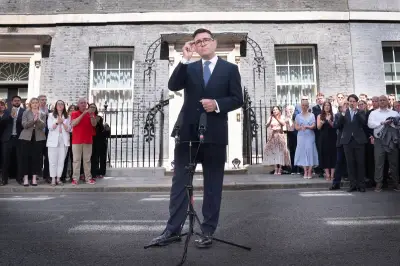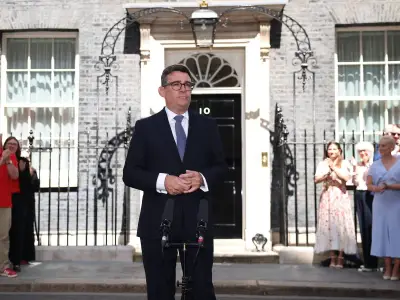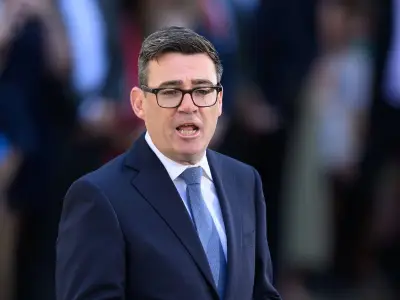
Infighting threatened to engulf the top of the Labour party on Thursday as the Prime Minister and Andy Burnham turned on Sir Tony Blair. The Greater Manchester Mayor and Sir Keir Starmer both rejected the former PM's scathing critique of their policies.
Burnham's Response
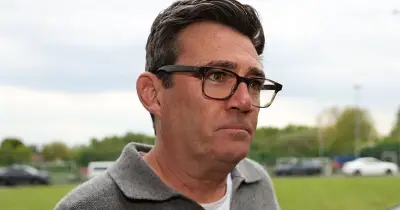
In a 1,500-word response, Mr Burnham accused his former boss of failing to reject Margaret Thatcher's legacy and called for more state control. He attributed economic success in Manchester to a 'very interventionist' approach as he said the markets shouldn't dictate policy. The former minister in the Blair government lashed out after Sir Tony warned the party against a 'dangerous' lurch to the Left in comments that appeared to be aimed at the mayor.
Making the argument for a more interventionist government, Mr Burnham wrote in The Times: 'The lesson from Greater Manchester is that you can't just leave it to the market, as Tony's essay seems to suggest. If you want higher growth in areas that don't have it, you need strong public control and direction over both the investment strategy and the enablers of a more productive economy, such as transport, energy, water, education and housing.'
In a direct attack on Sir Tony, he added: 'The Labour government in which I was proud to serve did many great things. It did not, however, take us off the direction set by Thatcher. This has given us 40 years of neoliberalism and the simple truth is this: it has not been kind to communities in Makerfield and those like them across the UK. Trickle-down economics did not in the end trickle down very much at all.'
Mr Burnham also argued that political turmoil in Britain and the West had been caused by falling living standards after the 2008 financial crash, which he blamed on deregulation. 'The fall in the living standards of millions, and the reality that life has got harder for most year-on-year since the financial crash in 2008, is, I believe, the gaping omission in [Blair's] analysis,' he said. 'This has been the single biggest driver of the turmoil in politics he describes and the cratering of support for traditional parties of Right and Left, here and around the world.' He also warned that Britain was drifting towards a 'toxic, divisive politics like the US, with all the social harm that comes with that'.
Starmer's Rebuttal
Sir Keir, meanwhile, rejected his predecessor's criticisms of his leadership, arguing that his policies had been vindicated. Speaking during a visit to the Acton Works train depot in West London, where he was meeting apprentices training to be engineers, the Prime Minister said: 'I agree with him that we should be having a discussion about policy and ideas, and that's what generates politics, that's where the focus should be, so Tony is right about that.'
Sir Keir pointed to his policies on economic growth and investment in public services, as well as falling NHS waiting lists and immigration levels, as examples of his Government's achievements. He said: 'My response to Tony is, yes, it's right to talk about policy, it's right to talk about ideas, that's where the debate should be. But actually no, I don't agree that the policy choices of this Government weren't the right policy choices given what we inherited, a very different situation in 2024 to 1997.'
Blair's Essay and Wider Reactions
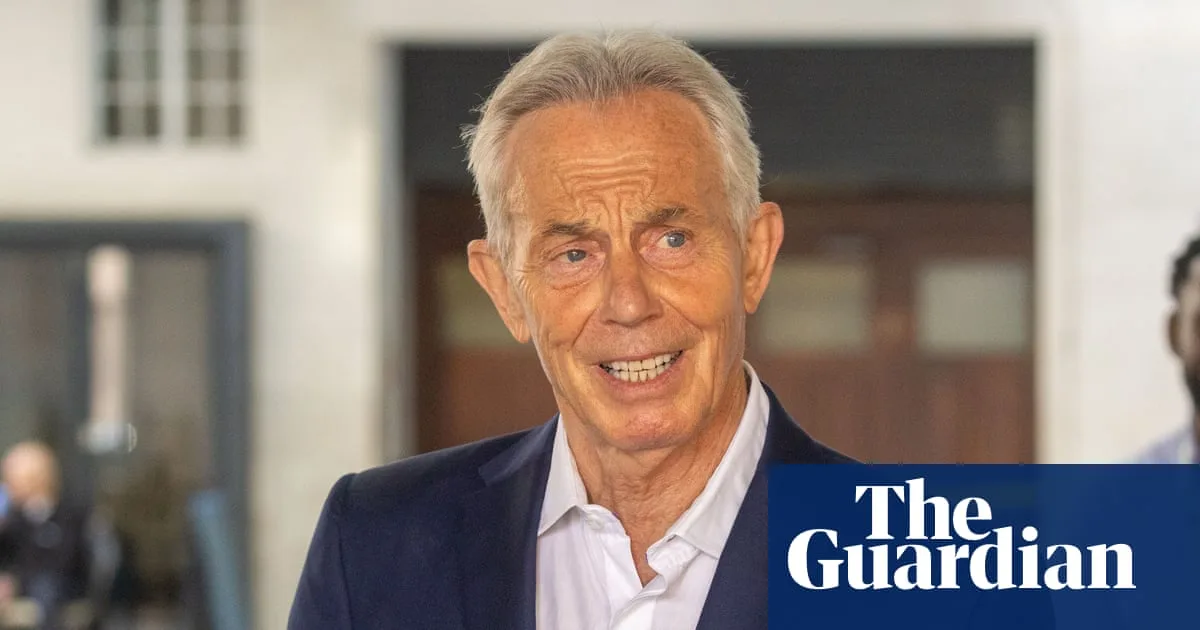
The battle at the heart of Labour began after former prime minister Sir Tony published a 5,600-word essay on the direction of his party. He savaged Labour's flagship workers' rights laws and minimum wage increase, while demanding the PM ditch net zero targets, cut welfare and rethink the pensions triple lock. He also accused the party of being more interested in increasing state benefits than in boosting the economy.
Elsewhere in his intervention, Sir Tony warned that Labour was in danger of losing the next election because it had no 'coherent plan' for the country. He said his party has retreated into a Left-wing 'comfort zone' as he warned against moving even further Left.
After defending his record, the Prime Minister also vowed to fight a leadership contest as he said once again that he would not 'walk away' if he is challenged. Mr Burnham is fighting the Makerfield by-election in a bid to return to Westminster and launch a leadership challenge. The mayor, who served in Sir Tony's government, said the problem with Blairism was it 'sometimes saw the market as always the answer'.
Former health secretary Wes Streeting, another potential leadership challenger, took a similar view, arguing the 'striking weakness' at the heart of the intervention was the lack of mention of inequality. Sir Tony is expected to make further interventions in the coming weeks after his allies said this was the 'beginning, not the end' of his efforts to shape the future of the party.