

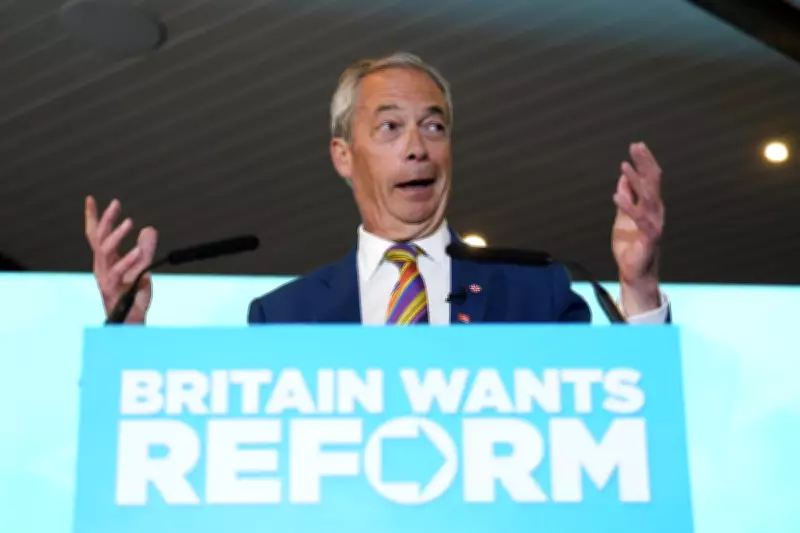
The 2026 local election results have reshaped the United Kingdom's political landscape, delivering what experts describe as an unprecedented level of fragmentation. The Labour Party suffered one of its worst-ever performances across England, Scotland, and Wales, losing over half of the councils it was defending. Meanwhile, Reform UK emerged as the clear winner, securing 1,431 seats after defending only three, building on its record-breaking 2025 victory when it won 677 seats.
Labour's Collapse
Labour's losses were concentrated in metropolitan areas, including all of London, where its support base was historically strongest. The party lost control of 36 local authorities, reducing its nationwide total to just 28. In most cases, councils transitioned to no overall control, though Labour often remained the largest party due to the fact that many councils elect only by thirds. This prevented Labour from losing its foundation entirely, but the scale of the defeat was still historic.
Reform UK's Surge
Nigel Farage's Reform UK picked up 14 councils across England, including Havering, Newcastle-under-Lyme, and Essex, bringing its total to 24 in 2026—up from zero before May 2025. The party's vote share surged in traditional Labour heartlands. In Birmingham, Reform's share rose to 26% (up 25 points), while Labour's dropped to 23% (down 28 points). In Manchester, Reform reached 18% (up 17 points), while the Green Party grew to 37% (up 20 points) and Labour fell to 31% (down 22 points).

Greens and Liberal Democrats
The Green Party also capitalised on collapsing support for the major parties, gaining hundreds of new councillors, particularly in London and other metropolitan areas. The Greens took control of Hackney, Waltham Forest, Norwich, and Hastings. The Liberal Democrats, led by Ed Davey, secured 143 councillors, a result likely to be viewed as satisfactory.
Fragmentation of UK Politics
Experts have noted that the election results reflect a trend towards a five-party system, pushing the country into unprecedented territory. Many councils, including Peterborough, Dudley, and West Oxfordshire, are now split between five or more parties, which could complicate governance. Pollster Sir John Curtice warned earlier: "We have never had five-party politics before. We're in unprecedented territory and none of us know exactly where this will go."
Scotland and Wales
In Scotland, Labour failed to capitalise on discontent with the Scottish National Party, as the SNP capitalised on a divided vote. In Wales, Labour's collapse was even more stark: the party lost power in the Senedd for the first time since its creation in 1999. Labour's vote share fell by more than half, pushing it into third place behind Plaid Cymru and Reform UK. The future of Sir Keir Starmer as Labour leader is now uncertain, with calls for his resignation mounting and one MP already threatening a leadership challenge.






