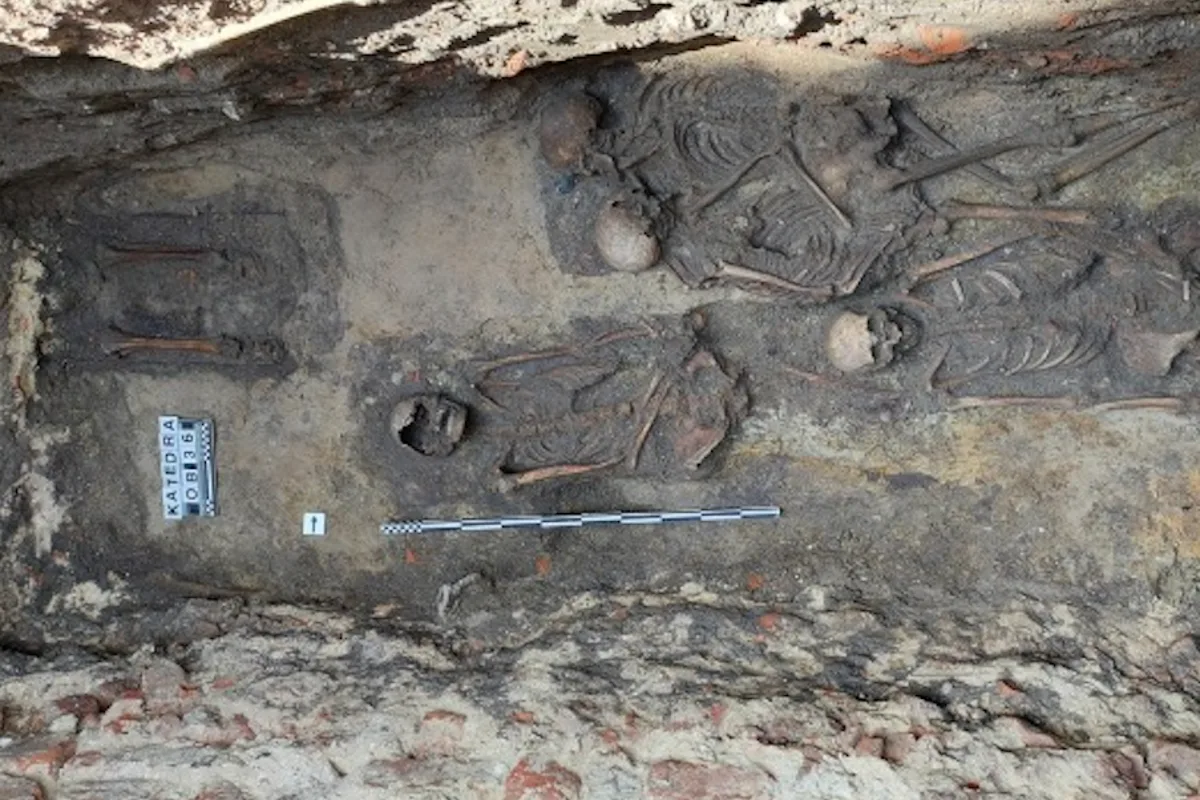
Archaeologists have confirmed that a pair of skeletons found embracing in a 13th-century Polish cathedral are the country's first known medieval same-sex double burial. The discovery, made at the Cathedral Church of the Exaltation of the Holy Cross in Opole, has raised questions about the relationship between the two women.
DNA analysis revealed that both individuals were female and genetically unrelated, ruling out a familial connection. The burial, in which the skeletons were positioned in a 'mutual embrace', is unusual for medieval Poland, where double burials typically involve family members or men who died in battle.
The women were interred next to the cathedral walls, a location usually reserved for royalty and nobility. This suggests they were not marginalised by medieval society, despite the fact that same-sex relationships were punishable by death at the time. Researchers believe their bond was likely social, institutional, or situational rather than romantic.
The study, published in the Journal of Archaeological Science: Reports, highlights the growing use of genetic analysis to understand medieval burial practices. Scientists hope further examination of other graves in the area may reveal whether such same-sex burials were part of a larger trend.