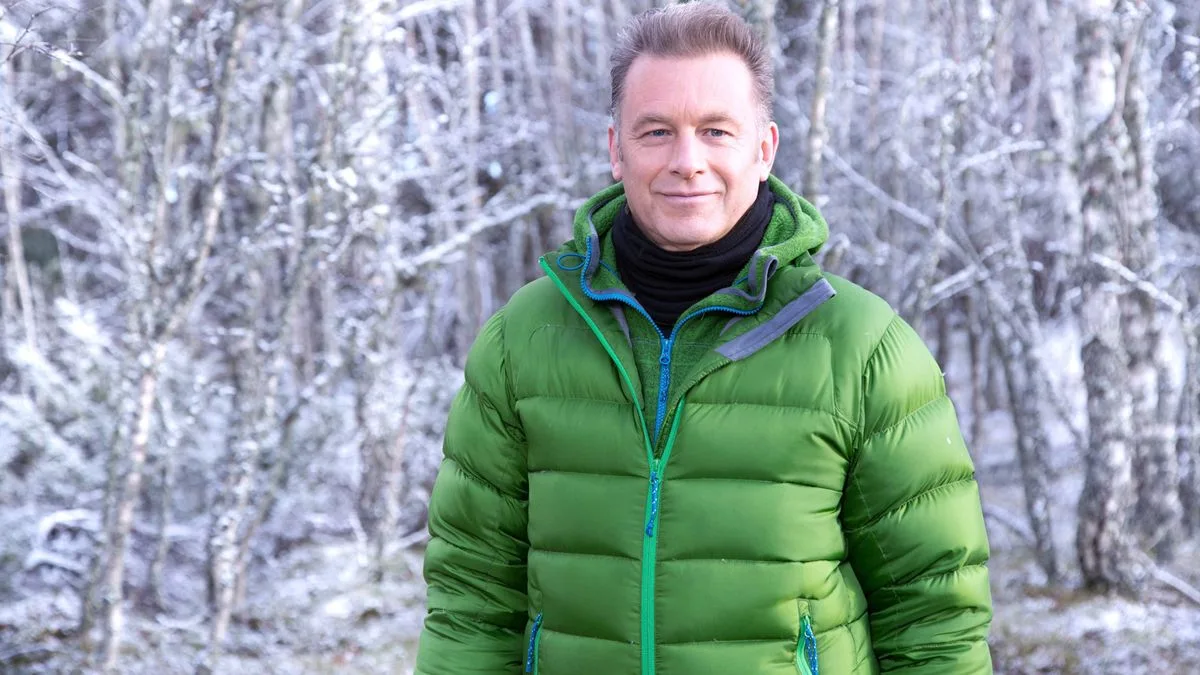
In a candid revelation that challenges public assumptions, renowned naturalist and broadcaster Chris Packham has detailed his unexpectedly nuanced relationship with television personality Jeremy Clarkson. The Springwatch presenter, known for his passionate environmental advocacy, admits that while many anticipate animosity between them due to their differing public stances, they have discovered significant common ground.
Beyond the Expected Animosity
Speaking exclusively to the Daily Telegraph, Packham addressed the widespread perception that he must harbor hatred toward Clarkson, the outspoken former Top Gear host turned farmer. "Everybody expects me to hate Jeremy," Packham confessed, before immediately countering this assumption. "But we worked together and he was extraordinarily hospitable. And he's like myself."
Packham elaborated on Clarkson's approach, suggesting that what many interpret as mere provocation serves a deeper purpose. "He sometimes sees the need to antagonise a situation to promote a conversation," Packham explained, indicating a strategic similarity in their methods despite their different platforms and audiences.
Environmental Alignment Emerges
Perhaps most surprisingly, Packham noted Clarkson's evolving perspective on environmental matters. "In recent times, we've seen him swinging more in my direction," the naturalist observed. He highlighted Clarkson's August comment questioning the effectiveness of badger culls in controlling bovine tuberculosis as particularly significant.
"He made the comment last August about the badger cull being ineffective [in spreading bovine TB], which as a farmer is very valid, and for him to have said that is great," Packham stated, acknowledging the importance of this perspective coming from within the farming community.
Parallel Paths of Advocacy
Since Clarkson assumed management of his Diddly Squat Farm in Oxfordshire in 2019, he has become increasingly vocal about agricultural challenges. His commentary has spanned multiple critical issues affecting British farming, including bovine tuberculosis outbreaks, advocacy for local produce procurement, extreme weather impacts on agriculture, and contentious planning disputes.
Similarly, Packham has maintained his prominent position as an environmental commentator since joining Springwatch and its seasonal counterparts Autumnwatch and Winterwatch in 2009. His advocacy has occasionally attracted dangerous opposition, most notably in 2021 when protesters set fire to a car at his driveway's end and burned down his gate. Despite this intimidation, which prompted enhanced security measures, Packham remains committed to his outspoken approach.
Criticism of BBC Environmental Coverage
During the same interview, Packham expressed disappointment with the BBC's environmental reporting. "I don't think the BBC is as forthright [as it ought to be]," he asserted. "It's a dereliction of duty not to be informing people of the gravity of the situation."
This criticism stands in stark contrast to his praise for broadcasting legend Sir David Attenborough, who celebrates his centenary this May. Packham described Attenborough as "the single most important ambassador for life on Earth that the planet's ever seen," highlighting the profound impact of consistent, quality environmental communication.
A Heartbreaking Wildlife Observation
Separately, Packham recently shared a distressing realization from his Springwatch filming in the Peak District. Appearing on the BatChat podcast in November, the 64-year-old naturalist revealed that during three weeks of recording in the National Park, he observed a complete absence of predatory birds.
"At no point during the recording of Springwatch, and I was there for three weeks, did I see a single Buzzard or a single Kite flying over," Packham lamented. While acknowledging the National Trust's excellent conservation work within protected areas, he described the surrounding landscape as "a Raptor death zone," creating what he characterized as "peering over the fence and into the desert really, which is tragic."
This sobering observation underscores the ongoing challenges in wildlife conservation, even as public figures like Packham and Clarkson navigate their complex relationship and evolving positions on environmental matters.