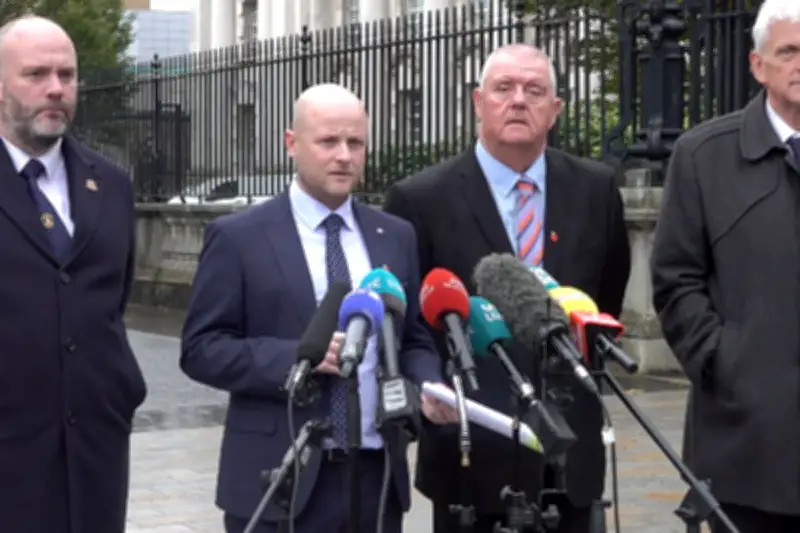
A bid to challenge the banning of the Orange Order’s Drumcree parade has failed, prompting a mixed political reaction.
A High Court judge found Secretary of State Sir Chris Bryant acted lawfully when he stepped in to stop the route along the mainly nationalist Garvaghy Road after it had been granted for the first time in almost 20 years.
Criticism of Unnotified Protests
The judgment also contained criticism of those who had taken part in unnotified protests against the parade, highlighting that all those holding public office are obliged to uphold the rule of law.
A police investigation is ongoing into alleged breaches of the Parades Commission determination allowing the route along the Garvaghy Road. First Minister Michelle O’Neill and Sinn Féin president Mary Lou McDonald are among those who have attended voluntary interviews with police.
Political Reactions
Following the judgment on Wednesday, Taoiseach Micheál Martin called for the rebuilding of community relations in Portadown following the tense stand-off.
“We need to broaden the conversation into community relationships and strengthening those and developing those, and see what additional assistance and support we can give to the broader community in the area,” he told reporters in Dublin.
However, the DUP and Sinn Féin have taken opposite stances. DUP leader Gavin Robinson described the outcome at the High Court as “not what we would have wanted”. He also focused on the aspects critical of the residents’ protest.
“The judge starkly said: ‘The law does not apply only when you agree with it’,” he said. “Michelle O’Neill and Sinn Féin take note. The rule of law must and will apply.”
Sinn Féin TD Matt Carthy welcomed the ruling as a “huge relief to the residents of Garvaghy Road”. He added: “They stood their ground on the Garvaghy Road to send a very clear message that there can be no going back. I think the court decision today was the right one. And what I would urge, particularly leaders of unionism, to recognise that there is no going back. Now is the time to be building relations with their neighbours and recognising just how far we have come over the past three decades.”
UUP leader Jon Burrows urged those who “blocked the Garvaghy Road” to “read this judgment before claiming victory”. He added: “In my view, this is a damning indictment of Sinn Féin’s political leadership throughout this dispute. The court’s warning applies to everyone in public office: you cannot demand respect for the law while selectively disregarding it yourself. This judgment strengthens the public interest case for prosecuting those against whom there is sufficient evidence. Where convictions follow, sentences should reflect the full seriousness of the offending, including the disruption and harm caused. Those decisions belong to independent prosecutors and courts. Blocking a lawful parade is no victory for rights. Political office is no exemption from responsibility.”
TUV leader Jim Allister said the “legality of the right of Portadown District is not removed”. He added: “The fact that the court upheld the processes followed to get to this point does not right the human rights wrong done to Portadown District, nor does it discourage future manifestations of mob rule. Though, I note the severe criticisms of the protesters, this outcome carries the risk of more of the same.”