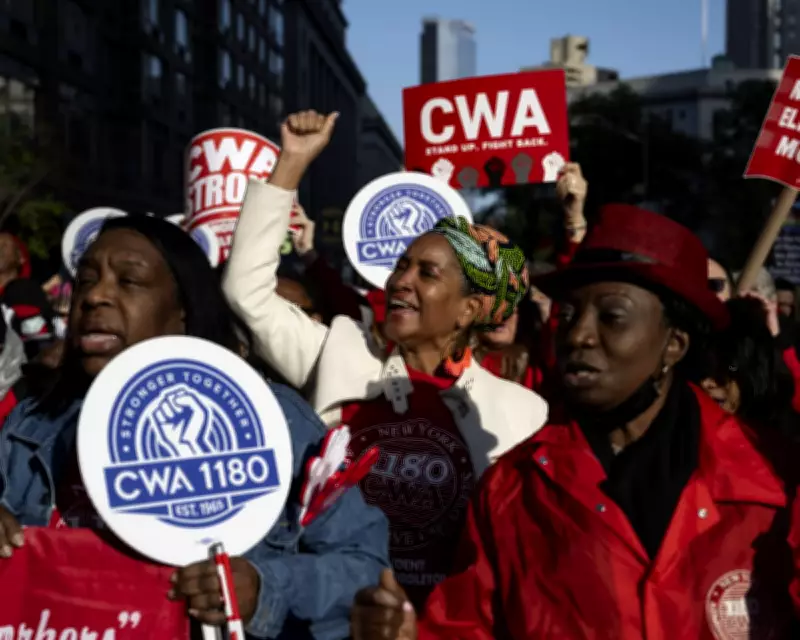
May Day protests erupted across the United States on Friday, drawing thousands of demonstrators who voiced grievances against both corporate power and the Democratic Party establishment. The rallies, marking International Workers' Day, underscored a growing chasm between the party's progressive base and its traditional working-class supporters.
Working Class Discontent
In cities from New York to Los Angeles, protesters carried signs criticizing Democratic leaders for failing to deliver on promises of economic justice, healthcare reform, and labor rights. "The Democrats take our votes for granted and then ignore our needs," said Maria Gonzalez, a striking hotel worker in Chicago. "We need a party that fights for us, not just for Wall Street."
The demonstrations come amid mounting evidence that working-class voters, particularly in key swing states, are increasingly disillusioned with the Democratic Party. Recent polls show that support among non-college-educated voters has dropped to its lowest level in decades, with many citing the party's focus on cultural issues over economic concerns.

Party Divisions
Internal party tensions were on full display as progressive lawmakers like Alexandria Ocasio-Cortez addressed rallies, calling for a more aggressive push for universal healthcare and a $15 minimum wage. Meanwhile, moderate Democrats warned that such demands risk alienating the very voters the party needs to win back.
"The party is at a crossroads," said political analyst James Peterson. "May Day has become a symbol of the struggle within the Democratic coalition. The question is whether they can bridge the gap between their activist base and the working-class voters who once formed the backbone of the New Deal coalition."
Electoral Implications
With the 2026 midterm elections approaching, the protests pose a serious challenge for Democratic strategists. In districts where working-class voters are crucial, candidates are torn between embracing progressive economic policies and maintaining a more centrist appeal.
"We can't afford to lose the working class," said Representative Tim Ryan, a moderate Democrat from Ohio. "But we also can't ignore the energy of the progressive movement. The key is finding common ground on issues like jobs, wages, and trade."
However, activists argue that the party has already lost touch. "The Democrats had a chance to transform the economy after 2008, but they bailed out the banks instead of the people," said union organizer Sarah Thompson. "Until they truly prioritize workers, May Day will continue to be a day of protest, not celebration."
As the sun set on the rallies, the chants of "Tax the rich" and "Healthcare for all" echoed through city streets, a stark reminder of the deep divisions that could shape the next electoral cycle.