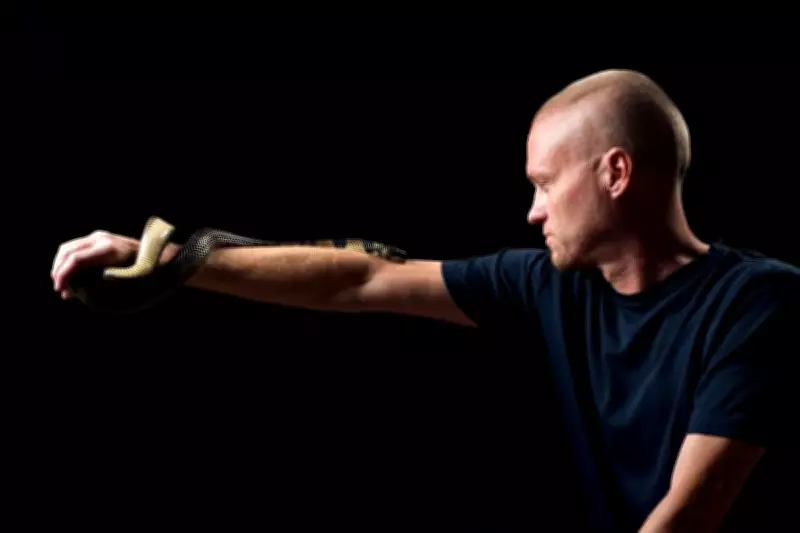
US Man's 200 Intentional Snakebites Fuels Quest for Universal Antivenom
In an extraordinary and perilous personal mission, Tim Friede, a 58-year-old American, has subjected himself to over 200 deliberate snakebites over nearly two decades. His goal is to develop a universal antivenom that could prevent the estimated 138,000 annual deaths and 400,000 disabilities caused by snakebites worldwide, particularly affecting impoverished communities in Asia and Africa.
A Dangerous Path to Immunity
Friede, a former window cleaner with no formal scientific training, conducted his experiments in the basement of his Wisconsin home. He allowed some of the world's most lethal snakes, including cobras, mambas, and taipans, to bite him to build up a natural immunity. "I understood it was dangerous, but people are dying from snakebites, and I was pissed at that," Friede told the Guardian. "I put my ass on the line, and I'm glad I did."
His journey was fraught with near-fatal incidents:

- In 2001, he slipped into a coma after being bitten by a monocled cobra and an Egyptian cobra within an hour.
- He suffered anaphylactic shock multiple times and nearly lost a finger to a rattlesnake bite.
- Necrotic venom from a monocled cobra caused muscle disintegration in his leg, requiring emergency self-surgery.
Despite these harrowing experiences, Friede persisted, driven by a desire to bridge the gap in snakebite treatment for humanity's most vulnerable.
Climate Crisis Escalating Snakebite Risks
Studies indicate that snakebite incidents are rising due to the climate crisis, as hotter weather alters both snake behavior and human activity, increasing unwanted encounters. For instance, California has seen an uptick in rattlesnake bites this year amid unusually warm spring conditions. With over 5.5 million people bitten globally each year, the need for effective antivenom is more urgent than ever.
Treating snakebites is complex, requiring specific antivenoms for hundreds of venomous species. However, Friede's sacrifices have paved the way for a breakthrough. Centivax, a California vaccine company where he now works, is using antibodies from his blood to develop a near-universal antivenom. A 2023 study confirmed that Friede's antibodies can neutralize toxins from 19 elapid snake species, including cobras and mambas.
From Basement Experiments to Global Impact
Friede's unconventional methods involved injecting venom mixtures and allowing snakes to bite him, often on his forearms or fingers. He kept about 60 snakes in his basement, acquired from a Florida breeder. "For me, it was a puzzle on how to not die from snakebites," he said. His immunity was so robust that he survived 22 bites from the inland taipan, the world's most venomous snake.
After years of being dismissed by scientists, Friede joined Centivax in 2019. The company is now preparing for a trial of the antivenom on pets in Australia, with potential human applications to follow. "I wanted to make sure this all wasn't in vain," Friede remarked, emphasizing his commitment to helping the poorest people on the planet.
Challenges and Future Prospects
The development of universal antivenom faces significant hurdles, including funding shortages and logistical issues, especially as international aid budgets shrink. A 2021 review highlighted insufficient manufacturing to meet global needs. However, Friede's work offers hope in mitigating the growing threat posed by climate-driven human-snake conflicts.
Friede reflects on snakes with admiration, noting their evolutionary history and ecological importance. "They are such marvelous creatures," he said, often spending hours observing them. His story underscores a critical message: as climate change intensifies, innovative solutions like universal antivenom are vital for protecting lives and fostering harmony between humans and wildlife.