

A shooting involving a white livestreamer known for provoking people with racist language has left a Black man wounded, reigniting debate over free speech and content creators who monetize hate-filled interactions. As more users of livestreaming platforms find that performative bigotry can generate significant income, the line between freedom of expression and the right to feel safe is becoming increasingly blurred.
Incident in Tennessee
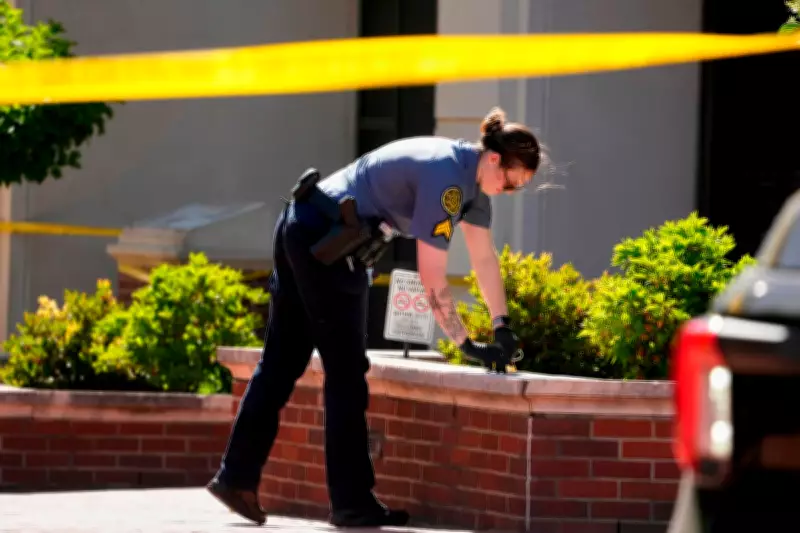
Dalton Eatherly, who streams under the moniker "Chud the Builder," faces charges including attempted murder after allegedly shooting another man outside the Montgomery County Courthouse in Clarksville, Tennessee. Authorities report that Eatherly, 28, and the victim engaged in a physical altercation that escalated to gunfire. A witness identified the victim as Black; Eatherly is white. In an audio stream recorded shortly after the shooting, Eatherly claimed self-defense. It remains unclear whether any words were exchanged beforehand. His attorney, Jacob Fendley, declined to comment on the charges. Eatherly is being held on a $1.25 million preliminary bond, with a full bond hearing scheduled for Thursday.
Free Speech as a Defense
An online fundraiser for Eatherly raised over $100,000 within a day for his legal assistance. On the crowdsourcing site, he defended his videos as "mild jokes, unfiltered thoughts" and acknowledged using racial slurs as "edgy, harmless humor," asserting, "I know it’s controversial, but it’s my right to speak freely." This echoes a case from a year ago when a white Minnesota woman, captured on video calling a child a racist slur, raised over $800,000 and similarly invoked her First Amendment rights.

Experts argue that free speech claims do not provide blanket protection when interactions escalate to violence. Brandon Tucker, senior director of government affairs for civil rights organization Color of Change, noted that "race-baiting" content creates immediate risk for Black bystanders, highlighting a power imbalance where the livestreamer attracts an audience. "The same free speech that this individual wants to advocate for doesn't recognize the chilling of my response to know that I cannot react in any reasonable way because my face, my safety, my family's safety is in jeopardy," Tucker said.
Platform Regulation Challenges
Eatherly was streaming on Pump.fun, a platform where users create and trade cryptocurrency tokens. In November 2024, Pump.fun paused its livestream feature after users violated terms of service with abusive and threatening content. Kate Ruane, director of the free expression program at the Center for Democracy and Technology, expressed uncertainty about improvements made before the feature was reinstated. "If you're relying on users to report and none of the users that are viewing these livestreams disagree or have a problem with what they're seeing, you might not be getting the user reports that you should," she said.
Brandon Golob, a criminology, law and society professor at the University of California, Irvine, noted that while the number of livestreaming platforms has grown, self-regulation can still feel like "the Wild West." However, he emphasized that the First Amendment is not a shield from real-world laws against harassment, hate crimes, and provocation. "The reality is that when it involves two private individuals, state law is going to govern," Golob said. "We just want to make sure that we’re not conflating government responsibility or government censorship with private accountability."
Community Reactions
SendaRoni Sloscru, a livestreamer with tens of thousands of followers, criticized Eatherly's actions, saying, "When you get to terrorizing and doing all this hate speech, that’s when the line gets drawn, especially when nobody is bothering you." He added that platforms allowing such behavior are essentially race-baiting. "I think he tried to find people he’d get a reaction out of," SendaRoni said. "When you do things such as that the end results are not going to be exciting."

Leading platforms like YouTube and Twitch have community guidelines barring hate speech and slurs, using automated detection and user reports. Both Golob and Ruane advise individuals to know their rights when dealing with uncomfortable livestreamers. Ruane suggested filming them back as a form of pushback, noting that "whatever First Amendment rights they might be exercising, you have them too."





