

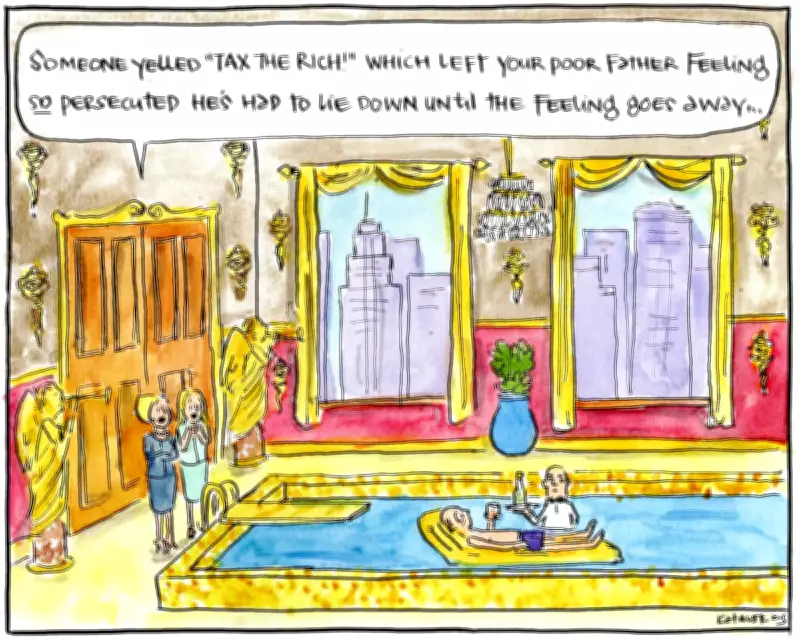
In a world where the line between political rhetoric and genuine offense grows increasingly blurred, a new controversy has emerged that would be laughable if it weren't so revealing. The phrase 'tax the rich'—a staple of progressive economic policy—has been branded by some as a form of hate speech. Yes, you read that correctly. Apparently, suggesting that billionaires should contribute a fairer share of their vast fortunes to society is now tantamount to inciting violence or discrimination.
The Absurdity of the Argument
This argument, if it can even be called that, stems from a fundamental misunderstanding of what hate speech actually constitutes. Hate speech is typically defined as communication that attacks or demeans a group based on attributes such as race, religion, ethnic origin, sexual orientation, disability, or gender. Advocating for progressive taxation does not fall into this category. Yet, in a climate where the ultra-wealthy are increasingly portrayed as a persecuted minority, some have taken to claiming that any call for higher taxes is an attack on their very existence.
Who Is Really Being Attacked?
Let's be clear: no one is suggesting that billionaires should be stripped of their wealth or denied their rights. The call to 'tax the rich' is simply a policy proposal aimed at reducing economic inequality and funding public services. It is a debate about fairness and the social contract, not an expression of hatred. To equate it with hate speech trivializes real instances of discrimination and undermines the seriousness of genuine hate crimes.

Moreover, this narrative conveniently ignores the fact that billionaires have access to powerful platforms and resources to defend their interests. They are not a vulnerable group in need of protection from the 'mob' of average citizens demanding economic justice. If anything, it is the working class and the poor who suffer from hateful policies that perpetuate inequality and poverty.
The Satirical Angle
Perhaps the most galling aspect of this debate is the sheer lack of self-awareness. The idea that billionaires—who often pay lower effective tax rates than their employees—are the victims of hate speech is a masterpiece of cognitive dissonance. It is a satire of modern political discourse, where the powerful co-opt the language of victimhood to deflect from their own privilege.
In a truly just society, we would be having a serious conversation about how to ensure that the wealthiest individuals contribute their fair share. Instead, we are debating whether the very suggestion of such a policy is an act of aggression. As the gap between the rich and the poor continues to widen, one must ask: who is really being silenced here?
So, let's put aside this ridiculous notion that taxing the rich is hate speech. It is not. It is a policy debate. And if billionaires feel threatened by the prospect of paying more taxes, perhaps they should consider that the real hate speech lies in the systems that allow them to hoard wealth while millions struggle to survive.






