
The Independent Commission Against Corruption's (Icac) public hearings for Operation Rosny concluded on Tuesday after 10 weeks, ending without a major political scalp. The inquiry, which began in July with allegations that senior New South Wales Liberal politicians supported branch-stacking efforts of a factional group of young conservative Christians known as the Reformers, failed to produce a resignation comparable to the premiership-ending appearances of Gladys Berejiklian, Barry O'Farrell and Nick Greiner.
Anthony Whealy KC, chair of the Centre for Public Integrity and a former Icac assistant commissioner, said the measure of an inquiry's success does not have “anything to do with resignations”. The impact of Rosny, with its three main allegations that Whealy likens to a “three-tentacled octopus”, will be twofold: “We will get a series of definitive rulings on what is a political donation … [in] a carefully considered report that draws all these strands together,” and, most importantly, “this will have all played out in public”.
Central role of electoral donations laws
On the opening day in July, counsel assisting the inquiry, Peggy Dwyer SC, emphasised the central role of electoral donations laws, observing: “Money in politics, as in other spheres of life, has the potential to corrupt.” Icac was investigating whether the Reformers took prohibited or undeclared donations to support branch stacking, with plans to recruit 5,000 Christian conservatives “and thereby take control of the NSW division of the Liberal party”. They aimed to deliver more conservative policies on abortion, euthanasia, marriage equality and climate change.
The watchdog examined whether three Liberal figures took $2m in donations from property developer Jean Nassif to support branch stacking, damage the career of the then Liberal minister David Elliott and remove the building commissioner David Chandler. Some of those named in the allegations stated payments for factional work do not count as donations to a political party, or that the payments were for genuine lobbying and consulting work. The NSW Electoral Commission said it would not comment on matters referred to Rosny in response to a parliamentary question about whether payments to factional groups inside parties were donations.
Theatre of the absurd
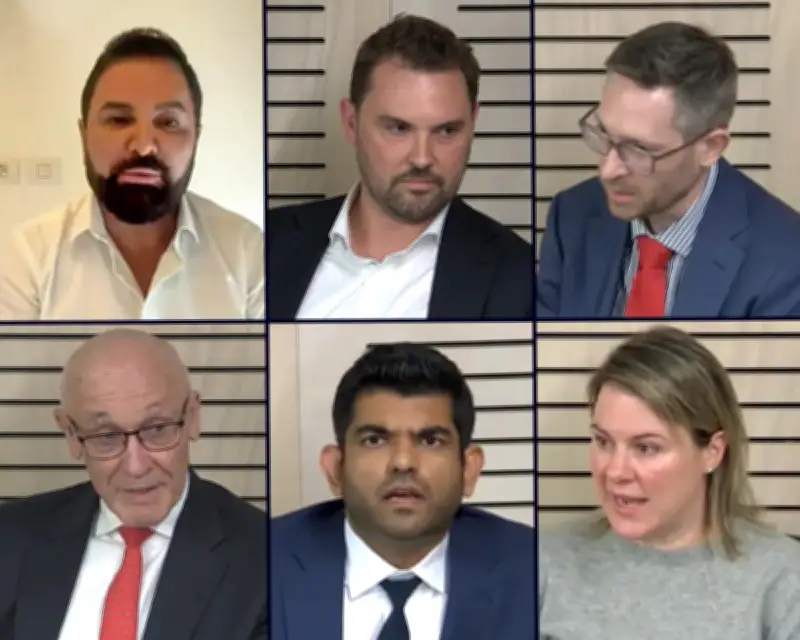
Rosny's public hearings were at times darkly entertaining, with tragedy, comedy and unintended satire. The drama's climax was Nassif's appearance via video link from his Beirut bedroom. Over two days, Nassif raged against allegations of corruption, as well as Elliott and Chandler. He claimed he had left Australia to receive “an international award for number one businessman from [an] Arabic background” and would return after he had collected “a beautiful legal team who are willing to fight politicians – to clear my name”. But he told Dwyer he would not come back to be “killed by the mafia boys”.
Whealy describes Nassif's appearance as the “theatre of the absurd” and believes most of the fugitive developer's evidence will not be accepted by the commission. He noted that “20 years ago” public hearings could expose witnesses to embarrassing media coverage before any findings of corruption were made, but now the rules of procedural fairness are “very carefully observed”. Still, one senior Liberal complained of the frequent “name-dropping” of politicians not subject to allegations.
Consequences for those named
Federal opposition leader Angus Taylor faced frequent questions from reporters outside Icac about a message revealed during the early days of Rosny about a plan to “shake down Angus for 10K”. Taylor, who is not accused of wrongdoing, was forced to repeatedly deny making payments to the Reformers. The person who sent the message, Taylor's factional ally Dallas McInerney, lost his job as the chief executive of Catholic Schools NSW days after admitting to performing a factory reset on his iPhone.
Damien Tudehope, whose upper house seat will be contested at next year's NSW election, was not named in Icac's allegations but has been referred to the parliamentary privileges committee after admitting to leaking a confidential draft report from a 2023 parliamentary inquiry. He remains stood aside as the Liberals' upper house leader and shadow attorney general. Charles Perrottet, a person of interest in the Nassif drama, has taken leave of absence from his role as head of strategy at BP during the inquiry.
Former premier Dominic Perrottet's name was dropped frequently, appearing in messages as “Dom” and in phone taps of Nassif as “my boy” and “my best friend”. Two of his siblings, Charles and Jean-Claude, and his sister-in-law Anita appeared before the inquiry. Anita Perrottet, who was not named in Icac's allegations, rejected the suggestion she had lied to the commission to cover illegal donations to her husband. The presiding commissioner, Fabian Gleeson SC, stated explicitly in week six that Dominic Perrottet was not a person of interest.
Whealy says Dominic Perrottet retains a “sparkling reputation” and was not called, which is “a reflection of the fact that he's not a person of interest in this”. Branch stacking is not itself illegal and takes place on both sides of politics, but the role it plays in the choice of candidates or policy might surprise many voters. In her opening remarks, Dwyer emphasised the “vital role” electoral funding laws play in ensuring a level playing field, saying: “They promote public confidence in a fair go for politicians and political aspirants, and for the public they are entrusted to serve.”




