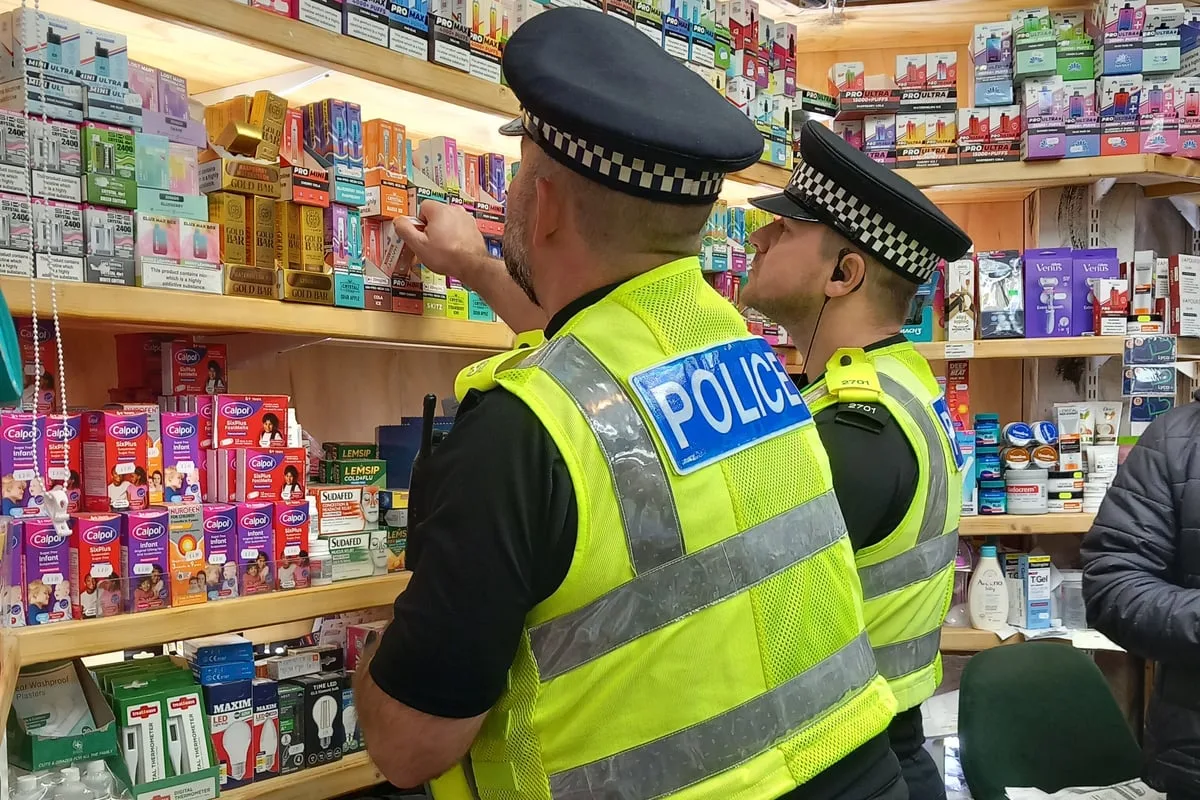
As many as half of convenience stores and vape retailers in some areas are estimated to have links with organised crime, according to a Trading Standards report. Similarly, up to a third of American candy stores and one in four fast food takeaways in specific areas are suspected of being fronts for criminal activity, the organisation’s Hidden In Plain Sight report said.
A survey by Trading Standards found that 97% of its officers are aware of suspected organised crime groups operating out of retail premises on local high streets. There was also “almost universal recognition” – involving 99% of officers – that Trading Standards had seen an increase in the number of cash-intensive businesses opening on local high streets since 2020. Almost three quarters of Trading Standards professionals reported experiencing intimidatory behaviour or had been threatened with violence in the course of their duties.
Trading Standards has published a map of high streets across the UK for so-called dodgy shops, along with the 10 towns and cities perceived by its officers to be hot spots for organised crime groups, with Birmingham, Liverpool and London filling the top three spots. It said the budgets of Local Authority Trading Standards services had been cut by up to 50% over the last decade, with staffing stripped to minimum levels.

Trading Standards warned that this – coupled with resource challenges for other key enforcement agencies including police – had coincided with the rapid spread of dodgy shops across the UK, as well as complex criminal networks that underpinned them. Dodgy shops had a “profound impact” on the safety of the public and the viability of legitimate businesses, while putting the health of consumers, including children, at risk. These shops often brought with them associated criminality including anti-social behaviour, theft, violent crime, drug supply, modern slavery, and child sexual exploitation.
The report outlined a 10-point plan to “reclaim the UK’s high streets”, including investing in Trading Standards, making the sale of illegal goods a trigger for licence review, and an additional £20 million to bolster Trading Standards resources for ports and borders. John Herriman, chief executive of the Chartered Trading Standards Institute, said: “It is clear from this research that serious and organised crime is endemic across the UK, and the threat posed by illegitimate high street businesses is having a significant impact on the work of Trading Standards.”
Association of Convenience Stores chief executive Ed Woodall said: “Responsible convenience retailers are extremely frustrated with rogue traders operating with impunity in their local area. 85% of retailers asked in our 2026 Crime Survey said that illicit trading has increased in their local area – this cannot be allowed to continue.” The Independent British Vape Trade Association chief executive Gillian Golden said: “We commend CTSI and the ACG for putting together this report and fully endorse their 10-point plan.”