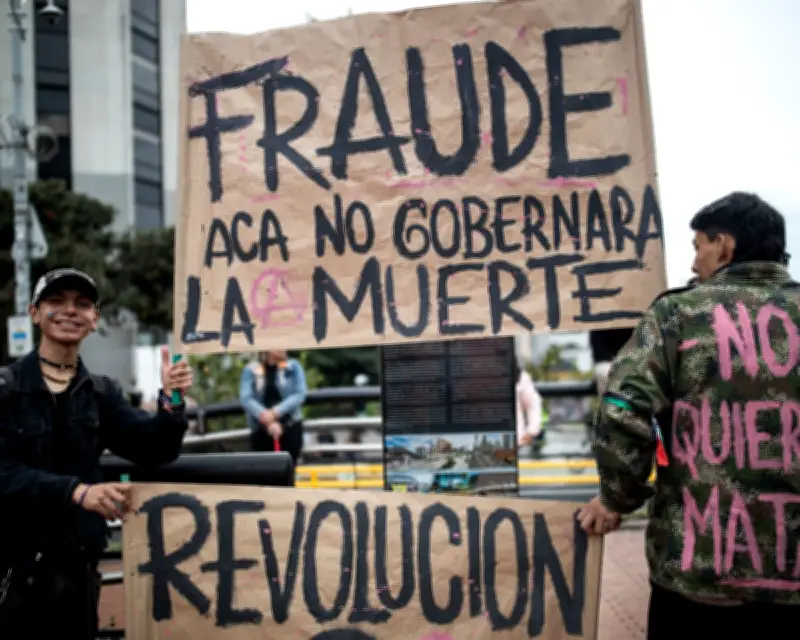
Colombia's recent presidential runoff election has sparked concerns about transnational interference, as leftwing candidate Iván Cepeda conceded defeat gracefully while outgoing President Gustavo Petro alleged Donald Trump's involvement. Petro claimed Trump interfered to bring far-right lawyer Abelardo de la Espriella to power, a charge not proven but not to be dismissed as paranoia, according to The Guardian's editorial.
Trump's Endorsement and de la Espriella's Agenda
Trump publicly endorsed de la Espriella, who won by a razor-thin margin despite a radically rightwing platform. De la Espriella promises mega-prisons, a war on rebels, a shrunken state, renewed oil exploration, fracking, and corporate tax cuts. However, Petro's Pacto Histórico remains the largest party in congress, making governance difficult without executive decree and militarized state power. De la Espriella aims to 'disembowel' the left.
Petro's Legacy and Economic Vulnerabilities
Petro delivered redistribution without revolution: lower poverty, higher wages, and a transition away from fossil fuels. Then drought sent electricity prices soaring, exposing the fragility of that bet. Trump opposed Colombia's shift from oil and gas. Petro's charge is that US power now works through data, disinformation, and fear rather than armed force. Colombia's election became a polarised battleground for fake news, but allegations of altered electoral data remain unproven.

Modern Election Manipulation Beyond Vote-Rigging
Modern elections rely on voter rolls, telecoms networks, and social media targeting. Compromising this ecosystem may not change the count but can change voters' minds before they vote. Honduras's 2025 election illustrates this: Trump-backed Nasry 'Tito' Asfura won by fewer than 30,000 votes after a disputed count. Leftwing opponents alleged millions of text messages warned voters receiving US remittances that supporting Libre's Rixi Moncada could cut off cash. Washington urged all parties to accept the result.
Chile and Argentina: Similar Patterns
In Chile, during José Antonio Kast's 2025 campaign, a gas company app allegedly sent pro-Kast push notifications after being hacked. Kast, a Trump supporter, denied involvement and won convincingly. This reveals the danger of private networks as political weapons. In Argentina, open financial bullying occurred during key elections. Javier Milei's 2025 midterm win was not solely due to Trump's threat to pull $40bn in support if he lost, but the US intervention gave voters a powerful financial incentive to stick with him.
Lessons for Britain and Beyond
Britain should not treat this as a faraway Latin American problem. The Rycroft review into electoral influence warns that foreign actors, including private citizens from allies like the US, can interfere through money and social media division. The old model of foreign enemies cultivating MPs or lobbying through front organisations has given way to a subtler approach featuring billionaires, data brokers, platforms, crypto, influencers, and AI. The lesson from South America is not that rightwing victories are illegitimate, but that democracy is weakened when the infrastructure of politics is privately owned, poorly regulated, and open to manipulation.