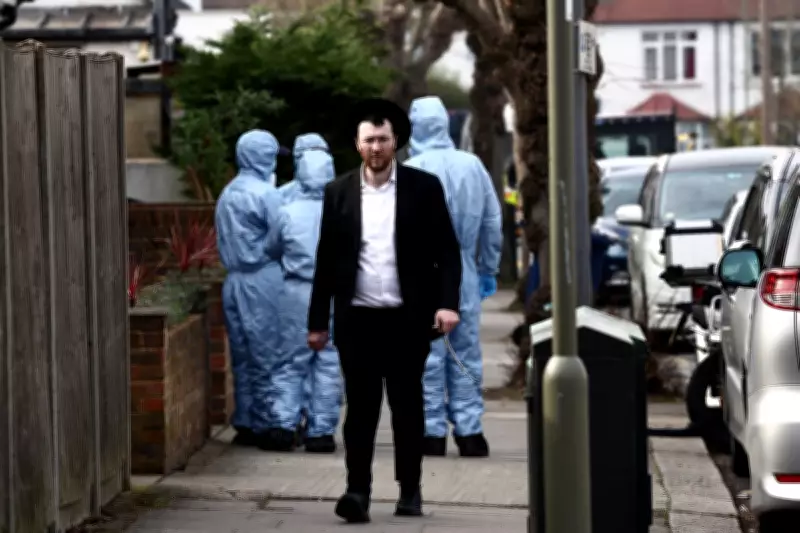
The arson attack on four ambulances in Golders Green early on March 23 has been labelled a horrific antisemitic act by Prime Minister Keir Starmer. The vehicles, operated by the charity Hatzola (meaning rescue in Hebrew), served both Jewish and non-Jewish residents of this north London district. The incident has heightened anxieties within the British Jewish community, which is still recovering from the October 2025 attack on Heaton Park Synagogue in Manchester on Yom Kippur, the holiest day of the Jewish calendar, which claimed two lives.
This arson is part of a broader international wave of antisemitism, with recent attacks in Norway, the US, and the Netherlands. Perpetrators come from various backgrounds, often influenced by online hate from groups like ISIS or supporters of the hardline Iranian regime. Counter-terror police are investigating whether an Iran-linked group is responsible, with Harakat Ashab al-Yamin al-Islamiya claiming responsibility for this and other attacks in Europe.
Historical Roots of Antisemitism in the UK
These attacks reflect a complex mix of domestic and foreign-inspired hostility towards Jews in the UK. While foreign influences like Oswald Mosley's British Union of Fascists in the 1930s are well-known, domestic antisemitism has deep roots dating back to the readmission of Jews in the 17th century after a 300-year expulsion. However, violent attacks have been rare, even if prejudice has made life uncomfortable during crises.

Golders Green: A Jewish Haven Since WWI
Golders Green began developing as a Jewish settlement from the First World War onward. Social historian Pam Fox notes that before 1910, only a handful of Jews lived there, but by 1915 there were 300 households. Growth continued after WWI, and the first synagogue, Dunstan Road, opened in 1922. Today, the Jewish population stands at around 8,000, representing about 40% of the suburb's residents.
The community has always been diverse. In the 1930s, more orthodox Jews, including refugees from Nazism, established different forms of worship. By WWII, at least 14,000 Jewish refugees in north-west London ranged from secular to reform to ultra-orthodox. Post-war influxes included Jews from Egypt, Hungary, and South Africa, as well as second- and third-generation Jews from eastern Europe and London's East End. Today, the ultra-orthodox are the fastest-growing group, but the community remains heterogeneous.
Antisemitism in Golders Green
Despite its vibrant cultural and religious life, Golders Green has not been immune to antisemitism. In the 1930s, the British Union of Fascists organized locally, and casual prejudice was common. In late 1945, the Hampstead Petition Movement aimed to remove foreign Jews from the area, gaining some local support. During the Nazi era, local newspapers like the Golders Green Times falsely accused Jewish refugees of being unpatriotic and selfish.
Today, the idea of Golders Green as a purely Jewish suburb ignores that most residents are not Jewish and that many types of Jewishness exist there. Such nuances are lost on those who carried out the ambulance arson, which targeted a service used by all. As local resident Sam Adler put it, the attack was cynical and cowardly. Yet, like the Manchester attack, it has brought communities together in solidarity against antisemitism.