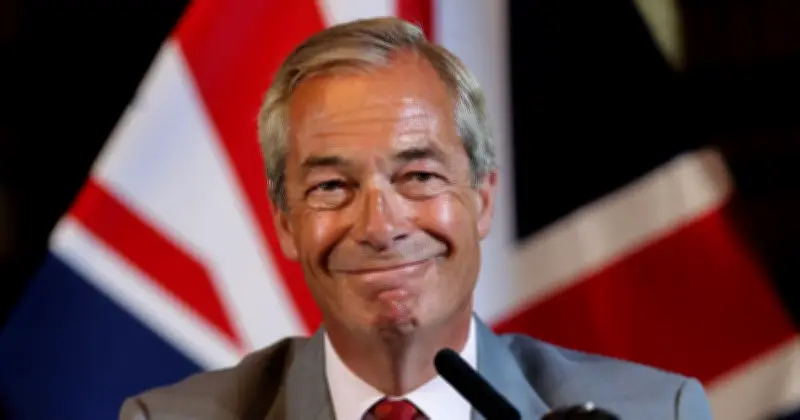
Nigel Farage can still defeat Andy Burnham and become Prime Minister, but he must do two things, according to Luke Tryl, Executive Director of More in Common. Writing for Express.co.uk, Tryl sets out the biggest challenges facing the Reform UK leader.
Polling slide and internal splits
A year ago, Reform was regularly polling between 30 and 33 per cent. That has now fallen to 23 per cent, according to the latest opinion poll, just one point clear of Kemi Badenoch's Conservatives and four points behind Andy Burnham's Labour Party.
Tryl points to several reasons for the decline. Restore Britain has split Reform's base, winning over 4 per cent of voters, and one in 10 of Reform's 2024 voters. A split between the parties delivered a council seat in Dover to the Greens. Badenoch's popularity has also at least stalled Farage's hopes of further squeezing the Conservatives, with a good chunk of Tories seemingly determined not to back Reform.

Personal ratings and Burnham's rise
Farage's own personal ratings have sunk on the back of questions about the £5m donation, down from -5 last summer to -23. In focus groups, More in Common has detected that the actions of the US President - particularly on Iran and ICE's behaviour in Minnesota - have given more voters pause for thought about whether Farage would mean the same in the UK.
Burnham's rise poses its own challenges. He is popular and, unlike Starmer, is seen as likeable and relatable. More voters want to go for a beer with him than Farage, a test on which the Reform leader has traditionally performed well. Burnham's rise in the polls is driven primarily by left-wing voters, attracted by Polanski's Greens last spring, returning to the party.
Labour progress and anti-Farage tactical voting
Labour's progress with those who switched to Reform is more limited. But a united left, and a fractured right, could mean scores of seats staying Labour that would have flipped to Reform. This could be made more electorally potent by ruthless tactical voting against Reform, as seen in Makerfield, Caerphilly and Gorton and Denton, driven by the 39 per cent of voters who strongly disapprove of Farage. Nearly 10,000 anti-Farage voters were even willing to rally behind Count Binface in Clacton even as the Reform leader mobilised his own base.
Reform's remaining strengths
Despite these challenges, Reform is far from a spent force, and continues to win locally. Farage retains the overwhelming loyalty of his base, with three in four of Reform's 2024 voters viewing him favourably. The party is still the most trusted on handling immigration (28 per cent) and asylum seekers (28 per cent), and if the salience of these issues remains high Reform will benefit. Reform has also led the Conservatives since April 2025; the longest spell a party that is not Conservatives or Labour has been in the top-two since the advent of modern polling.
Farage's strengths are, in many ways, the same as his weaknesses. His strident opinions and style attract enthusiastic supporters but also generate motivated opponents. To win the next election, Farage must expand beyond his base and dominate a fragmented right; on both, this summer has seen them going backwards not forwards.