

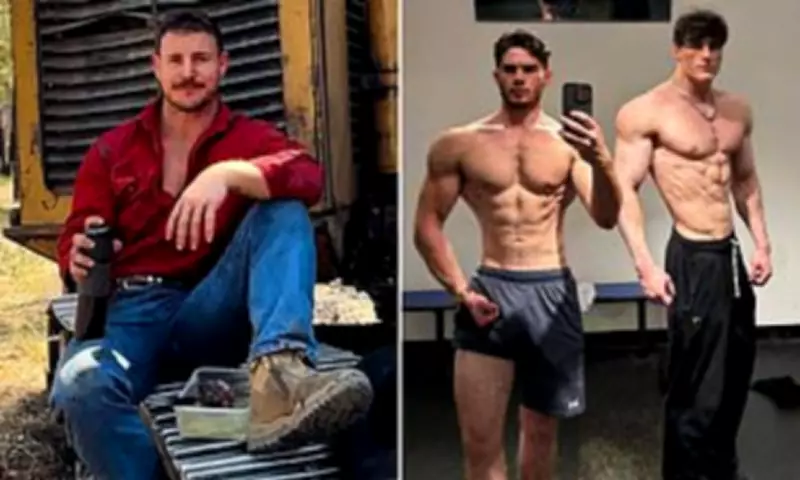
Former NRL star Luke Bateman has spoken out against the online 'looksmaxxing' subculture that preys on young men, drawing parallels to what he describes as other toxic male cultures in Australia, such as rugby league.
What is Looksmaxxing?
The online movement encourages young men, typically teenagers, to go to drastic and dangerous lengths to 'maximise' their appearance. Methods range from basic hygiene to 'hardmaxxing', which can include steroid use, leg-lengthening operations, jaw reshaping, and plastic surgery. Within this subculture, sexually successful men are labelled 'Chads', weak ones as 'betas', and involuntarily celibate men as 'incels'.
Bateman's Comparison to Rugby League Culture
Luke Bateman, who transitioned from the NRL to become an influencer and podcaster, told the Daily Mail that the looksmaxxing movement is not dissimilar to other toxic male spaces in Australia. 'Growing up, I received a lot of validation from sport. But then when I got into early adulthood, it was very much like when you get into partying culture,' he said. 'It was competition between each other, who could drink the most or who could do the most drugs, who could get the most women?'

Bateman added, 'I think patriarchy conditions males to be competitive and dominant. And if you're not dominating someone else, you're failing. When you see the looksmaxxing thing, you see that same culture there, the need to compete with everybody else.'
Competition Among Influencers
This competition is evident between looksmaxxer influencers Braden 'Clavicular' Peters in the United States and Brisbane-based Ronan, known as 'Androgenic'. The two frequently engage in 'mogging' on social media, striking bodybuilder poses side by side to compare physiques.
Bateman described how the connection between masculinity and competition impacted him personally. 'All my worth, validation and meaning was outsourced,' he said. 'It was always (about) athletic accomplishment, financial accomplishment, even strength because I was playing rugby league. It was like: Can I be more physical than everybody else? It's that exact same thing that I think the looksmaxxing (world) is doing. It's placing your status, worth, and value on an external factor, but there is no end to that.'
The Path to Addiction
For Bateman, this desire for validation grew beyond rugby league. 'I just kept constantly needing more and more and more and more, because there was no fulfillment,' he explained. 'Once I'd achieved all my goals, that's when I formed an incredibly bad, a debilitating gambling addiction, because I just needed worth from something else. I needed a connection to something that would give me or make me feel anything, and unfortunately, that was gambling and it ruined my life.'
Bateman found a way out through vulnerability. 'It's removing the armour and masks we have been conditioned to wear and returning to our self,' he said. 'People think self-development is adding more things and (literally) growing. For me, it's very much stripping things back and returning to authenticity, vulnerability, and intimacy.'
Misogyny in the Subculture
The looksmaxxing subculture also raises concerns about its connection to misogyny. Women are classified either as a 'Stacy' (attractive and often unattainable) or a 'foid', 'femoid', or 'Female humanoid organism' – an insult suggesting women are less than human. Some popular looksmaxxing forums contain posts such as: 'Why do women want to be raped?', 'Do foids like rape?' and 'Why do incels worry about looking good so much? Women are disgusting.'
Influencers like Clavicular have been associated with anti-women movements, including partying with misogynists Andrew and Tristan Tate, and far-right live streamer Nick Fuentes, who popularised the phrase 'your body, my choice'.
When the Daily Mail interviewed Ronan in April, he said he does not hate women, though he admitted previously disliking them. 'There's been past times where I had maybe more of a resentful mindset toward women,' he said. 'I didn't really see things from a woman's perspective and I wanted to be treated really well by them growing up. The first woman who ever showed interest in me was when I was 19, so I grew up in a world where it felt like no woman ever respected or liked me. Nowadays, women treat me better than men do.'

Bateman believes the ties between amplifying masculinity and mistreating women are inherently linked. 'Rugby league culture has misogyny absolutely baked into it, and that's because of patriarchy,' he said. 'When you live in hyper-masculine cultures, it says that everything that isn't masculine or masculinity is less than or second to it, which immediately becomes women. It's not a direct path to saying "we hate women" but, when you live in a hyper-masculine culture, anything that's feminine needs to be suppressed, dominated, repressed. (It) just leads indirectly to misogyny and an extremely poor mindset towards women.'
The Way Forward
Bateman says that improving as a person is not an issue, but it must come with self-education rather than performing for others. 'It's not through external sources, external validation, or external measures,' he said. 'Self-betterment (is) educating yourself to understand the systems and cultures we live in, and the subconscious messaging and beliefs they place upon us as men. (That) is actually the path out, understanding yourself, understanding how you became who you are.'





