

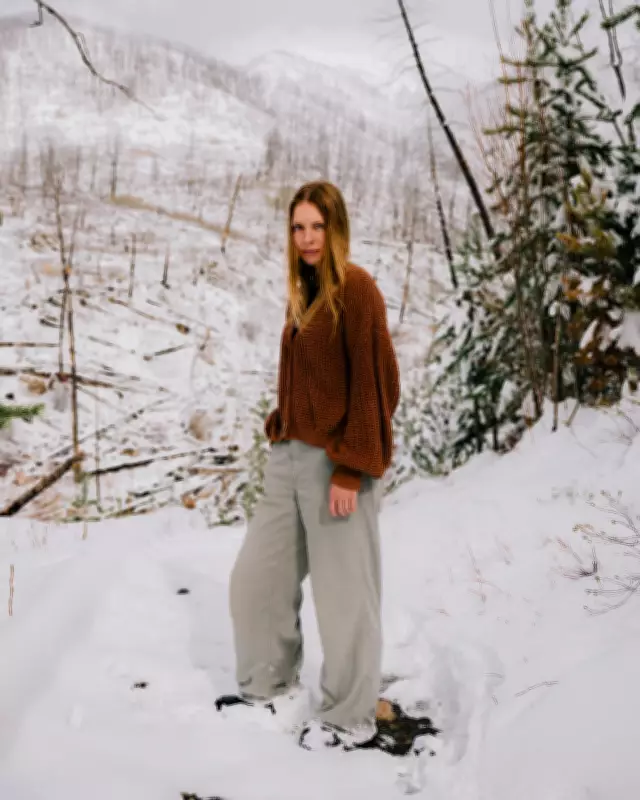
Eva Lighthiser, a 20-year-old climate activist, and 22 other young Americans are taking on the US federal government in a lawsuit that accuses President Donald Trump of violating their constitutional rights through executive orders that promote planet-warming fossil fuels. The case, known as Lighthiser v Trump, represents a bold legal challenge aimed at holding the administration accountable for its climate policies.
A Personal Mission
Lighthiser, who is still deciding her college major—leaning toward environmental studies—has been preparing testimony for the lawsuit while balancing her academic life. She recently had to cut short a dorm party to fly to Portland, Oregon, where she and her fellow plaintiffs argued before the ninth circuit court of appeals to reinstate their case, which was dismissed last fall. In a speech outside the courthouse, she declared, "We are challenging this administration for sacrificing the lives of myself and my fellow plaintiffs by expanding fossil fuels for the sake of power."
The experience was "nerve-racking, but invigorating," Lighthiser said. The court will decide in the coming months whether to revive the case, which targets executive orders that expedite fossil fuel extraction and weaken environmental regulations.

Roots in Montana
Lighthiser's connection to nature runs deep. Her parents met as hiking buddies, and she grew up camping and climbing mountains in Livingston, Montana. During her first year of high school, she was homeschooled while traveling to national parks. Despite her love for the outdoors, she never imagined she would sue one of the world's most powerful figures. Her father, Mark, noted, "Taking on Trump, it’s not the first thing that occurs to you that she would do. I think Eva has had to push herself."
Lighthiser's activism began in 2020 when a family friend told her about Our Children's Trust, a non-profit law firm that specializes in youth-led climate litigation. She joined Held v Montana, filed on her 14th birthday, which argued that the state's pro-fossil fuel policies violated Montana's constitutional guarantee of a "clean and healthful environment." In 2023, the case made history as the first of its kind to go to trial, and the judge ruled in favor of the plaintiffs. Now, Lighthiser is pushing for that victory to be enforced, as state lawmakers have passed new laws that contradict the ruling.
The Federal Challenge
In early 2025, Lighthiser became the lead plaintiff in Lighthiser v Trump after a call from her lawyer. "That was really a moment when it clicked," she said. "My name against his name." The lawsuit argues that Trump's executive orders—such as those expanding oil and gas drilling and weakening emissions standards—violate the plaintiffs' constitutional rights to life, liberty, and property, as well as the public trust doctrine.
Julia Olson, founder of Our Children's Trust, said, "Eva was actually one of the first youth who we were in conversation with and who wanted to be involved." The firm has been involved in dozens of similar legal actions across the US.
Climate Threats in Montana
Montana, a state with a rich conservation history but also a legacy of resource extraction, faces mounting environmental challenges. Lighthiser lives in Livingston, a town surrounded by the Gallatin and Absaroka mountain ranges and the Yellowstone River. But coal trains spew dust daily, and climate-linked disasters are increasing. In 2018, flooding washed out the bridge to her family's home, forcing a 30-minute detour and eventually a move. In 2022, the Yellowstone River overflowed, causing $128 million in damages. "My future feels uncertain," Lighthiser testified in the Held trial.
Despite these threats, Lighthiser finds hope in community responses to disasters and in youth-led litigation, which she says provides a sense of togetherness. As a lead plaintiff, she mentors younger challengers like Jorja McCormick, a 17-year-old from Livingston who looks up to her. "I definitely look up to the older plaintiffs like Eva," McCormick said.

Legal Risks and Rewards
Pat Parenteau, an environmental law expert at Vermont Law School, admires the plaintiffs' courage but worries about potential backlash. He believes the sweeping arguments in Lighthiser v Trump go beyond what courts typically accept. The case calls for blocking several executive orders, which Parenteau says courts are unlikely to do. "The courts are not able to reform the energy system of the United States," he said.
District Judge Dana Christensen dismissed the case last fall, calling the requests "unworkable." Parenteau expects the ninth circuit to uphold that dismissal. If Our Children's Trust appeals to the Supreme Court, they risk a ruling that could "slam the door" on other environmental lawsuits. However, Olson remains undeterred: "Children are being harmed right now."
Lighthiser acknowledges the risks but believes bold action is necessary. "Eventually, youth climate litigation will be successful," she said. "There are risks. But if you never take risks, nothing good happens."





