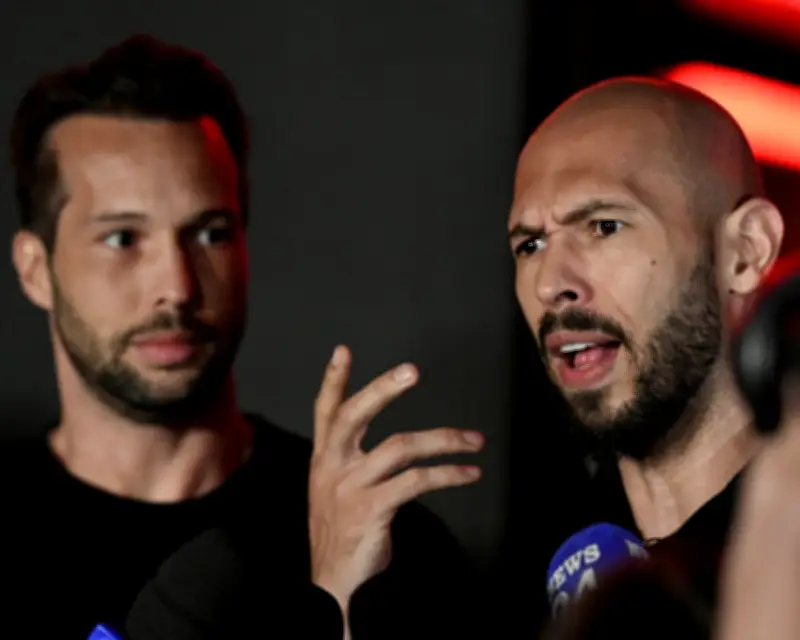
Andrew Tate, the misogynist influencer accused by numerous women and British prosecutors of rape, strangulation, assault, sex trafficking, possession of child abuse images, and extreme pornography, was arrested in Miami last week along with his brother Tristan. The men were previously charged in Romania, where they were under house arrest until, following diplomatic moves from the Trump administration, they were allowed to leave for the US. Their lawyer said: “Do the math. These guys are on the plane.” Now they await extradition to the UK, where they are dual citizens.
Allegations and Investigations
The Tate brothers have long made provocative, contemptuous statements about women online. In June, the New Yorker’s Heidi Blake published an investigation detailing a long history of alleged sex trafficking, violence, and sexual assault, along with police mismanagement that allowed them to go free. The Tates denied wrongdoing; their lawyer called the new British charges “garbage”.
A Natural Fit on the Right
Tate fits naturally into a Maga right united around male supremacy. Donald Trump himself cemented the presidency after being revealed to have bragged about “grab[bing]” women “by the pussy”, and his domineering style of masculinity has become a feature of the movement. But as Donegan writes: “Just because Tate’s style of masculinity is popular on the right does not mean that it is popular with the public.” Tate’s version of misogyny has a constituency of Republican politicians and unlikable teenage boys, not the majority of Americans.

Democratic Silence
Donegan asks why Democrats are not making the Tates symbols of Maga’s hateful cultural project, Trump’s alleged affinity for sexual misconduct, or the movement’s anti-democratic stances. Rape, she argues, is “the most quintessentially anti-democracy act”. Yet the party remains quiet, which she attributes to male supremacist thinking among strategists who do not want to alienate the Tates’ base of manosphere content consumers.
Desperate Efforts to Win Men
Democrats are losing men, a demographic reality treated as an emergency. Major party players raised $20m for a “Speaking with American Men” project. Gavin Newsom launched a podcast embracing some rightwing cultural positions. The party runs white male candidates saying it’s OK “to be a manly man”. This strategy led to the recruitment of Graham Platner, an ex-marine who dropped out of the Maine Senate race after being accused of rape (he denied the allegations). Donegan concludes that even if Democrats don’t condone Tate’s alleged violence, on his most fundamental principle—that men are better and more important than women—they may not entirely disagree.