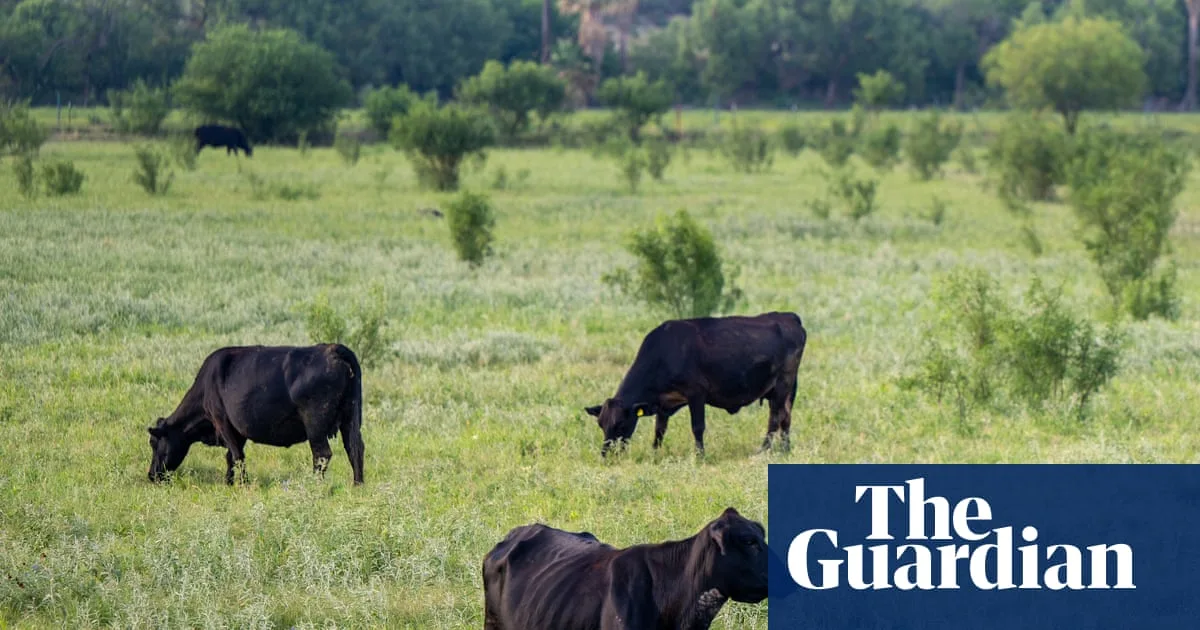
Legal Challenge to Trump's Plan to Open 24m Acres to Cattle Grazing
Challenge to Trump Cattle Grazing Plan on 24m Acres

Environmental advocates have launched a legal challenge against a Trump administration plan to open up to 24 million acres of federal lands to cattle grazing, which they say prioritizes big agriculture at the expense of wildlife and protected species.

Plan Targets Sensitive Landscapes

The plan, implemented through a memorandum of understanding signed in March by the US Bureau of Land Management, would use emergency authority to fast-track grazing in areas where it is currently not allowed. It includes opening parts of Grand Canyon National Park and other sensitive landscapes.

Advocates argue that cattle grazing destroys critical habitats by stripping land of vegetation and polluting streams with waste. This, they say, leads to increased conflict with predators like grizzly bears and wolves, which are often killed by ranchers and government agents.

Wide Pickt banner — collaborative shopping lists app for Telegram, phone mockup with grocery list

Legal Action Under Endangered Species Act

The Center for Biological Diversity (CBD) has filed a notice of intent to sue, alleging the administration fast-tracked the plan without consulting the US Fish and Wildlife Service, as required under the Endangered Species Act. 'The federal grazing program is already a disaster for endangered species,' said Andrea Zaccardi, carnivore conservation legal director at CBD. 'Expanding grazing across 24 million more acres will make that devastation even worse.'

Zaccardi noted that while individual ranchers have requested some allotments be opened, there is no industry-wide demand for the expansion. The Bureau of Land Management declined to comment, but the policy states a goal of 'no net loss of Animal Unit Months' and maximizing livestock use across western rangelands.

Minimal Benefit to Industry

Despite high meat prices, advocates say the benefit to the livestock industry would be small, as grazing on public lands accounts for just 2% of the nation's beef cattle. However, the harm to wildlife could be significant. Since 2017, CBD surveys of over 2,400 stream miles of endangered species habitat show significant damage from livestock. Surveys in Arizona and New Mexico also show damage from authorized, unauthorized, trespassing, and feral livestock.

Conflict with Predators

The plan is likely to increase conflict between cattle and predators, advocates warn. Congress authorized wildlife services in the 1930s to kill wildlife at the request of private landowners, including predators like grizzlies and wolves, which are protected under the Endangered Species Act. State and federal agents 'lethally remove' hundreds of thousands of animals annually. 'The likelihood of this increasing conflict with predators is extremely high,' Zaccardi said.

Provisions Favoring Big Agriculture

Chandra Rosenthal of Public Employees for Environmental Responsibility (PEER) noted that the plan includes 'unusual provisions to benefit' big agriculture, such as immersion and training programs for federal employees to understand ranchers' daily lives. The memorandum focuses on deregulation and streamlining, with little mention of environmental conditions.

The plan would also open lands in national monuments, including Grand Staircase-Escalante, Canyons of the Ancients, and Arizona's Sonoran Desert National Monument.

The Trump administration has 60 days to respond to the notice of intent to sue. If it fails, CBD will ask a federal judge to order a review of the plan's impact on protected wildlife, as required by the Endangered Species Act.

Pickt after-article banner — collaborative shopping lists app with family illustration



