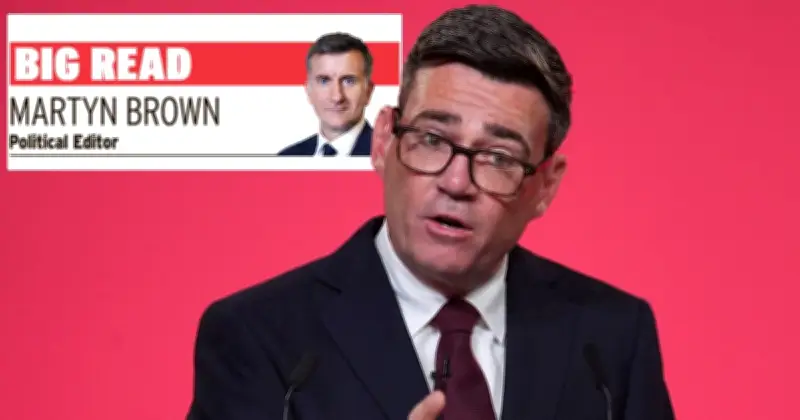
Andy Burnham heads to the Labour Party Conference this weekend with his administration engulfed by an economic tsunami, explosive backbench mutinies and collapsing public support, writes Martyn Brown, Political Editor.
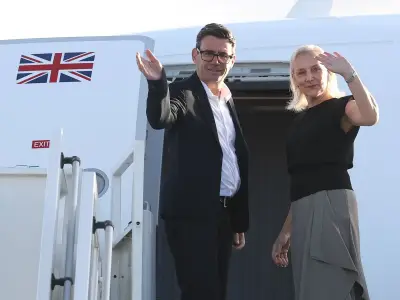
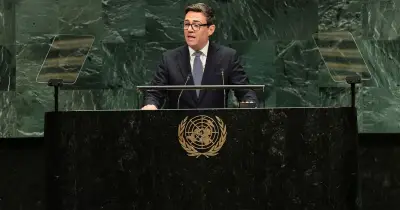
Jetting home on the red-eye from New York on Wednesday, the Prime Minister said the conference would be tougher than what he had just experienced. Hours earlier, he had his first taste of the Donald Trump right-hook, with the US President's acerbic dismissal of the government's plan for the Chagos Islands brutally public.
Mega-poll reveals obliterated majority
While not a knockout blow, the intervention has prompted a swift change of direction. Burnham's agility and communication skills may serve him well on the global diplomatic stage, but problems of a different kind are piling up back home. The King of the North gathers his party in Liverpool under the optimistic banner of "Hope Again".
Behind the artificial smiles, scripted speeches and snappy TikTok videos, the mood inside the party is rather different. A landmark mega-poll released on the eve of the party showpiece has dropped like a mega-ton bomb across Westminster.
The comprehensive YouGov MRP study reveals that Labour's parliamentary majority has been completely obliterated. If a general election were held tomorrow, Burnham would suffer a catastrophic net loss of 170 seats, crashing to just 241 MPs and leaving Britain locked in a paralyzed hung parliament.
Economic turmoil and fiscal black hole
Labour's demise is Reform UK's gain, with Nigel Farage's party projected to surge to 123 seats, virtually neck-and-neck with Kemi Badenoch's Conservatives on 130 seats. Electoral experts say that any initial "Burnham bounce" in popular support is virtually non-existent, leaving Labour pinned against the wall as voters register their fury over rocketing bills and broken promises.
The root of Burnham's political nightmare lies in a rapidly deteriorating economic picture. Official figures show inflation climbing back up to 3.1%, driven by soaring pump prices where diesel sits at four-year highs, alongside Brent crude oil prices exceeding $108 a barrel.
Energy analysts warn that household bills could jump by a staggering 25% - adding £442 to typical family expenses this winter. State borrowing surged to £18.3 billion in August alone - nearly a fifth higher than the same period last year - shrinking the Treasury's fiscal room for manoeuvre.
Chancellor John Healey is frantically attempting to plug a monstrous £10 billion fiscal black hole ahead of his landmark Budget on October 28. With economists warning that tax hikes are now inevitable, measures under consideration include extending stealth freezes on income tax thresholds, maintaining National Insurance hikes on business job-creators, slapping new proportional levies on property, and introducing a 10% flat-rate "death tax" on family inheritances to fund social care.
Migration and Brexit divisions
Another major headache for Burnham is the ongoing migration crisis. The past few days have seen a surge in illegal small boat crossings, pushing this year's migrant arrivals to 18,565. New analysis reveals that the number of migrants to have crossed the Channel under Labour is greater than the number of full-time soldiers in the British Army, with 83,279 people arriving in small boats, overtaking the 83,000 in the Army.
As if economic and migration crises were not enough, Burnham's conference preparations have been torpedoed by explosive interventions from his own party's past. Former Prime Minister Sir Tony Blair sparked fury across Labour ranks after demanding that Britain prepare to re-join the European Union. A bombshell report from Sir Tony's policy institute urged the government to make re-entering the EU a central pillar of Britain's 10-year strategic plan.
The intervention re-opens bitter Brexit wounds at the precise moment Burnham is trying to hold onto working-class Red Wall seats. In Burnham's former constituency of Makerfield, an estimated 65% of voters backed Leave in the 2016 referendum. Senior Labour figures privately accused Sir Tony of trying to "sabotage" the Prime Minister and handing an unbeatable open-goal to Farage.
Conference plans and internal pressures
While Reform UK threatens Labour across its northern heartlands, Burnham is being squeezed from the left in urban strongholds. All eyes are turned toward an imminent by-election in Holborn and St Pancras on October 8 - the seat previously held by Sir Keir Starmer. The Green Party, led by Zack Polanski, has mounted a formidable challenge, exploiting deep dissatisfaction among left-wing activists over Labour's economic caution and foreign policy positions.
Earlier this week, Burnham said his debut leader's speech would leave nobody in any doubt about "what I'm trying to do in this role". An internal No 10 note has set out the broad themes he will explore when he takes to the stage on Tuesday - including setting out long-term solutions to build a belief that the future can be brighter. He is likely to point to his forthcoming 10 Year Plan for the UK, which he says will have "making life more affordable" at its core.
Labour's biggest union funder, Unite, wants to see much more robust action on living costs sooner rather than later. Its leader, Sharon Graham, has called for a "winter fuel in reverse" – a policy from Burnham next week which would be as popular as Starmer's early removal of payments from many pensioners was unpopular. The union has put forward a motion giving the PM options such as a cap on energy prices and unfreezing tax thresholds.
Despite Burnham's comments to the contrary, he will no doubt continue to fend off speculation that he is planning to call a snap general election. Some in Labour's ranks believe it could happen next Spring, with party HQ recently launching "operation second term" to beef up its campaigning and organising strength. Burnham does not have to call an election until August 2029, but going to the country early could deliver him a mandate of his own and free him from the constraints of Starmer's 2024 manifesto.
Burnham is promising "hope again," but as delegates arrive in Liverpool, the reality facing his government is somewhat more difficult. He is the one who needs a bit of hope.