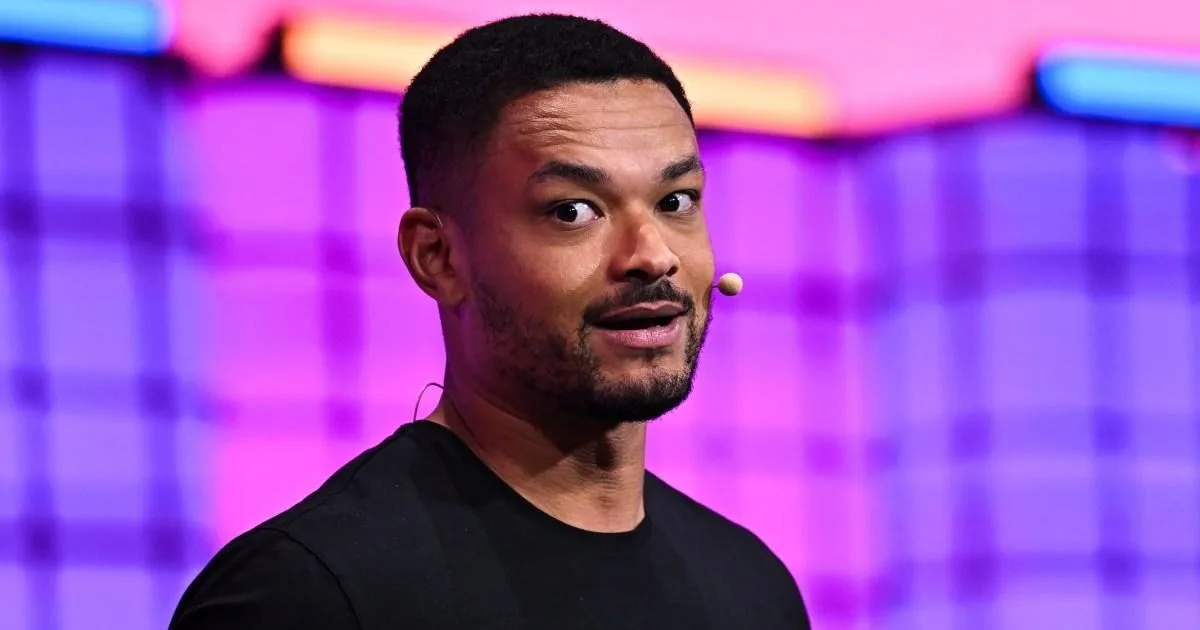
Steven Bartlett has been ridiculed for promoting a joyless 'optimisation culture' after claiming the effects of just two glasses of wine 'ruined three days' of his life. The Dragons Den star, 33, said the data on his wearable smart technology Whoop showed that even a modest intake of alcohol negatively impacted his sleep and diet, as well as his dopamine and cortisol levels, which are linked to happiness and stress.
However, he has faced a backlash from numerous celebrities, led by BBC Radio 1 Breakfast host Greg James, who encouraged people to join his 'anti-Bartlett cult'. On social media, James said: 'Can we talk about this Bartlett thing? This wine thing... I've sort of been railing against this for years. Not the alcohol thing, fair enough if you want to give up alcohol, it can ruin lives, got that - that's not what my issue is. My issue is this endless optimisation and measuring of everything to the point where it starts to make you feel a bit miserable if you don't quite hit your own targets.'
A host of stars joined in agreement with James on social media, including Julia Bradbury, Fearne Cotton, Gabby Logan, Bev Turner, and rapper Example. But does Bartlett have a point? We asked experts what two glasses of wine really does to the body - and looked at whether health data from wearable technology should be fully believed.
Expert Opinion on Alcohol Effects
Adam Taylor, a professor of anatomy at Lancaster University, told the Daily Mail that the effects of a couple of drinks typically do not last beyond 24 hours. He said: 'Alcohol consumption and the effects vary from person to person, and depends on the alcohol strength and size of the glasses. A couple of glasses of wine would be sufficient to have an impact on sleep that night. Alcohol helps people fall asleep but it alters the sleep pattern through the night, reducing the body's ability or time to get into REM sleep. As the alcohol effect wears off, the nervous system attempts to reset which can cause broken sleep.'
Taylor adds that because alcohol is metabolised in the liver, this affects the liver's ability to moderate blood sugar levels due to its focus on clearing alcohol. This causes blood sugar levels to drop, which may explain why Bartlett complained about his diet being impacted. In his full speech on his podcast, Bartlett said: 'I had a couple of glasses of wine, didn't get drunk, it ruined three days of my life because of the domino effect that it caused. It meant that I got worse sleep that night, I ate more poorly the next day because my dopamine system or the cortisol system or whatever was all messed up. Then I podcasted worse and I didn't go to the gym the day after and I could track all of this on my Whoop.'
Despite Bartlett's assertions, Taylor says the body generally recovers quickly from moderate alcohol consumption. He continued: 'For most people, a couple of drinks might have an impact the next night but the body doesn't usually take more than 24 hours to get back to normal for that person. Depending on people's tolerance and lifestyle these effects can be longer or shorter, but the individual will know best about where their body is at in the following hours and days.'
Official Guidance and Wearable Tech Debate
In official guidance, the NHS recommends adults not drink more than 14 units of alcohol per week, equivalent to six medium glasses of wine or six pints of average strength beer. The health service says: 'There's no completely safe level of drinking. If you do drink alcohol, then it's recommended to drink no more than 14 units a week, spread across 3 days or more.' According to Alcohol Change UK, the average UK adult consumes 21 units per week, around a third higher than the guidance.
Bartlett's comments on using Whoop to monitor dopamine and cortisol levels have sparked discussion on interpreting data from smart technology. One in three Britons now wears a smartwatch, most of which track heart rate, sleep quality, VO2 max, and stress. Whoop tracks cortisol levels by monitoring heart rate and HRV. But some studies warn that the tech may encourage bad habits. Scientists found that the more someone used their wrist-worn device to track exercise, the more likely they were to engage in 'compensatory eating' - treating themselves to a snack because they feel good about being active. Women were much more likely to reward themselves with food for exercising than men.
Experts at the University of Delaware asked 200 smartwatch users about their usage and found that those who checked smartwatches more frequently were more likely to tuck into a treat. The report said the positive health impact of smartwatches 'may be limited for some users as compensatory eating can derail fitness goals'. Former Health Secretary Wes Streeting previously discussed providing wearable gadgets to millions of NHS patients to help monitor symptoms and track treatment responses. But some experts say access to this data risks encouraging self-diagnosis and increasing health anxiety. Dr Helen Salisbury, an Oxford GP, said: 'I think for the number of times when it's useful there's probably more times that it's not terribly useful, and I worry that we are building a society of hypochondria and over-monitoring of our bodies.'
Celebrity Reactions
Radio 1 host James encouraged people to 'switch off' their fitness trackers and 'go and have a nice time'. He added: 'Optimisation is killing fun. We absolutely need to rail against that. So phones down today. Go and have a nice time! And don't log it.' Julia Bradbury said life is about 'progress not perfection', while Fearne Cotton joked: 'I genuinely sometimes podcast better on a hangover.' Rapper Example said: 'That's why I don't wear those stupid f***ing watches. I don't care. I don't wanna know. I'll just live in the moment and get on with it.' Beverley Turner commented: 'It's out-sourcing instinct to tech. These people will become deskilled at listening to their bodies... it is disempowerment dressed up as success.' Comedian Donna Ashworth said: 'Just try and be kind to everyone (and yourself), get outside and eat food that fuels you whenever you can. Humans are messy and not supposed to be on robot mode every day.' Other stars showing support included drag queen Danny Beard, This Morning host Cat Deeley, cricket star Stuart Broad, Match Of The Day host Gabby Logan, and Paul Mescal's mother Dearbhla.