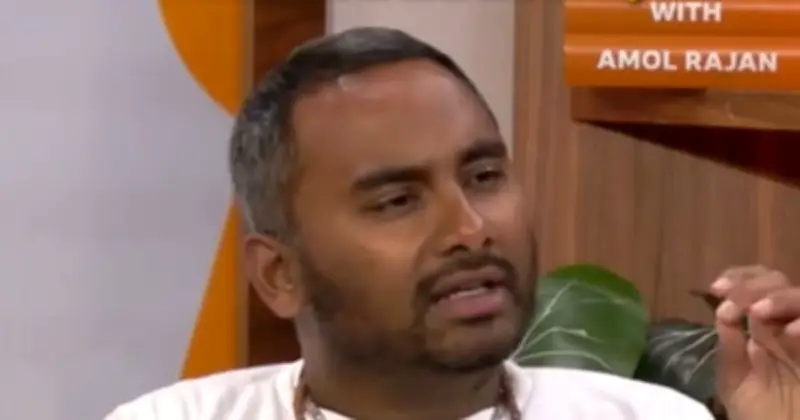
University Challenge host Amol Rajan has warned that the BBC is "screwed" unless its licence fee funding model is replaced. The 43-year-old broadcaster, who is leaving the Today programme next week, said the broadcaster's finances are "much worse than people realise" following the steep decline in licence fee revenue.
Cost-cutting plans
At the start of the year, the BBC's new director general, Matt Brittin, outlined plans to slash 550 jobs and close various programmes as part of its massive cost-cutting drive, which could lead to approximately 2,000 job losses. But the TV star warned that doing this would "cut your way to growth" and urged the Prime Minister to "stop dithering" over the company's future and announce a new funding arrangement.
During an appearance at the Edinburgh TV Festival, the presenter warned that the most recent round of job cuts is "just the beginning" and said that there was "worse to come."

Call for political leadership
He told the crowd: "The [BBC's] finances are much worse than people realise. What we need is political leadership, and this country has new political leadership, and I happen to know they're listening.
"I have a message for them: make a decision. Stop dithering. This could not be more urgent, and this could be a great legacy for you."
Mr Rajan, who is soon to launch his own media venture, slammed the licence fee funding model and supported the idea of transforming the BBC into a mutual, similar to employee-owned businesses such as John Lewis or the Co-op. He explained: "Under the mutual model, it actually would belong to all of us."
Funding review and declining income
Lisa Nandy, the Culture Secretary, is leading a review of the BBC's funding ahead of its upcoming Charter renewal. The star previously said she supports mutualisation to help promote "genuine public representation and participation".
Reflecting on the BBC's future, Mr Rajan warned that the taxpayer-funded broadcaster was standing over a "vast chasm called the internet" and faced a looming emergency as its licence fee income continued to fall. The corporation's latest annual report showed that more than half a million Brits stopped paying the fee after it rose to £180 in April.
The presenter then took aim at the government for failing to act as the decline worsens. He fumed: "When it comes to the BBC, we have not had benign neglect. We have had a kind of malicious neglect."
Departure and new venture
He argued that there was a "patriotic case" for the BBC in the modern age. Mr Rajan added: "The BBC isn't the only bridge, but it's one of the best, and we'll be stranded without it. I think my message to the BBC would be that if the money is sorted, you can still be the best in the world."
The comments come as Mr Rajan prepares to leave the corporation after a decade to start his own online venture, The Amol Rajan Connection. Despite leaving the corporation, he will continue to host University Challenge.
In separate comments on the Political Currency podcast earlier this week, the presenter said the BBC was destined to "get smaller at an accelerating rate", adding: "I want to go to where the action is, and that's YouTube."
Elsewhere at the Edinburgh TV Festival, Mr Brittin admitted that he hadn't been aware of the "severity" of the cuts the organisation had to make. The BBC director general said: "On the financial side, I knew that cuts had been announced and that savings had been announced, but I hadn't really understood the severity."
He added that he was "impressed by the magic of the creativity and the talent" at the company, but added that he is "concerned by the financial situation". He said the corporation needed to move faster to adapt to the changing media landscape and move away from its "inward-looking" position.
Mr Brittin explained: "When you're publicly funded, and the charter rightly requires a level of quality and responsibility that's higher than others. I completely get that. What that can lead to is an aversion to risk.
"We need to move faster through experimenting and learning, and that's one of the things I want to bring to the BBC: is a sense of openness and partnership to find a way to the future together."