
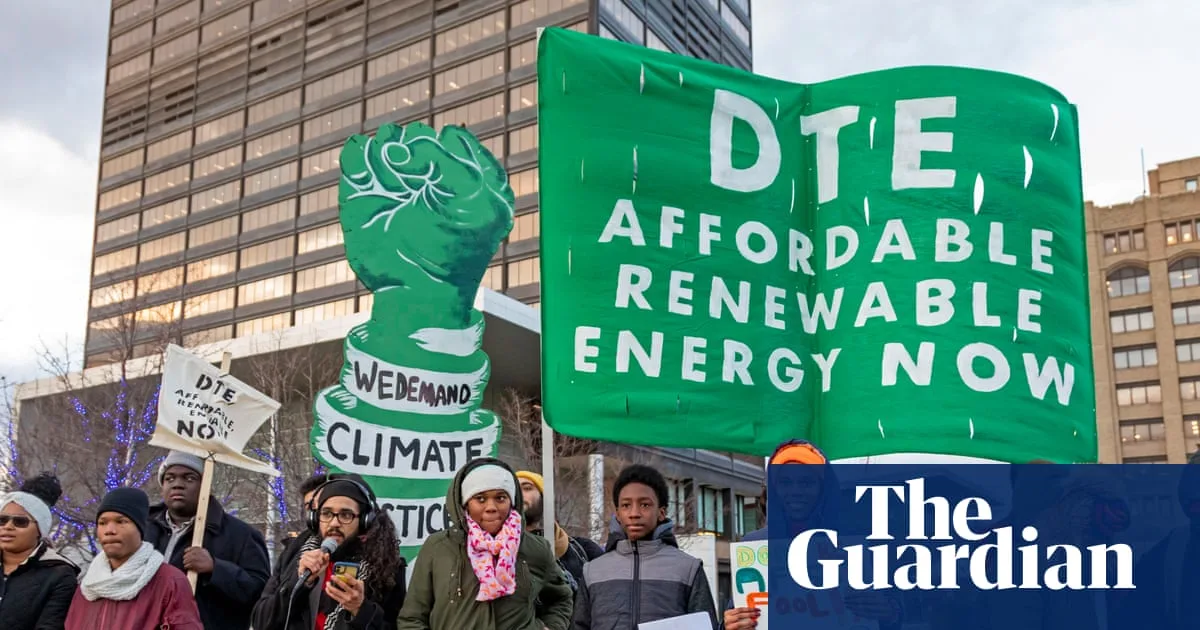
Private utility companies in the United States are quietly funding front groups to oppose the growing movement for publicly owned electricity, according to campaign finance records and state filings. Communities across the country, including Ann Arbor, Michigan, San Diego, California, and St Petersburg, Florida, are exploring municipalisation—taking over their local grids from private utilities—amid rising bills, outages, and slow clean energy transitions.
In Ann Arbor, the Ann Arbor Responsible Energy Coalition (A2rec) appears to be a grassroots group opposing a public power campaign. However, state filings show its mailing address is One Energy Plaza, the headquarters of DTE Energy, the private utility serving the city. Campaign finance records reveal A2rec is funded with nearly $2m from DTE, its contractors, the utility lobby, and an industry consultant involved in similar operations elsewhere, including a successful effort to defeat a 2023 public power vote in Maine.
Sean Higgins, president of Ann Arbor for Public Power (A2P2), said the utilities are funding these groups because “the public power movement is a direct threat to their profits.” He noted that if Ann Arbor municipalises, DTE would lose revenue from the city, cutting into its profit margin. Advocates say such front groups are part of a broader tactic by utilities to hide their identity in regulatory and political battles.
In St Petersburg, Florida, the industry allegedly recruited canvassers from plasma donation centre parking lots to oppose public power. DTE Energy, in a statement, touted its grid upgrades in Ann Arbor but did not address questions about its role in A2rec, instead agreeing with the coalition that a city takeover would strain finances. Federal data shows public power companies’ bills average about 14% lower than private utilities, partly because private profits for Wall Street investors are passed on to customers.
Ann Arbor for Public Power aims to put municipalisation on the November ballot and is collecting signatures. In recent weeks, A2rec has run social media ads and deployed canvassers claiming public power would saddle residents with $1bn in debt and up to 40% rate increases. The city previously opted for a “Sustainable Energy Utility” that leaves DTE in charge of the grid, a move critics say fails to address the underlying issues.




