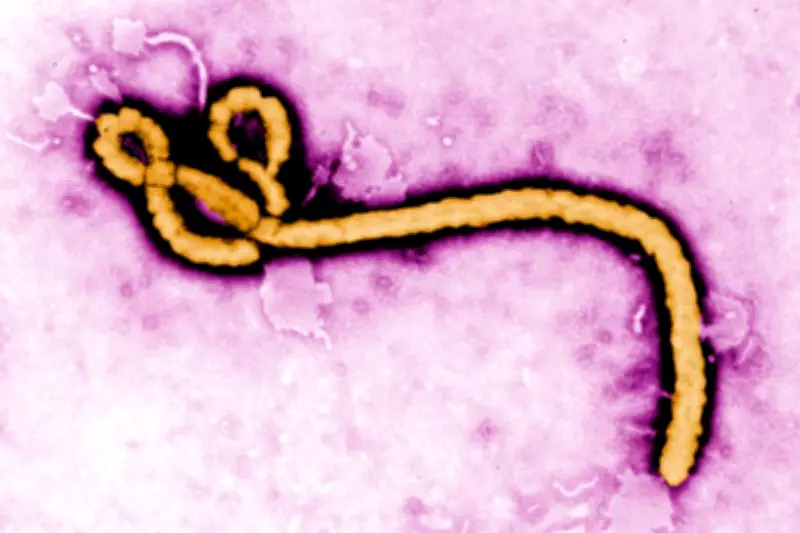
African health officials have reported a new Ebola outbreak in the Central African country of Congo, with at least 246 suspected cases and 65 deaths. The severe and often fatal disease was first identified in 1976 after two simultaneous outbreaks in what is now South Sudan and Congo, according to the World Health Organization (WHO).
Understanding Ebola
Ebola is caused by a group of viruses, with three known to cause large outbreaks: Ebola virus, Sudan virus, and Bundibugyo virus. Fruit bats are believed to be the natural hosts, while apes and monkeys can also become infected. Human infection occurs through contact with infected animals, and the virus spreads between people via body fluids such as blood, feces, or vomit, or through contaminated surfaces.
Symptoms appear two days to three weeks after exposure, typically within a week. Initial signs include fever, aches, fatigue, and sore throat, progressing to gastrointestinal problems, rashes, seizures, and bleeding. The average fatality rate is around 50%, ranging from 25% to 90% in past outbreaks. Approved vaccines and treatments exist only for the Ebola virus.

Major Outbreaks
2013-2016: Worst Outbreak on Record
An outbreak across West Africa remains the deadliest, with over 28,000 cases and more than 11,000 deaths. Guinea, Liberia, and Sierra Leone were heavily affected, with cases also reported in the US, UK, Italy, and Spain linked to travelers or health workers. The epidemic likely started in southeastern Guinea when a child came into contact with infected fruit bats.
2018-2020: Congo and Uganda
The second-largest outbreak occurred in Congo's North Kivu, South Kivu, and Ituri provinces, with some cases in Uganda. It reported over 3,400 cases and more than 2,200 deaths (fatality rate 66%). The latest outbreak announced Friday is also in Ituri, near the Ugandan border. Congo has experienced over a dozen significant outbreaks, including one in late 2025.
2000-2001: Uganda
An outbreak caused by the Sudan virus resulted in 425 cases and 224 deaths. Authorities were praised for their rapid response and community education efforts to dispel misinformation.
1976: First Known Outbreaks
The first known outbreak occurred in towns in what was then Sudan (now South Sudan), likely originating from a cotton factory where workers had contact with bats. At least 151 people died among 284 cases. Months later, an outbreak in northern Congo (then Zaire) caused 280 deaths and led to the identification of the Ebola virus, named after the nearby Ebola River. The first known infection outside Africa happened the same year when a British lab technician accidentally pricked himself with a needle; he recovered. Very few cases have been recorded outside Africa since.