

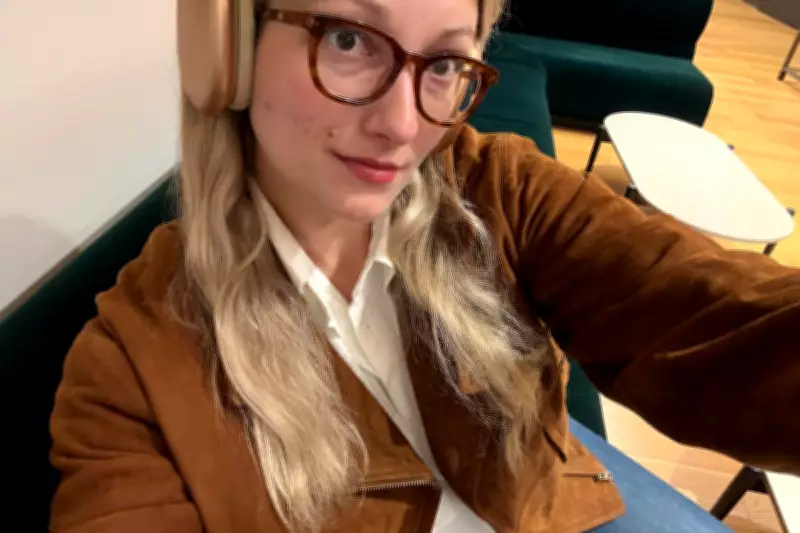
Americans are losing their spoken words at an alarming rate—over 300 a day, or 120,000 a year, according to recent research. Technology is the primary culprit, with texting, self-checkout lanes, and apps replacing face-to-face conversations. To better understand this phenomenon, Julia Musto, The Independent's U.S. Science and Climate Correspondent, decided to take a 24-hour vow of silence.
A Yapper's Challenge
Musto describes herself as a talker, likely exceeding the average 10,000 daily words women speak. The sudden silence was daunting. Would friends and strangers perceive her as rude? Unlike a monastic vow, she could still use text, email, Slack, and social media, yet the experience proved far more difficult than anticipated.
Morning Struggles
The day began typically, but leaving home brought challenges. Unable to greet her doorman, security guard, or cab driver verbally, she relied on facial expressions and hand gestures. Even ordering coffee from Dunkin' Donuts via the app felt guilty as she bypassed her usual chat with staff. By 7:55 a.m., she was already feeling the strain.

Workplace Hurdles
In the office, Musto avoided telling colleagues about her silence. Responding to questions with thumbs-ups or nods left many confused. During the morning meeting, she kept her words minimal, feeling like she was playing disjointed Mad Libs. The urge to say "bless you" when colleagues sneezed was overwhelming, but she resisted—until later.
Experts note that voice conveys intention and intelligence better than text. Nicholas Epley, a behavioral scientist at the University of Chicago, explained that voice connects us more deeply. Musto felt this acutely when she couldn't call her parents during lunch, leaving her lonely and worried.
Loneliness and Connection
Former U.S. Surgeon General Vivek Murthy's 2023 report highlighted that social disconnection is as harmful as smoking 15 cigarettes daily. Musto's silence amplified this truth. She listened to music to focus, but when a colleague sneezed, she exclaimed "Bless you!"—her first slip.
Robert Hawkins, a linguistics professor at Stanford, noted that even brief exchanges like "bless you" knit us into our social fabric. Spoken conversation is uniquely suited for this coordination.
Afternoon and Evening
Musto communicated via Post-it notes to compliment a colleague's hair, but later slipped again by making a joke during a discussion about life insurance. During a group chat about the musical Cats, she felt like an outsider, unable to share her idea for an all-meow rendition. Leaving work, she stomped her feet to get a colleague's attention instead of saying goodbye.
On the packed rush-hour train, she couldn't say "excuse me," looming over a fellow passenger. This highlighted how fewer words can make us seem disrespectful. She usually calls her mom on the way home but instead listened to music.
Lessons Learned
By day's end, Musto realized that writing and texting allowed her to choose words more carefully. She thought about Americans with disabilities who cannot speak, understanding how vital being heard is for well-being. Two-way communication, with its physical responses, creates magic that tech and phone calls lack.
The study's findings are alarming not just for lost words but for what they signify: a structural shift in how society gathers and talks. Hawkins warns that a cumulative drop in conversation thins out ambient social connection, often unnoticed. Paying attention, one "bless you" at a time, may help preserve it.






