US Immigration Agents Deploy Personal Meta AI Glasses for Covert Surveillance
Immigration and Customs Enforcement (ICE) and Border Patrol agents across the United States are increasingly utilizing personal Meta AI smart glasses to surveil communities, according to an investigation by The Independent. This practice has alarmed civil liberties experts and protesters, who fear the footage could be used to target critics of President Donald Trump's aggressive nationwide deportation campaign.
Widespread Use of Personal Surveillance Devices
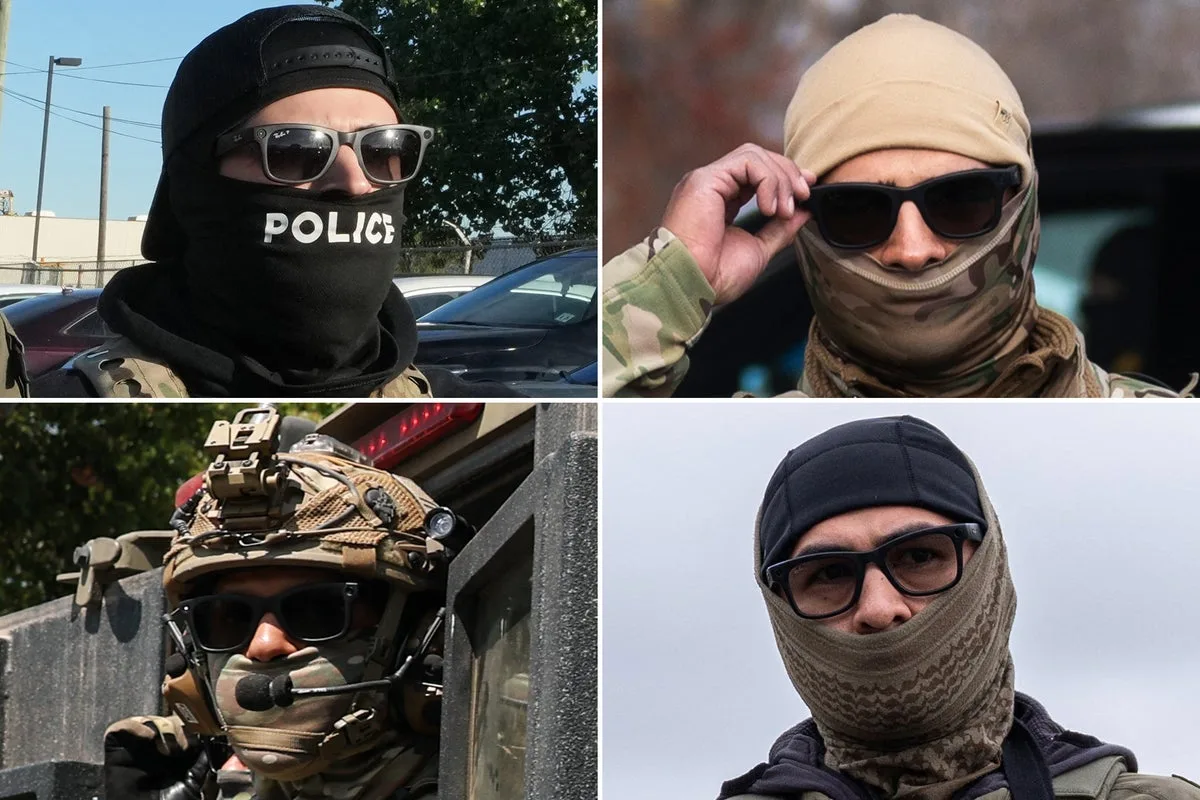
Since Trump took office, Department of Homeland Security (DHS) agents in six states have been observed wearing Meta's Ray-Ban-branded smart glasses. These devices, which cost upwards of $379, feature voice-controlled artificial intelligence that can analyze what the wearer sees in real time. The glasses are internet-connected and capable of recording video, taking photographs, and even livestreaming footage.
In several documented instances, agents have used these personal devices to record members of the public during immigration operations. This raises significant concerns that agents could be transmitting captured images and video into facial recognition software or law enforcement databases without proper oversight.
Privacy and Constitutional Concerns Amplified
The use of personal recording devices by government agents "eviscerates" established safeguards, according to Jay Stanley, senior policy analyst for the ACLU's Speech, Privacy, and Technology Project. Federal agencies typically have clear policies governing when government-issued cameras should be activated and how sensitive data must be stored for later review.
"If an officer is using their own personal device, that just blows out of the water any of the needed policies that have to accompany this form of government surveillance," Stanley told The Independent, characterizing the practice as emblematic of the "lawlessness" of the Trump administration.
First Amendment Rights Under Threat
Patrick G. Eddington, a surveillance analyst and senior fellow at the Cato Institute, expressed alarm at the "widespread" use of Meta glasses by agents. He noted the Trump administration's position that citizens who record or protest agents constitute a national security threat, despite such activities being "100 percent First Amendment-protected activity."
"The purpose of it all, quite clearly, with this regime, is to gather as much data as they can on anybody who they believe is a threat to the regime," Eddington stated. "They are aggregating data on individuals and on groups and they are using it for the purpose of politically going after people."
Documented Incidents of Surveillance
The Independent's investigation, based on analysis of video footage, high-definition news photography, and media reports, identified multiple instances where agents used Meta glasses during operations:
- In Evanston, Illinois, on December 17, two Border Patrol agents used Meta glasses to film protesters during an immigration operation at a Home Depot parking lot.
- During July 2025 operations in Los Angeles, a Border Patrol agent from the elite Bortac special operations unit was photographed wearing the glasses with the recording light activated.
- In Charlotte, North Carolina, a Border Patrol agent was recorded using Meta glasses during an immigration raid in December.
- Agents were also seen wearing the glasses in New Jersey, Louisiana, and Minnesota, though recording wasn't confirmed in these instances.
DHS Policy and Official Response
Homeland Security does not have a contract with Meta for the smart glasses, according to agency statements confirmed by federal procurement records. DHS policy permits agents to wear personal sunglasses but explicitly prohibits recording with personal devices.
"The use of personal recording devices is not authorized. Recordings may only be done on government issued devices such as Go Pros or traditional DSLR handheld cameras," a Homeland Security spokesperson told The Independent.
When presented with evidence of agents using Meta glasses for recording, DHS maintained that their statement stood, without addressing whether any investigations or disciplinary actions had been initiated.
Broader Pattern of Intimidation
The concerns about Meta glasses surveillance are part of a larger pattern of immigration officials intimidating those who observe their operations. In multiple cities, individuals who filmed immigration agents have reported having their faces and license plates photographed, or experiencing agents driving ominously past their homes.
Outgoing Homeland Security Secretary Kristi Noem stated in July that filming agents "when they're out on operations" constitutes a form of "violence." This position aligns with a September national security memo that lists "anti-Americanism" and criticisms of "law enforcement and border control" as key indicators for domestic terrorism enforcement.
Technological Vulnerabilities and Future Concerns
Meta's smart glasses feature a white LED light that indicates when recording is active, but hackers claim this privacy light can be easily disabled. Third-party covers to block the LED light are already being sold on Amazon, potentially allowing covert recording without any visible indication.
Furthermore, The New York Times reported in February that Meta is exploring whether to officially add facial recognition capabilities to the glasses, which would significantly expand their surveillance potential.
Deepening Ties Between Tech and Government
The Trump administration continues to strengthen relationships with surveillance and technology companies. DHS maintains at least $1 billion in contracts with Palantir, co-founded by former Trump donor Peter Thiel, for AI and data mining tools to track migrants. Customs and Border Protection recently secured a one-year deal to access Clearview AI's facial recognition technology.
Meta has donated to Trump's inauguration and his White House ballroom project, and CEO Mark Zuckerberg visited Trump at Mar-a-Lago shortly after the election. Zuckerberg was among the Silicon Valley guests of honor when Trump was sworn in for his second term in January.
Protesters Voice Constitutional Concerns
Illinois resident Liz Myers, who witnessed agents using Meta glasses during the Evanston operation, expressed deep concerns about the constitutional implications. "I am a vet," said Myers, who served in the Army during the first Gulf War. "I took an oath to defend the Constitution, and everything that they're doing is violating the Constitution in several ways."
Myers worries that agents are not only recording members of the public without their knowledge but that the footage is being used to track critics of the Trump administration. "They're keeping records of people who are protesting them," she claimed.
The use of personal Meta AI glasses by immigration agents represents a significant escalation in government surveillance capabilities, raising fundamental questions about privacy, constitutional rights, and the appropriate boundaries of law enforcement authority in a democratic society.






