

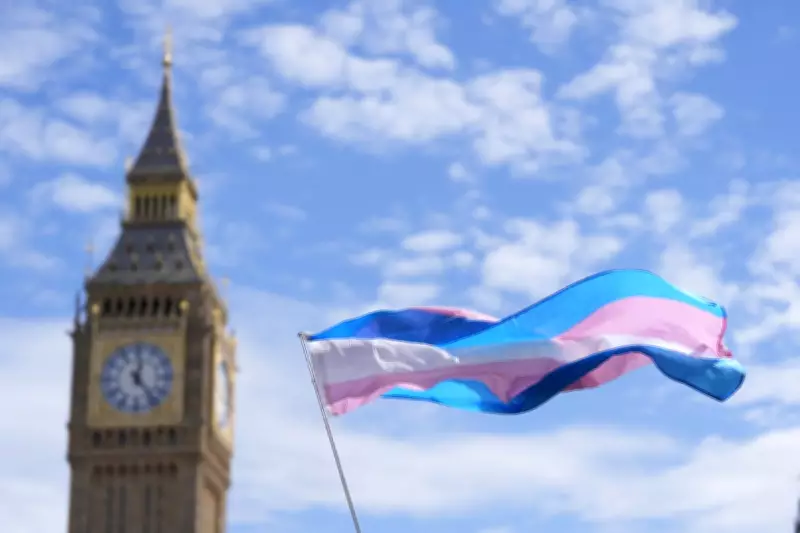
UK Trans Community Faces 'Hostile Environment' Amid Rising Prejudice, Major Report Reveals
A comprehensive new report has exposed a deepening crisis for transgender individuals in the United Kingdom, describing a "hostile environment" fueled by rising discriminatory behaviour and prejudice. The study, conducted by advocacy organisation Trans Actual UK, warns that this climate is severely impeding access to healthcare and causing significant damage to mental wellbeing.
Survey Highlights Overwhelming Impact of Media and Politics
Trans Actual surveyed more than 4,000 trans people across Britain, aged from 18 to 81, in what stands as the largest in-depth survey of the UK trans population to date. The findings are stark: 99 per cent of respondents stated that hostile or negative media coverage had adversely affected their mental health or intensified feelings of gender dysphoria. An identical percentage reported hearing politicians express transphobic views, with nearly half describing the impact as major.
"Hundreds of thousands of trans people have seen the degradation of their human rights protections over the past decade," the organisation stated, characterising the situation as one where trans people are "being catastrophically failed." The report calls for urgent government action to address what it terms a "domestic human rights crisis."

Daily Life and Safety Under Strain
The survey revealed that media-driven narratives are translating directly into personal experiences of prejudice. Large majorities of respondents believed negative coverage had influenced the behaviour of strangers (96 per cent), family members (91 per cent), colleagues (85 per cent), and friends (74 per cent). This has led many to feel less safe in public, under-supported at home, and more exposed to discrimination in workplaces and social settings.
For those who had directly experienced transphobia from family members in the past year, 98 per cent also believed media narratives had influenced their relatives' treatment of them, suggesting a vicious cycle where public hostility reinforces personal discrimination.
Healthcare Avoidance and Economic Hardship
The hostile environment is having severe practical consequences. A striking 64 per cent of respondents said they would avoid contacting their GP even when unwell, highlighting a critical barrier to healthcare access. Economic vulnerability is also prevalent, with almost two-thirds reporting household earnings under £30,000 annually and a quarter having experienced homelessness.
"Decisions about trans people’s lives are increasingly based entirely on the testimony of non-trans people," said report co-authors Freddy Sperring and Dr Trent Grassian. "Trans people are enduring unliveable conditions."
Legal Recognition and the Shadow of the Supreme Court
A key issue identified was the difficulty in obtaining accurate identification. Only 13 per cent of respondents said they could update their ID without any difficulty, with most citing barriers like high costs, complex bureaucracy, and a lack of gender-neutral options. Without congruent documents, individuals face heightened risks to privacy, employment challenges, and increased exposure to harassment.
The survey was conducted prior to a major Supreme Court ruling in April 2025, which determined that the terms "woman" and "sex" in the Equality Act must be interpreted as referring to biological sex—a judgment with far-reaching implications for equality law. Amnesty International UK described the ruling as "disappointing" with "potentially concerning consequences for trans people."
The authors suggested that, given this legal shift, "things will have significantly worsened if we were to undertake the same survey now." Campaigners are considering challenging the ruling at the European Court of Human Rights.

Political Context and Calls for Action
The report emerges amid a contentious political landscape. Last month, Reform UK, under its new equalities chief Suella Braverman, announced plans to scrap the Equality Act if the party wins the next election, claiming Britain is being "ripped apart by diversity, equality and inclusion" policies. The 2010 act protects against discrimination based on characteristics including gender reassignment, race, and sexual orientation.
Trans Actual UK and the report's authors are urging the UK government to recommit to defending trans people's human rights, emphasising the urgent need to address this escalating crisis and restore protections for one of the nation's most vulnerable communities.





