

British Survivor Condemns Government Over Anti-Semitism and Lack of Support
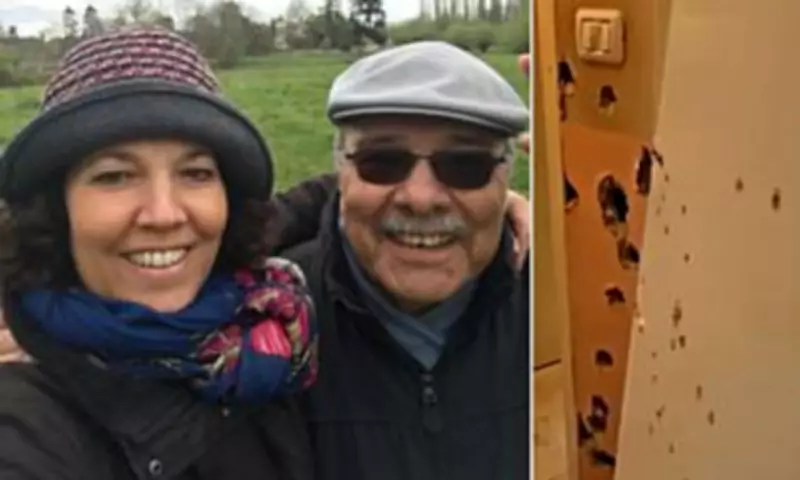
Anat Ron-Kendall, the United Kingdom's only known survivor of the October 7, 2023 Hamas atrocities residing in Britain, has issued a powerful condemnation of the UK government for what she describes as "abandoning" her during a period of "total vulnerability." The 57-year-old mother-of-three, whose elderly father was brutally murdered by Hamas terrorists, also accuses authorities of permitting anti-Semitism to "run riot" across the country, creating an environment where she no longer feels safe.
Traumatic Testimony Included in Parliamentary Report
Anat's harrowing account, along with testimony from released hostage Emily Damari, features in the updated October 7 Parliamentary Commission report scheduled for launch this Wednesday. Originally published in March 2023 and led by historian and Conservative peer Lord Andrew Roberts, this exhaustive 318-page document establishes a detailed timeline of events while collating witness statements from that fateful day.
The report, commissioned by the All-Party UK-Israel Parliamentary Group, reveals that 1,182 people were killed and 251 taken hostage during what it describes as a "large-scale, coordinated assault" planned for years by approximately 7,000 Hamas terrorists. For Anat, this marks the first time she has publicly shared the full extent of her ordeal.

The Day That Changed Everything
Anat had returned to Israel to visit her parents at Kibbutz Nahal Oz in southern Israel, ahead of her 84-year-old father Shlomo's scheduled operation on October 8, 2023. She never anticipated being awakened early the previous day by what she describes as the "massive, massive sound of bombs and rockets" surrounding their home—nor that she would spend the next twelve hours fearing each moment might be her last.
In an emotionally-charged video testimony, Anat recalls how she, her son, and her sister crammed into a locked safe room while her mother, father, and his carer hid in a second safe room just meters away. The family cowered in fear as they heard Hamas terrorists moving closer toward their property.
"We waited for the door to open and to be shot. You just know you're going to die and you're waiting for it—you're just petrified," she remembers. "There was a moment where suddenly things shifted and we started to feel it in our bodies."
Initially, the only threat came from bombs, and being in a safe room provided some sense of security. "As long as we're sitting in the safe room, we were quite relaxed," she explains. "We just became like a big huddled ball on the floor."
The Attack Intensifies
The situation deteriorated rapidly. "The shooting was immense. It was relentless. It was automatic gunshots. We felt the walls were shaking, the floor was shaking, and we just huddled together, held each other," Anat recounts. "At that point, we kind of lost control of our bodily fluids because it just happens. The fear was so intense, and we just sat there waiting to be shot."
Hearing the gunfire around them, Shlomo became increasingly concerned about events unfolding outside and made the fateful decision to move to the living room to listen to news reports on television. Tragically, a terrorist shot him through the kitchen window at approximately 10:20 AM as he sat in his reclining chair.
Believing he was an elderly man alone, the group of terrorists moved on to the next property in the kibbutz. Only his wife and carer were aware he had been murdered—they sat in silence next to his body until rescue arrived. Anat did not learn the devastating news until many hours later.
Twelve Hours of Terror
Filled with grief and believing they could still be killed if they left their safe room, the family remained hidden. "The only thing that separated myself, my son, my mum, and my sister on that day from being dead and murdered in the same way as my father was absolutely some stroke of luck or miracle," Anat reflects. "In the chaotic moment, the terrorists decided to just move along and do damage to other members of the community."

The family stayed in their shelter for another eight hours until IDF soldiers eventually rescued and evacuated them. "We were there in the mamad [shelter], not able to come out, in conditions of absolute, intense fear for twelve hours overall," she describes. "Any kind of movement would create a noise that could threaten our life."
"The mind kept saying, 'This is not real. This is not happening.' It's something from some kind of dystopian life," she continues. "For hours we sat in puddles of urine, we didn't eat, we didn't drink, we could hardly breathe. We were frightened, and we couldn't move. We kept texting 'send someone, send someone, send someone.' That's all we could think of."
Aftermath and Government Response
When they finally left the room, Anat encountered "a scene of chaos" with multiple bodies lying on the ground as armed soldiers escorted her to safety. Unbeknownst to her at that moment, she had just survived the deadliest massacre of Jewish people since the Holocaust.
The parliamentary report found that civilians accounted for 73 percent of victims, with the youngest being a newborn baby girl and the oldest a 92-year-old Holocaust survivor. It documented evidence of mass murder, widespread sexual violence, and desecration of corpses including mutilation, beheadings, and booby-trapping of bodies with grenades.
Anat was forced to grapple with witnessing these traumatic events while grieving her father. Yet upon returning to the UK, she claims there was "no recognition" by then-Conservative government officials of what she had endured.
"My father had just been murdered and I barely survived the massacre myself. I came back in a state of profound shock and grief—grieving not only my father but all those who lost their lives that day," she states. "I hoped my own government would help me. Instead, I was met with a cold and unfeeling response from a country that appeared hostile to my community, and I was left feeling completely ignored by the very government that should have shown compassion and humane engagement in a time of trauma."
She adds emphatically: "I was abandoned by the British government at a time of total vulnerability. It just was unbelievable to me."
Ongoing Concerns About Anti-Semitism
More than two years later, Anat asserts that the current Labour-led government has similarly failed to support her and has "allowed" anti-Semitism to spiral. "The British government is allowing what's going on ever since [October 7], in demonstrations and in anti-Semitism running riot. Jewish students in universities [are] suffering, communities [have been] affected every day since, and that's been allowed to happen to me," she declares.
"I still live under threat. I cannot feel safe in a country that normalizes this kind of behaviour," Anat concludes.
According to the latest UK Home Office statistics, Jewish people in England and Wales are now nine times more likely than any other faith group to be victims of racially motivated hate crime, while the Community Security Trust (CST) has recorded surging levels of anti-Semitism.
A Call for Recognition
Anat emphasizes the importance of people reading the October 7 report to counter any claims of denial, "because it really did happen." "It happened to me. I am a testament that it did happen and I survived it," she affirms.
"Twelve hundred people were murdered in a few hours, massacred, butchered, burnt. Houses were burned, babies were killed, families were erased, people were taken to tunnels, petrified, held for two-and-a-half years," she recounts.
Drawing a parallel to global historical events, Anat observes: "When 9/11 happened all those years ago, the whole world stood wherever they were and watched those towers collapse because they dared to watch, and they were horrified. And everybody remembers. It's etched in a collective memory of everybody in the world. It cannot be that the October 7 massacre would not have the same impact on humans."





