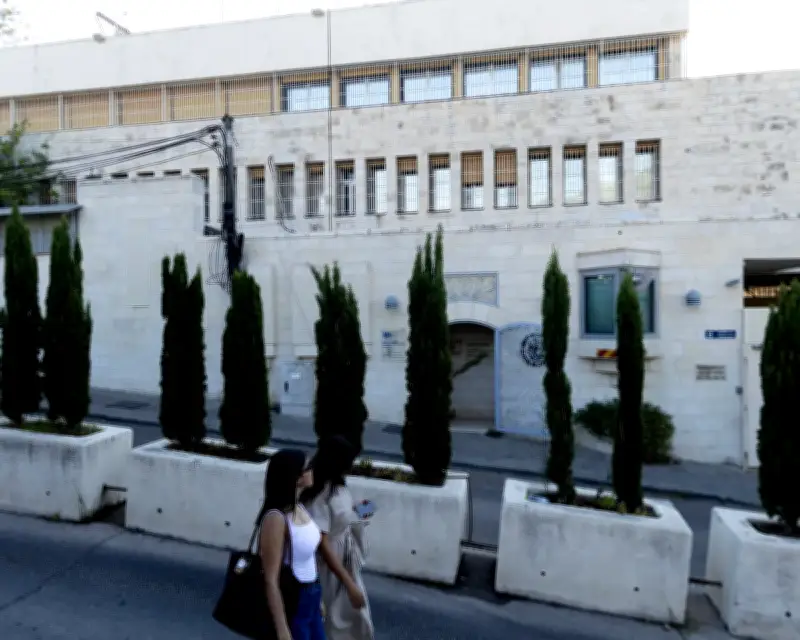
The British consulate in East Jerusalem is set to close its doors on Thursday after Israel ordered its shutdown in response to a UK ban on trade with illegal settlements in the occupied West Bank and sanctions on those who help build or finance them. The forced closure marks the lowest point in UK-Israeli relations for decades, with reports that the UK is considering a retaliatory expulsion of 27 Israeli diplomats from London.
Palestinians to lose consular services
The consulate, which is separate from the UK embassy in Tel Aviv and remains open, provides services to Palestinians in East Jerusalem, the West Bank and Gaza—services they will now lose. Amjad Iraqi, senior analyst on Israel and Palestine at the International Crisis Group, warned that Palestinians would pay the price for the consulate’s closing.
“It’s quite telling that the Israeli government response was primarily about blocking the UK’s ability to support Palestinians, rather than the core of UK-Israeli relations themselves,” Iraqi said. “For [the Israeli] foreign minister, Gideon Sa’ar, the response is low-cost, in their minds it’s just Palestinians bearing the cost.”
Israel has already curtailed the diplomatic activities of countries like the Netherlands, Spain and Norway in the occupied West Bank.
Residents resigned to closure
Palestinian residents of Sheikh Jarrah, the East Jerusalem neighbourhood that is home to the consulate, appeared resigned when asked about the impact the closure might have on their lives. “I mean, it was the British that were the basis of the issue wasn’t it? They were the ones who signed the Balfour declaration?” said Abu Abdo, a 79-year-old former repairman and resident of Sheikh Jarrah, referring to a 1917 document by the British foreign secretary Arthur Balfour, which expressed support for a Jewish state in Palestine.
Abu Abdo expressed disappointment over what he saw as a lack of international support for the Palestinian people in recent years. “We have seen very little but studies and words, no action from the international community,” he said.
A history of upheaval
The closure is a dramatic end for the consulate’s tenure in East Jerusalem, which since its move to the Sheikh Jarrah neighbourhood in 1967 had seen its fair share of political upheaval. The UK government first bought the plot in 1963, when East Jerusalem was still under Jordanian control, intending it as a direct liaison between the UK government and the Jordanian-administered West Bank and East Jerusalem. The compound took four years to build and was finally ready for the UK consul-general to move into by 1967.
But weeks before the new consul-general, John Henry Lewen, was to move into the building, the six-day war broke out, and Israel captured East Jerusalem from the Jordanian forces. Lewen assumed his post in a changed East Jerusalem under Israeli control, occupying a unique position as the UK did not recognise Jerusalem as being under any single country’s control. As the UK foreign secretary told parliament in June 1967: “Our consul-general in Jerusalem is subordinate neither to the ambassador in Tel Aviv nor to the ambassador in Amman, but directly to the Foreign Office.”
Lewen’s tenure was marked by political problems, including a 1969 bomb placed under the window of a consul secretary, which harmed no one but damaged the compound. Years later, in 2017, protesters demonstrated outside the consulate to mark the centenary of the Balfour declaration, placing flags in the consulate windows reading “Balfour is a crime” while schoolgirls carried thousands of letters written by Palestinian students asking Britain to apologise for the declaration.