

Trump's Push for Presidential Self-Branding Faces Legal Scrutiny
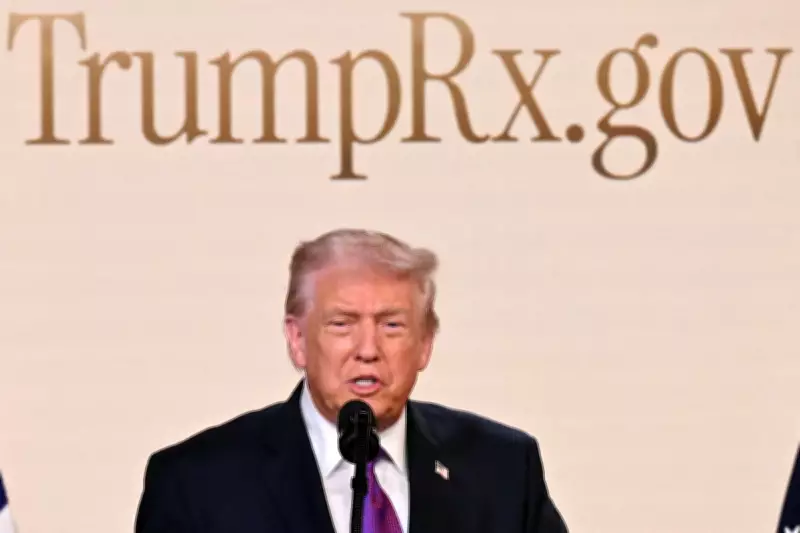
Former President Donald Trump has recently suggested that Congress should rename both New York's Penn Station and Washington's Dulles International Airport in his honour. This proposal follows a pattern of self-branding that has characterised both his business career and political tenure, raising significant questions about the legal boundaries of presidential authority.
A Pattern of Presidential Self-Promotion
During his presidency, the Trump administration placed his name on numerous government properties, most controversially including the Kennedy Center. The administration also issued currency, monuments, and military equipment bearing Trump's name and likeness. In November 2025, the administration released a special National Park Service pass commemorating America's 250th anniversary that featured images of both George Washington and Donald Trump, replacing the service's traditional landscape photography.
This departure from convention triggered both a lawsuit and a social media movement encouraging citizens to place stickers over Trump's image on the passes. Meanwhile, Florida lawmakers are considering renaming the airport near Trump's Mar-a-Lago estate after the former president, with the Trump Organization filing trademark applications for airport-related uses of his name.

The Constitutional Framework of Government Speech
As a communication professor specialising in First Amendment studies, I find these developments particularly intriguing from a constitutional perspective. While citizens clearly retain the right to protest government actions under First Amendment protections, the question of whether the federal government itself possesses freedom of speech has already been addressed by the Supreme Court.
Through a series of rulings, the Court has established the government speech doctrine, which permits the government as speaker to express whatever messages it chooses. In governmental forums, authorities may even compel individuals to convey official messages, as established in the 2006 Supreme Court decision involving a deputy district attorney questioning warrant validity.
The Court's reasoning suggests that if citizens disapprove of government speech, their recourse lies in changing the government through electoral processes. However, some legal scholars argue this doctrine grants excessive power to governmental entities, potentially drowning out alternative viewpoints in the marketplace of ideas.
Limitations on Compelled Speech
While the government enjoys broad speech rights, it generally cannot compel citizens to endorse ideological messages. The Supreme Court has protected individuals from such compelled speech, as demonstrated in the case of a Jehovah's Witness permitted to cover the "or Die" portion of New Hampshire's "Live Free or Die" motto on his license plate.
When the government creates forums for citizen expression, such as displaying monuments in public parks or flying flags on government property, courts must determine whether these spaces constitute purely governmental forums. This analysis examines the forum's history, control mechanisms, and public perception of authority.
Applying Principles to Trump's Branding Campaign
Constitutionally, the Trump administration could express itself as it saw fit under the government speech doctrine. However, statutory limitations and formal contracts may impose restrictions, as evidenced by the legal battle over renaming the Kennedy Center, which was originally designated by congressional act.
The lawsuit challenging the National Park Service passes alleges violation of federal law requiring that winning entries from public lands photo contests be used for the passes. Nevertheless, legal experts suggest it would be challenging to successfully argue that the passes constitute compelled speech forcing bearers to endorse Trump, as most observers would likely perceive the artwork as government-controlled expression.

Protest Rights and Government Response
More legally problematic may be the administration's policy of declaring passes null and void if Trump's image is covered by protest stickers. Citizens covering the president's image as political protest likely constitutes protected speech under the First Amendment. Voiding passes specifically when Trump's likeness is obscured appears more legally suspect than content-neutral regulations against pass alteration.
The updated policy targeting stickers covering Trump's image seems a direct response to political protest, potentially violating First Amendment protections. Given the administration's social media awareness, arguments that officials were unaware of the protest movement or that the policy wasn't designed to chill such speech may prove unconvincing in court.
While the government retains considerable rights to place presidential names and images on public property in many circumstances, resulting political protests will similarly enjoy constitutional protection in most instances. This creates an ongoing tension between executive self-expression and citizen response that will likely continue to be tested throughout Trump's political career.





