

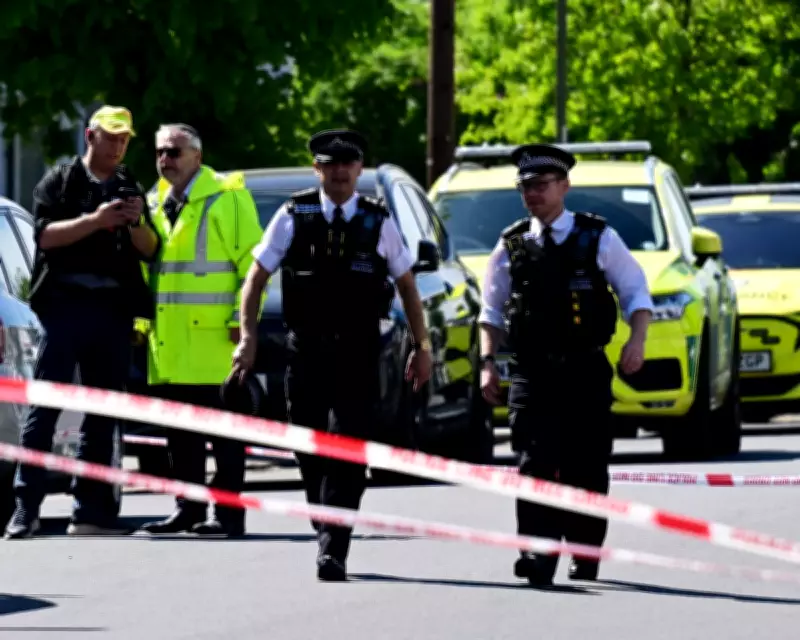
Police officers attending the scene of a stabbing in Golders Green, north London, exemplify the daily trauma that frontline personnel face. In response, ministers are set to mandate the use of 'trauma trackers' across England and Wales to record individuals' cumulative exposure to harrowing incidents, ensuring the psychological toll of policing is no longer ignored.
Mandatory Trauma Monitoring
A Home Office white paper published in January outlines a legislative push to make trauma monitoring systems mandatory across all 43 forces in England and Wales. Leading the development is Insp Stuart King, an officer with 23 years of service, who helped develop a prototype system used by Avon and Somerset police. By linking an officer's collar number to every distressing incident they attend, the tracker creates a permanent digital record of cumulative exposure that cannot be overlooked by a changing rotation of supervisors.
'When I joined 23 years ago, I don't even remember the word trauma being mentioned,' King said, reflecting on a career that began in 2003. 'It wasn't defined. It was just something you got on with.'

The Hidden Toll
That silence has come at a cost. King pointed to a landmark 2018 study, Policing: The Job and the Life, which revealed that more than 90% of UK police officers had been exposed to traumatic incidents. The study also found that 20% were suffering from clinical levels of post-traumatic stress disorder (PTSD). Despite these figures, the system has historically relied on reactive measures, often waiting for an officer to show signs of distress before offering help.
The new tracker seeks to intervene before a psychological breakdown occurs. It functions by scanning the force's crime recording systems and highlighting 'red flag' incidents such as fatal road traffic collisions, child sexual abuse, and sudden deaths. King's team ensured the tool looks backwards as well as forwards, pulling up to 20 years of historical crime data to assess the 'cumulative drip' of a long career.
'The challenge is that we don't want to under-capture those potential touchpoints,' King said.
Invisible Casualties
While frontline officers attending mangled car wrecks or violent brawls are the obvious focus, the data has unearthed distress among back-office staff. Call takers, digital media investigators, and crime scene investigators often carry trauma scores similar to those on patrol. King said the tracker now ensures these 'invisible' casualties of policing are identified, which is particularly vital given the frequency with which officers change roles. In the past, a new sergeant might have been unaware that a veteran officer joining their team had spent the last decade processing homicides. The tracker bridges that gap, allowing a manager to see a collective history of exposure.
King recalled his time as a sergeant in Bristol, where he might attend a tragic sudden death only to be called to a violent street fight five minutes later. 'Those levels of emotions can have a significant impact on people over time if it's not recognised,' he said.
Data and Privacy
In response to concerns about personal data gathering, King said the system was designed with an opt-out clause, and the data is used primarily as a 'conversation starter' for one-to-one meetings with supervisors. 'It treats people as humans. It's about being able to say: We've noticed you've had high trauma exposure – how are you?'
As the 2026 white paper moves toward legislation, the data generated by these trackers is expected to provide the evidence base needed to secure more funding for mental health resources. King is working with the University of Bath to provide independent academic scrutiny of the system, hoping to prove that while policing will always be traumatic, the neglect of those who do it no longer needs to be.
'We're not going to stop the exposure. This is the nature of policing,' King said. 'But it's how you manage it, how you support it, and how you acknowledge it that matters.'






