

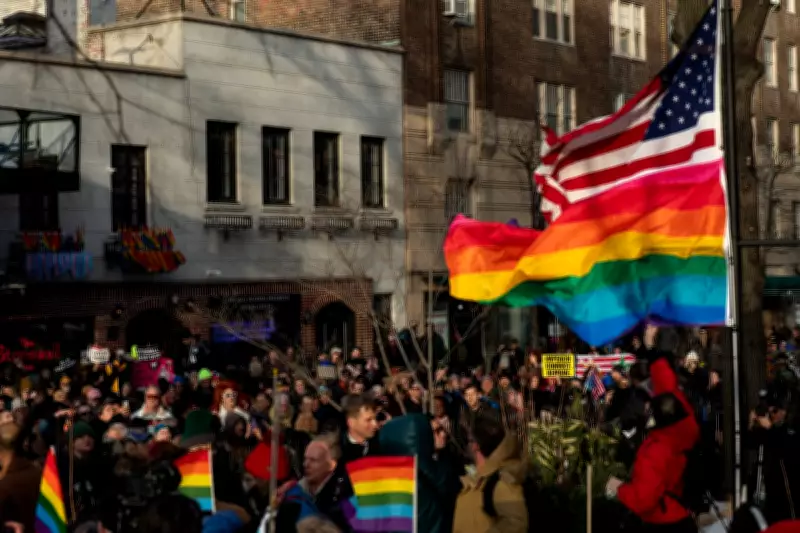
Trans Activists Decry Exclusion as Traditional Pride Flag Re-raised at Stonewall
Officials raised the Pride flag at the Stonewall Federal Monument in New York on 12 February 2026, but the event sparked controversy among trans activists. They argue that restoring the traditional rainbow flag, instead of the more inclusive Progress flag, excludes the trans community and undermines their visibility.
Protests and Disappointment at Stonewall
Thousands of protesters gathered outside the iconic Stonewall Inn on a near-freezing night last week to re-raise the rainbow Pride flag in defiance of the Trump administration, which had ordered its removal days earlier. While meant as a joyous act of protest for the New York City LGBTQ+ community, trans activists in the crowd were deeply disappointed. They say choosing the historic rainbow flag over the newer Progress flag, which includes trans colors and stripes for queer people of color, represents a harmful exclusion.
The debacle began on 9 February when passersby noticed the rainbow Pride flag had been removed from the Stonewall Inn national monument, which commemorates the landmark 1969 queer rights uprising. Charley Beale, president of the Gilbert Baker Foundation, named for the designer of the original 1978 flag, reported that the flag was replaced with an American flag without notice. The foundation has been monitoring the Trump administration's attempts to remove Pride flags nationwide.

Trump Administration Actions and Legal Response
The removal was justified by a Trump administration memo from January restricting which flags can fly at national parks and historic sites. The interior department stated that the policy has been in place for decades and recent guidance ensures consistency across National Park Service-managed sites. However, this wasn't the first attempt by the administration to obfuscate Stonewall's history. After Trump's inauguration earlier this year, the NPS stopped flying the Progress Pride flag and later replaced it with the traditional rainbow flag, which was recently removed.
The administration also removed references to transgender people from the Stonewall monument's website, effectively erasing history, given that Black trans women led the queer rights uprising. These moves coincide with a series of anti-transgender executive orders, including one declaring that the government would only recognize sex assigned at birth.
In response, the New York City LGBTQ+ community held multi-day protests outside the Stonewall Inn, culminating on 12 February when Democratic lawmakers re-raised the same Pride flag design that had been taken down. Still, activists like Chloe Elentári, a trans woman and activist, called it a "half measure," emphasizing the need for the Progress flag to include everyone.
Activists Voice Concerns Over Inclusion and Safety
Trans activist and playwright Mika Kauffman criticized the flag-raising as "extremely performative" due to the lack of trans colors. She highlighted that trans people, especially Black and brown trans women, are integral to the LGBTQ+ rights movement and face high rates of violence. According to Advocates 4 Trans Equality, at least 27 transgender people were killed in violent acts in the United States last year.
On 17 February, leaders of various nonprofits filed a lawsuit against the Trump administration's removal of the Pride flag at Stonewall. They told the Guardian they would support raising an inclusive Progress flag moving forward. Andrew Berman, Executive Director at Village Preservation, stated that trans erasure has been part of the federal government's agenda, undermining their historical contributions.
Debates Over Unity and Visibility
Charley Beale of the Gilbert Baker Foundation expressed support for raising a Progress flag or any inclusive Pride flag but warned against divisive debates. He urged the community to avoid "flag wars," emphasizing unity and the importance of having any Pride flag displayed. However, trans activists like Kauffman and Elentári disagree, arguing that visibility and support are crucial for progress and safety.

Xaddy Addy, a Black trans person, stressed that the issue goes beyond the flag, noting that lives are at stake. The Progress flag symbolizes advocacy for all under the LGBTQ+ umbrella. Beale concluded by advocating for inclusivity, saying, "Fly the flag that speaks to your soul. There's room in the sky for all of them."





