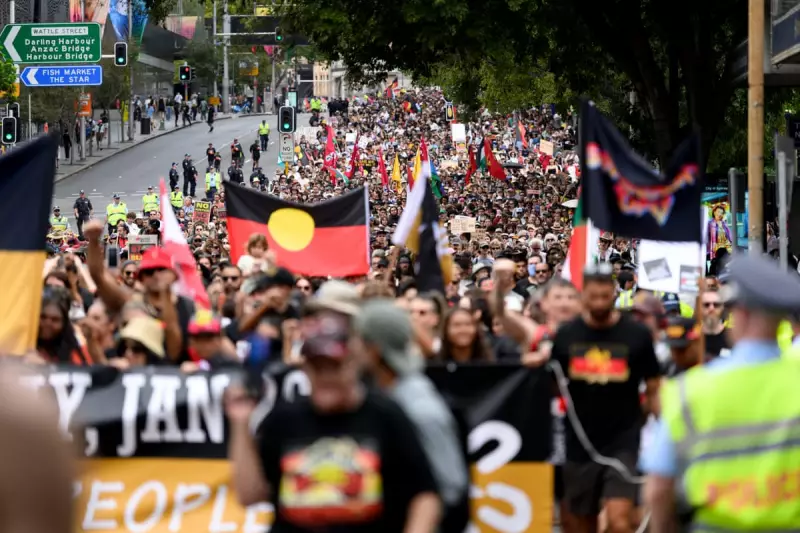
Major demonstrations planned for Australia Day in Sydney are likely to proceed, with New South Wales police confirming they are working with organisers to establish contingencies. This comes despite a controversial police declaration restricting protests, which was extended following the Bondi terror attack.
Police Work with Organisers on Contingency Plans
Assistant Commissioner Peter McKenna stated on Thursday that police are actively engaging with the planners of various public assemblies scheduled for 26 January. He confirmed that different contingency plans are being prepared, irrespective of whether the current protest declaration is extended beyond its expiry date of 20 January.
The declaration, enacted by NSW Police Commissioner Mal Lanyon, prohibits the use of the Form 1 system. This system normally shields protesters from charges related to obstructing traffic or footpaths. While the measure does not outlaw protests entirely, it significantly raises the legal risks for participants in large-scale marches.

Uncertainty Over Declaration Extension
The future of the protest restrictions remains unclear. Commissioner Lanyon is expected to decide before Tuesday whether to prolong the declaration for another 14-day period. This potential extension had sparked concerns over the fate of the annual Invasion Day rallies, which draw large crowds calling for a change to the date of Australia Day.
McKenna sought to clarify the situation, stating, "At the moment, we are working with the organisers... We'll have different contingencies in place to work with them, regardless of whether there is a declaration." He acknowledged the legislation's complexity but affirmed police were operating within its framework.
Multiple Rallies Planned Amid Geopolitical Tensions
The 26 January date will see multiple gatherings across the city. Alongside the Invasion Day protests, the anti-immigration group March for Australia has also scheduled a demonstration. This occurs against a backdrop of heightened geopolitical sensitivity, which police say they are mindful of.
McKenna emphasised that police are not an anti-protest or political organisation, but are focused on managing public safety. He noted that 25 static protests have occurred since the declaration began, including recent rallies in solidarity with anti-regime protesters in Iran, which passed without incident.
Further protests are imminent. On Friday, groups including Stop the War on Palestine and Jews Against the Occupation will hold a static rally outside Sydney Town Hall. This event opposes the Minns government's anti-protest laws and calls for the cancellation of a planned visit by Israeli President Isaac Herzog.
Adam Adelpour, a spokesperson for Stop the War on Palestine, argued the action was partly to remind people that police cannot prevent a static assembly under the current laws. Meanwhile, a separate protest in Hyde Park on Sunday will mark ten years since the death in custody of Dunghutti man David Dungay Jr.
When asked about the potential for arrests if pedestrian access is blocked, Assistant Commissioner McKenna indicated police retain powers to move people on or disperse crowds, with assessments made on a case-by-case basis.