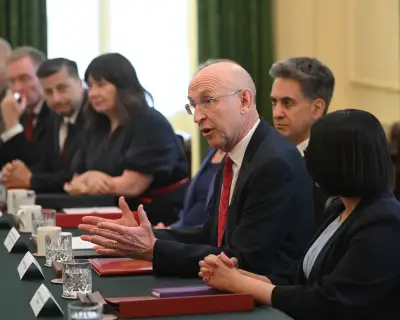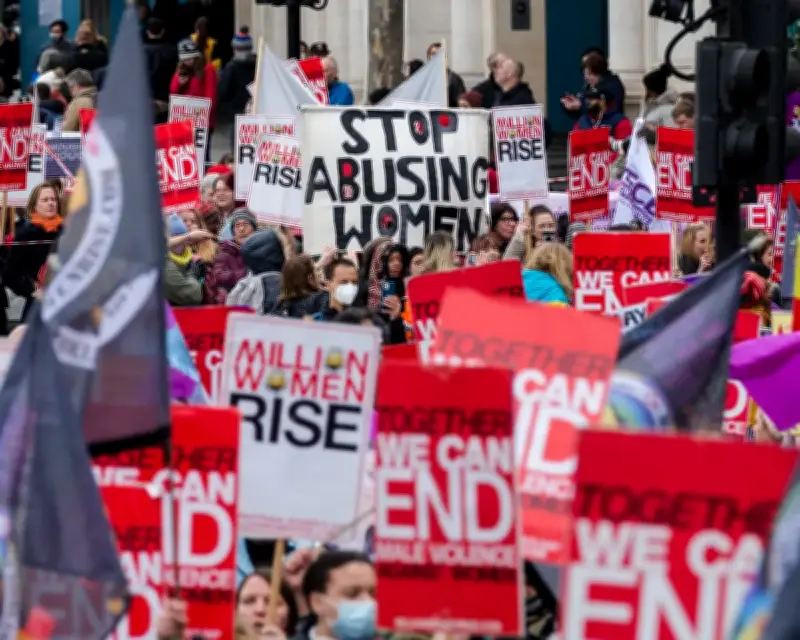
Scotland's First Minister John Swinney has pledged to put ending violence against women at the heart of his government's ambitions for the coming year and beyond. The announcement came as he set out his programme for government at Holyrood, the Scottish equivalent of the King's speech.
The context for Swinney's pledge is bleak, with a steady increase in misogyny and violence against women and girls across the world. In Scotland, both domestic abuse and sexual crimes are on the rise, with crimes recorded by Police Scotland including rape, attempted rape, sexual assault, and communicating indecently up 10% last year, now at their highest level since 1971.
Pioneering Laws and the Implementation Gap
Scotland has produced a raft of radical strategies and legislation, including the 2018 Domestic Abuse Act, which criminalised coercive control for the first time and was hailed by international experts as the gold standard. In 2021, further powers were added with domestic abuse prevention orders. However, campaigners say these laws have not achieved their full potential.

Equalities campaigner Talat Yaqoob, who co-chaired the Scottish government's National Advisory Council on Women and Girls until last month, highlighted the implementation gap. Only 4% of domestic abuse crimes were prosecuted under the new legislation last year, and many of the 2021 powers are gathering dust due to poor drafting.
Technological advances have also enabled new forms of abuse, including deepfakes, revenge porn, and online coercion and control through GPS tracking. A survey of Scottish secondary school boys last year found a third believed that girls who wear revealing clothing were asking for trouble, while a third of female teaching staff reported sexist abuse from children as young as eight.
What Needs to Happen Now
Yaqoob argues that gender equality must be made a priority across the public sector. She said that without placing gender equality at the centre, big commitments will not make a difference enough to women and girls' lives. She also called for resourcing tailored grassroots projects, such as the Many Good Men project, which takes conversations into football clubs.
Police Scotland has done some work with its Don't Be That Guy campaign, but has struggled to tackle misogyny and racism within its own ranks. The discussion around violence against women in Scotland has recently been dominated by arguments around women-only spaces and unfounded claims linking asylum populations to increased sexual violence.
Yaqoob is clear that anyone positioning themselves as protectors of women and girls without an agenda focused on tackling poverty, putting money back into communities, and consent education is selling a lie. She argues that a global problem demands a global solution, but change also requires small acts of solidarity at street level.
As one campaigner noted, this focus at the beginning of the SNP government's five-year term presents an opportunity to kick the door down for bigger changes.