

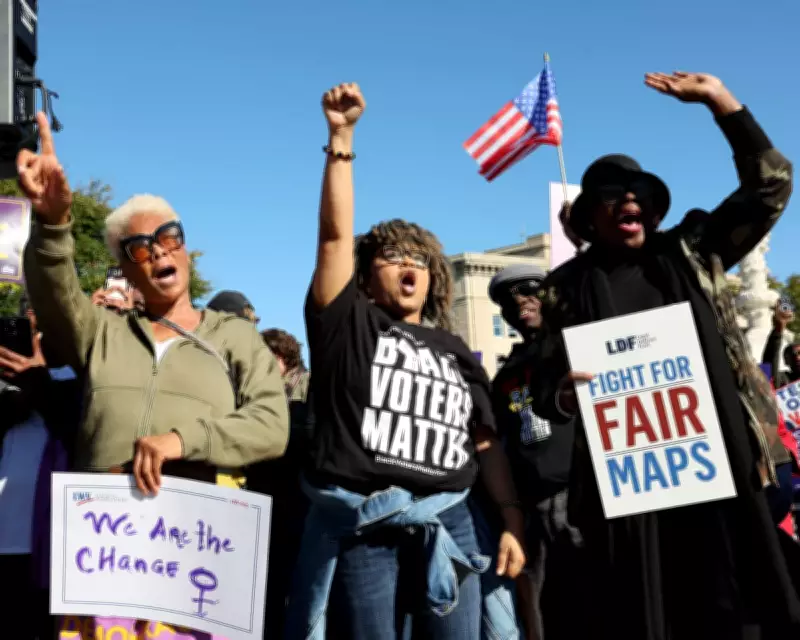
The United States Supreme Court has delivered a significant blow to the landmark Voting Rights Act, ruling against a key provision designed to protect minority voters from racial discrimination in redistricting. The 6-3 decision, split along partisan lines, struck down a majority-black congressional district in Louisiana, effectively rendering Section 2 of the Voting Rights Act largely unenforceable.
Ruling Details
At the heart of the case, Louisiana v. Callais, was the question of how much lawmakers may consider race when redrawing district lines to ensure adequate representation for Black voters. The conservative majority, led by Justice Samuel Alito, argued that race should play no role in government decision-making, stating that compliance with Section 2 could not justify the state's use of race-based redistricting. The ruling paves the way for aggressive gerrymandering that could affect elections for years to come.
Dissenting Opinion
In a sharp dissent, liberal Justice Elena Kagan described the decision as a "demolition of the Voting Rights Act," noting that under the court's new interpretation, states can systematically dilute minority voting power without legal consequence. She warned that the ruling renders Section 2 "all but a dead letter" and threatens minority representation across the South.

Reactions from Lawmakers and Civil Rights Groups
The National Association for the Advancement of Colored People (NAACP) called the ruling "a devastating blow" and "a major setback for our nation." NAACP President Derrick Johnson condemned the decision as a "license for corrupt politicians who want to rig the system by silencing entire communities." Former President Barack Obama stated that the ruling effectively guts a key pillar of the Voting Rights Act, freeing state legislatures to gerrymander under the guise of partisanship.
Janai Nelson, head of the NAACP Legal Defense Fund, called the day "a tremendous loss for our democracy," emphasizing that Black voters in Louisiana have relied on fair maps for representation long denied to them. Sophia Lin Lakin of the ACLU Voting Rights Project described the ruling as "a profound betrayal of the civil rights movement," making Section 2 "difficult, if not impossible, to enforce."
Former House Speaker Nancy Pelosi called the ruling a "new blow" against the sacred right to vote, predicting fewer voices heard and a diminished democracy. Senate Majority Leader Chuck Schumer labeled the decision "awful" and "another step towards resurrecting the Jim Crow South," accusing the court of trying to give Republicans an illegitimate advantage in future elections. House Minority Leader Hakeem Jeffries called the decision "corrupt," while Georgia Senator Reverend Raphael Warnock said it "further ravaged" the Voting Rights Act, leaving the country at a crossroads.
Representative Troy Carter, whose predominantly Black district includes New Orleans, warned of "immediate and severe" consequences, with Louisiana's two majority-Black congressional districts now at risk. New Orleans Mayor Helena Moreno called the ruling "a step backward" that suppresses voices and weakens democracy. Lauren Groh-Wargo of Fair Fight Action argued that the decision guts voting rights protections while pretending to uphold them, allowing discriminatory maps to be shielded by claims of partisan interest.






