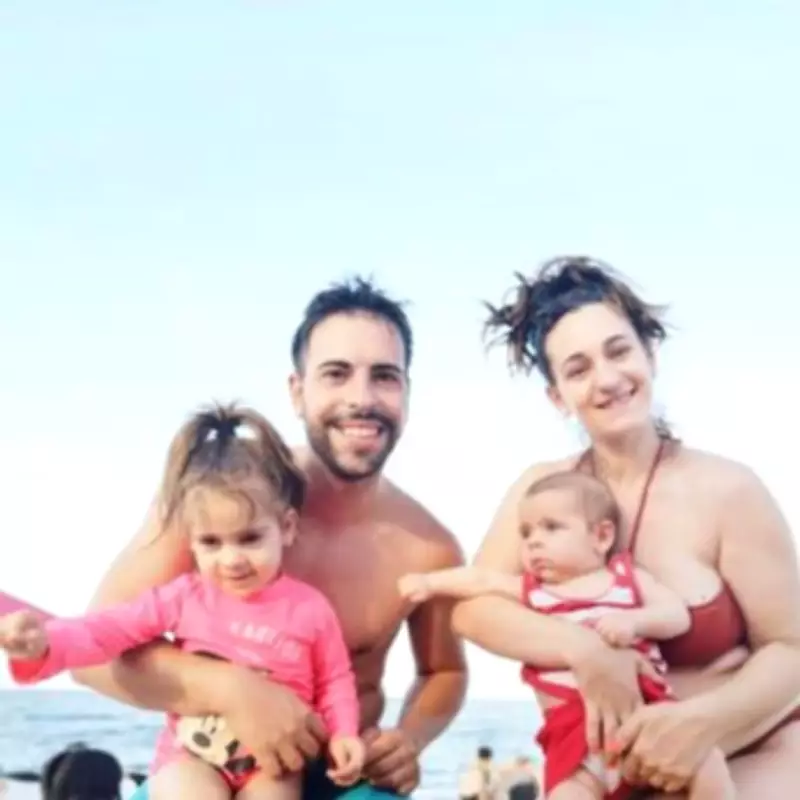
Spanish Siblings Launch Legal Battle for Marriage Rights After Having Two Children
Ana Parra, a Spanish woman who is campaigning for the right to legally marry her estranged half-brother, Daniel Parra, has drawn a powerful parallel with historical struggles for marriage equality. "Homosexuals were also not allowed to marry," she stated, referencing the evolution of societal norms. The couple, who have two children together, are now at the forefront of a controversial push to reform Spanish legislation that currently prohibits matrimony between relatives.
A Forbidden Connection Ignites
Ana was just 20 years old when she first encountered Daniel, her previously unknown half-brother. Despite the familial connection, the attraction was immediate and profound. Ana had long been aware that her father had left her family to be with another woman, with whom he had additional children. Daniel, one of those children, recalled fragmented knowledge of a potential sister. "Someone had told me that maybe I had a sister out there, but my father never told me, it was something he wanted to hide," he explained.
Driven by curiosity, Ana located Daniel on Facebook and proposed a meeting. What followed was an intense, magnetic connection that both described as love at first sight. "We didn’t want to realise it," Ana confessed. "We were angry with ourselves because it was hard to admit and break that taboo - we are siblings even though we didn't feel that way."

Breaking Taboos and Facing Backlash
The couple's first kiss occurred at a mutual party, a moment Daniel described as transformative. "That kiss broke all barriers, marked a before and after, it was like a reality check," he said, while Ana remembered initial feelings of shame. Their relationship remained clandestine until a holiday in London provided a liberating escape. "That was the first time we can say that we behaved, in public, like a real couple," Ana reflected. "We went out to dinner, we took walks. It was like an explosion of freedom."
Emboldened, they decided to share their story publicly via television, hoping to preempt individual explanations. However, this disclosure unleashed a torrent of online abuse and condemnation. "There are people who have written to us on social media telling us that we're going to burn in hell," Ana revealed, detailing the harsh backlash against their incestuous entanglement.
Family, Health, and Legal Hurdles
Undeterred by public opinion, Ana and Daniel have since built a family, welcoming two children whom they describe as "perfectly healthy". This is notable given the genetically heightened risks associated with consanguineous relationships, such as recessive diseases. In Spain, consensual incest between adults is not a criminal offence, but the Spanish Civil Code explicitly forbids marriage between blood relatives, including siblings.
The couple's campaign seeks to overturn this marital prohibition, framing it as a matter of personal liberty and societal progress. "Societies must advance and not cling to traditionalism," Ana asserted. "We love each other and that is what should prevail. We are not harming anyone. That is why we want people to know our story." Daniel echoed the emotional struggle, comparing it to a forbidden romance: "Imagine liking a girl and, for a moral reason, being forbidden to be with her. It's really hard to deal with."
Their fight highlights ongoing debates about the boundaries of marriage, family law, and personal freedoms in modern Spain, challenging deep-seated taboos while advocating for legal recognition of their unconventional union.