

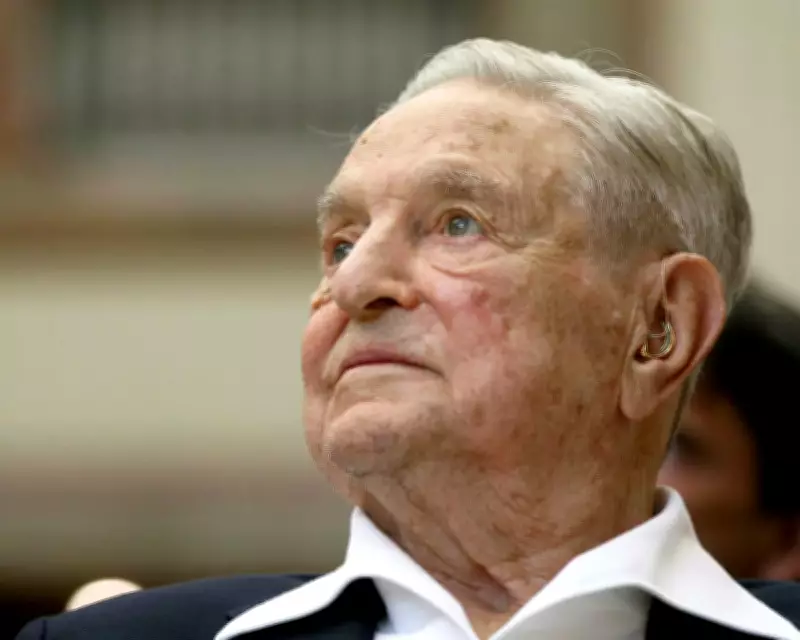
The Open Society Foundations (OSF), the philanthropic network established by billionaire investor George Soros, has committed $300 million to strengthen economic security and protect civil liberties in the United States. The announcement comes as the country grapples with an affordability crisis and what activists describe as an unprecedented assault on the rule of law under President Donald Trump's second term.
A Strategic Shift Towards Domestic Challenges
For decades, OSF has focused on advancing justice and human rights in regions such as Africa, the Middle East, and other global hotspots. However, this latest investment signals a significant pivot toward addressing crises closer to home. Laleh Ispahani, managing director for the US at OSF, emphasized the urgency of the moment: "We certainly believe that civil society is essential and must stay on the playing field. We have experience in other countries where civil society has been targeted by autocratic administrations. It matters that we continue funding globally while staying connected as events unfold in the US."
Bracing for Backlash
Soros, a longtime Democratic donor and frequent target of right-wing criticism, has donated over $32 billion of his personal fortune to global causes. Attacks against him often rely on antisemitic tropes, portraying the Hungarian-born Jewish survivor of the Nazi occupation as a "globalist" puppet master. When asked if OSF is prepared for inevitable backlash, Ispahani responded: "We fully expect that. We would not expect anything less. But we will not be intimidated into silence. Our work has never mattered more, especially when democracy is under attack, rights are being rolled back, and peaceful dissent is criminalized. We are prepared and will persist."

Integrating Rights and Economic Justice
The new initiative aims to break down traditional silos between democratic rights advocacy and economic justice. Ispahani explained: "What is new and distinctive about this is the unified, focused effort. We are funding an integrated strategy to improve democracy by modernizing rights and freedoms while reforming the economy. These are two sides of the same coin; when one suffers, the other inevitably does too." This approach builds on historical precedents, from Franklin Roosevelt's New Deal to Martin Luther King Jr.'s civil rights movement, linking liberty to livelihood. "We need a new social compact today," she added.
Addressing the Reversal of Rights
OSF perceives an alarming reversal of fundamental protections driven by a right-wing majority on the Supreme Court. Ispahani highlighted recent decisions: "Rights to protest, civil rights, and voting rights are being rolled back. The Supreme Court's decision in Louisiana v. Callais effectively put a nail in the coffin of the Voting Rights Act, taking us back to a pre-1960s moment." To counter this, OSF advocates expanding the civil rights paradigm to address modern threats, including algorithmic bias and technology-driven discrimination.
Immediate Investments and Economic Pillar
OSF has already allocated $20 million this year to support frontline organizations through strategic litigation, non-profit sector defense, and anti-corruption efforts. Grantees include the Roosevelt Institute, the Groundwork Collaborative, the National Women's Law Center, and state-level groups like Living United for Change in Arizona. The economic security pillar of the $300 million investment targets stark disparities: the US child poverty rate stands at 14.3%, affecting about 10.4 million children, while the top 20% of households capture over half of national income. Ispahani argued for universal moral and material rights: "The right to a good job with fair wages, stable housing, affordable childcare, healthcare, bodily autonomy, safe communities, and economic mobility should resonate across all constituencies."






