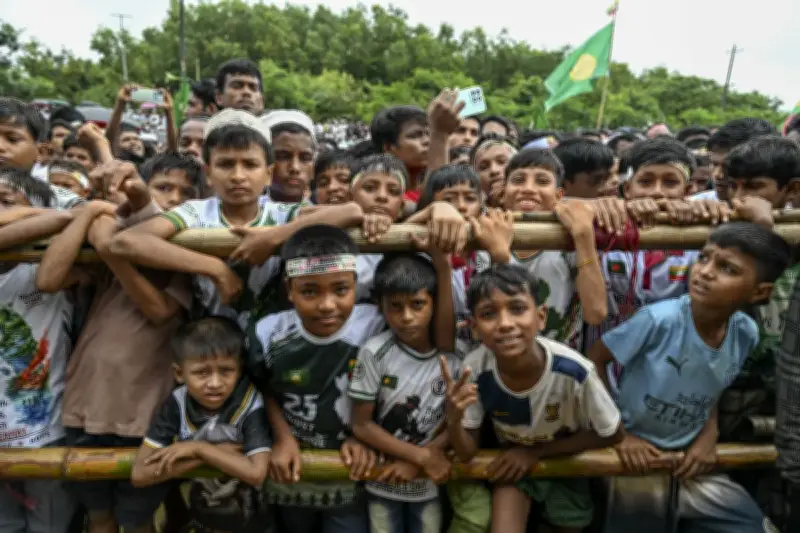
Nine years after being forced to flee his home in Maungdaw township, Rakhine state, Myanmar, Ajas Khan, now a climate activist and youth leader, says exile has not broken young Rohingya people, but survival has come at a high price.
Khan was 13 when he and his family crossed the Naf River into Bangladesh, a journey that took three days. "Survival came at a high price: the price of my home, my liberty, my life," he writes in a first-person account marking the ninth anniversary of the attacks on 25 August.
A generation growing up in tents
Reflecting on nine years in a plastic shelter in Cox's Bazar, Khan describes the loss of his freedom and childhood. He acknowledges the safety provided by the people of Bangladesh and the lives saved by humanitarian organisations, but stresses that "a plastic shelter is not a permanent solution"—offering a place to sleep but little else in terms of home, citizenship, freedom, or dignity.
Despite the hardships, Khan notes that young Rohingya people are studying, caring for each other, and sharing their stories. "We are not just victims; we have a history, a culture, a home and dreams for the future," he says.
Justice and the right to return
Khan clarifies that seeking justice does not mean revenge. Survivors want the truth about those who committed genocide against the Rohingya and for the international community to provide support. "Those responsible for these crimes must be brought to justice," he insists, adding that impunity would allow perpetrators to repeat their actions.
He argues that returning home means more than crossing the Naf River; it requires full human rights in Myanmar, including citizenship, security, equality, land, livelihood, healthcare, and education. "Return without citizenship is no solution at all," Khan states.
Rohingya must lead their own future
On this ninth anniversary, Khan calls for decisions over the Rohingya's fate to be made by the Rohingya themselves, not solely by governments or armed groups. He acknowledges the sacrifices of the Bangladeshi government and NGOs in hosting more than a million refugees but warns that concessions in negotiations should not come at their expense.
Khan, founder of the Rohingya Green Nature Society, concludes with a vision for the next generation: "I want our next generation to hold their lives in their own hands and not in those of strangers. I want them to see our land, not just hear stories." He ends by noting he has spent nine years in a foreign refugee camp "without a future, in an open jail," still waiting for hope to return.