
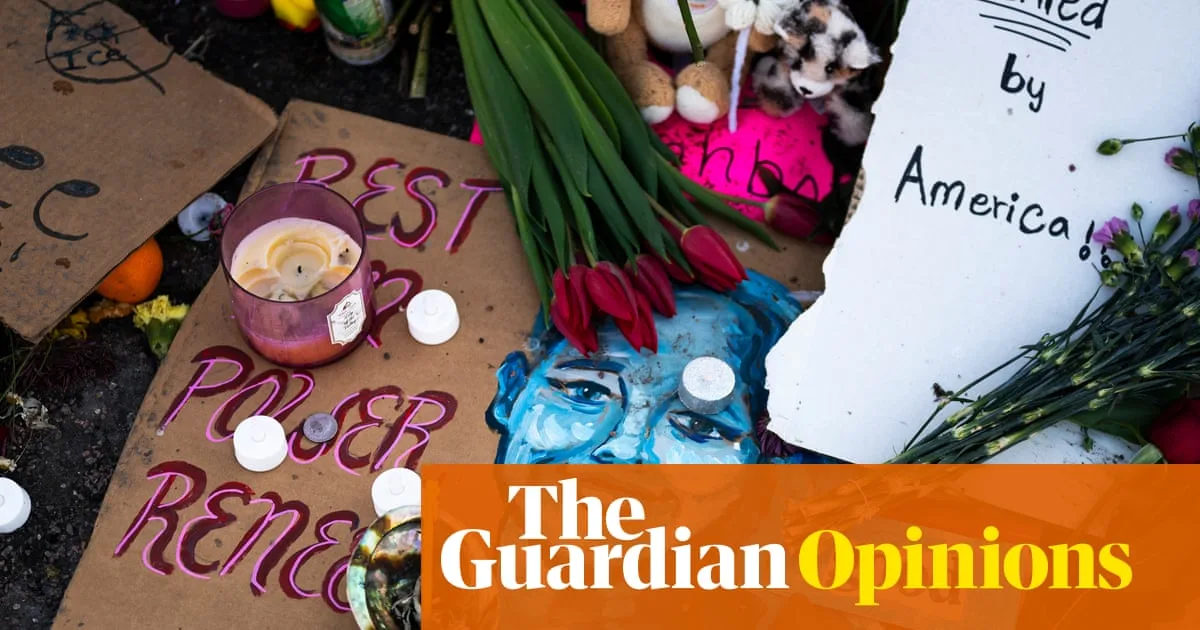
The fatal shooting of Renee Good by an Immigration and Customs Enforcement (ICE) agent in Minnesota has raised troubling questions about the limits of dissent in the United States. The Trump administration has justified the use of deadly force as self-defence, but video evidence appears to contradict that claim. The incident underscores a broader concern: a system that deploys paramilitaries on the streets may observe no limits.
Prior to the shooting, Good and her wife, Becca, addressed the agent in a jocular tone. Becca said, 'You wanna come at us? I say go get yourself some lunch, big boy.' Good smiled and said, 'I'm not mad at you.' This casual defiance, while understandable, may have reflected a fatal miscalculation: underestimating the danger they were in. In a healthy democracy, such behaviour should not put one in mortal danger, but US norms have shifted.
The US sees a high number of police killings annually—a conservative estimate by the University of Illinois puts the average at 600. This context makes the women's levity seem dangerously naive. Some right-wing commentators have dismissed their tone as political glibness, but it suggests a sheltered understanding of the country's realities, one not unique to their side. The January 6 Capitol riot, where Ashli Babbitt was shot and killed by police, similarly involved participants who expressed political convictions with a larky tone premised on assumptions of safety.
The lesson is stark: dissent can be fatal in Trump's America. A friend's experience at immigration, where her Australian sarcasm was met with her Japanese-American wife's desperate pleas to shut up, illustrates the danger. Another friend's indignation at being detained at JFK was met with a cold rebuke: 'You're a fucking idiot. What if they'd asked you where the girls' father is?' Her antecedents were murdered by Nazis; she understands real threat. Good's courage should not be diminished, but the case serves as a devastating warning.




