
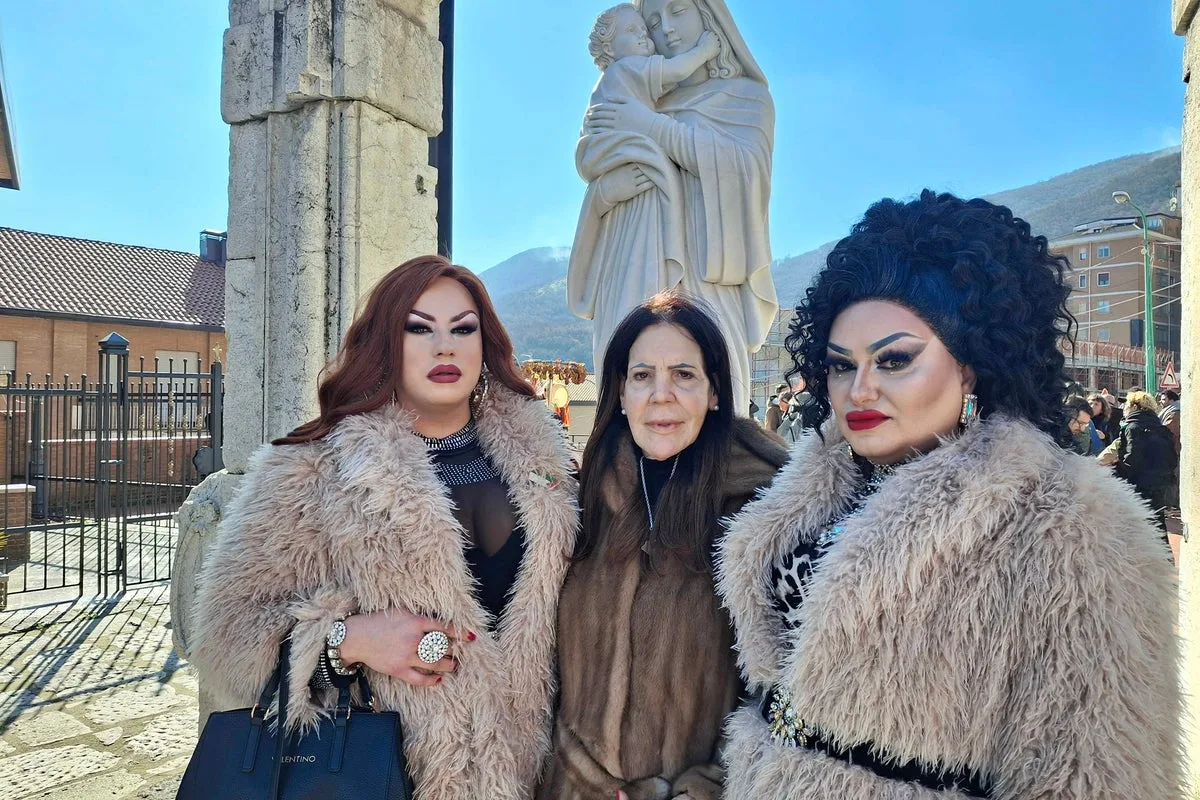
The pews of the Church of the Annunziata in Mercogliano, near Naples, were filled with guests wearing lacquered nails, towering wigs and heavy eyelashes. The group known as femminielli — a nonbinary gender identity with ancient roots — gathered for their annual pilgrimage, La Juta, honouring the biblical Mary and affirming their identity.
The parish priest, the Rev. Vitaliano Della Sala, said in his homily on 2 February that the Juta 'is a celebration of the encounter between the human and the divine,' stressing that such occasions are more important now as violence, prejudice and war threaten rights worldwide.
The Juta dei Femminielli is an old Catholic event that combines the human with the divine and highlights an identity rooted in Neapolitan mythology. It takes place every year on 2 February, when Catholics celebrate Candlemas. During Mass, the faithful bring candles to be blessed by the priest. Hundreds of femminielli from across Italy traditionally hike to the Sanctuary of Montevergine, which holds the painting of the Madonna of Montevergine.
The Mass was a celebration of joy and prayer but also reflected grief as the priest remembered Paolo Minturno, a 14-year-old who died by suicide after alleged relentless bullying. 'We live it deeply — we cried in church, we held each other because we talk about transphobia, we talk about sisters who have died,' said a femminiello named Jupy.
Despite the Juta being an ancient tradition, this year was the first time transgender women were invited to do the church readings. 'They want people to believe the church is a place of darkness for us,' said Gold Queen, a transgender entertainer. 'But there are people inside the church who open their arms, open the doors and help tear down the walls of inequality.'
According to medieval lore, in 1256 two young men accused of a same-sex relationship were left to die on Mount Partenio but were miraculously saved by the Madonna of Montevergine. Since then, the figure has become a symbol for the oppressed. The Juta was not held continuously; in 2002 femminielli were barred from the sanctuary. This year, a landslide forced the celebration to the Church of the Annunziata. 'Despite everything, the femminielli didn’t stop because beyond folklore, this is an act of faith, an act of resistance,' said Lust Queen, a trans woman who read the Psalm at Mass.




