
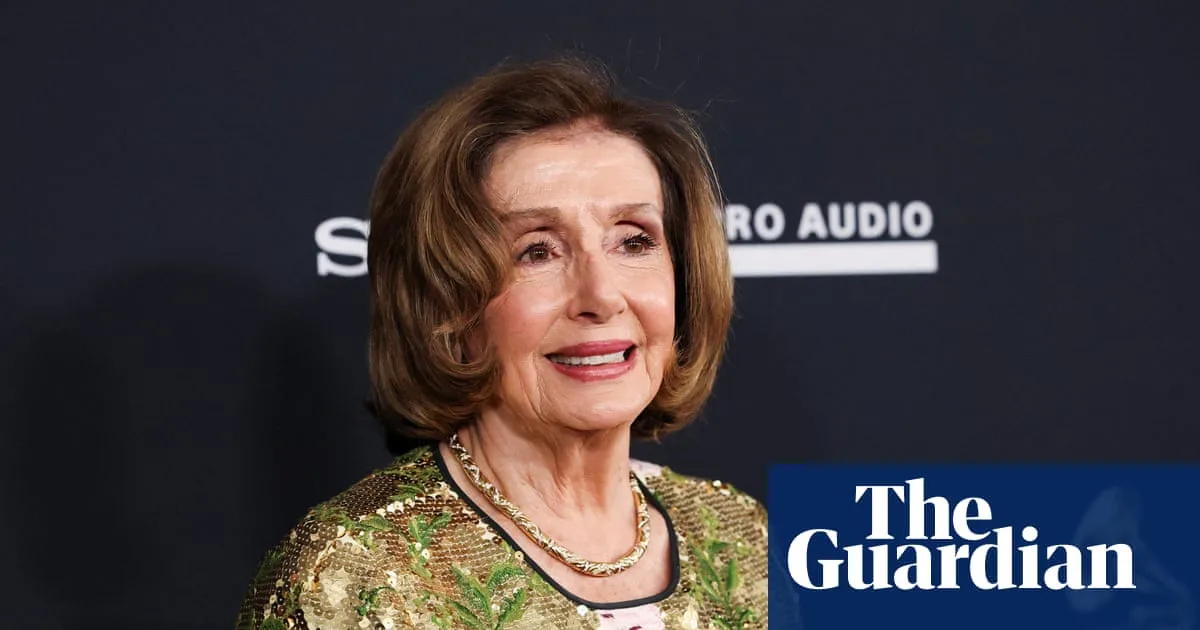
Former US House speaker Nancy Pelosi has said press freedom is “under siege” in America, following the Trump administration's arrest of a prominent journalist and the searching of another reporter's home. Speaking at the annual dinner of the Washington Press Club on Wednesday, the veteran Democrat said the First Amendment was under threat “here at home”.
“Facts are challenged, truth is distorted, and the press is treated by those in power as an enemy, fake news, rather than vital partner,” she told the gathering of congressional reporters. Her warning came on the same day that the Washington Post – owned by Amazon billionaire Jeff Bezos – carried out mass layoffs of its journalists and editors around the world.
Pelosi described last month's arrest of former CNN anchor Don Lemon and the search of Post reporter Hannah Natanson's home, during which FBI agents seized electronic devices, as “an affront to press freedom meant to scare, chill and silence”. She also condemned the layoffs at the Post as part of “a broader reprehensible pattern” in which corporate decisions were hollowing out newsrooms.
Referring to the Post's famous slogan, “Democracy dies in darkness”, Pelosi said: “A free press cannot fulfill its mission if it is starved of the resources it needs to survive. And when newsrooms are weakened, our republic is weakened with them.” She added that America was in “a crisis of conscience”, accusing President Donald Trump of having “crowned himself King” and describing the Supreme Court's conservative majority as “gone rogue”.
Pelosi, who made history as the first female speaker in 2007 and later served another term from 2019 to 2023, is stepping down from Congress at the end of this year after four decades in office. She has long been a prominent antagonist of Trump, once tearing up a copy of his State of the Union address.




