

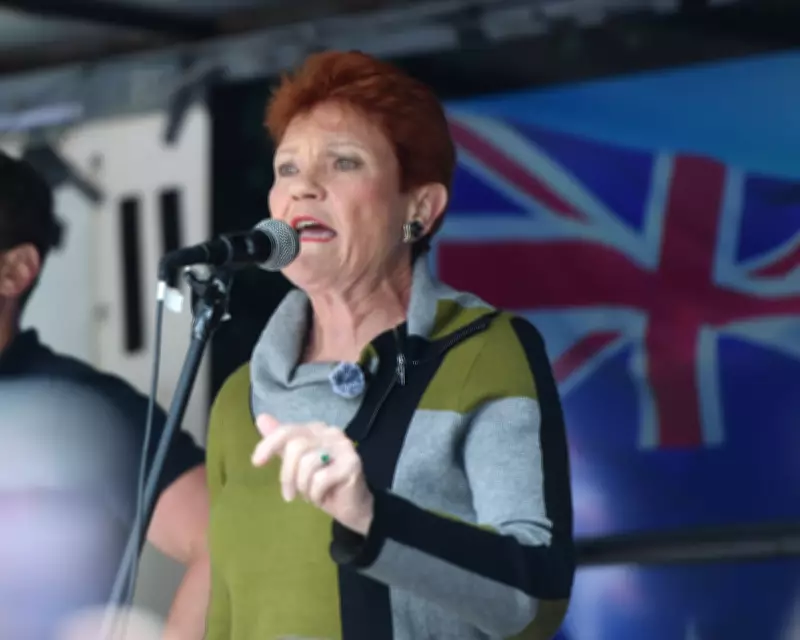
Pauline Hanson's Anti-Muslim Remarks Trigger Federal Police Crime Reports
The Australian federal police have confirmed they have received reports of a crime in connection with comments made by Senator Pauline Hanson about Muslims during a media interview last week. Hanson, the leader of the One Nation party, made the remarks while discussing the return of Australian women and children from Syria on Sky News, questioning the existence of "good Muslims" and singling out the Sydney suburb of Lakemba as a place where people "feel unwanted."
Political and Community Backlash Against Hanson's Statements
Prime Minister Anthony Albanese has linked Hanson's inflammatory comments to a series of threats targeting the Lakemba mosque, while her own colleague Barnaby Joyce has declined to endorse them. Bilal El-Hayek, the mayor of Canterbury Bankstown, which includes Lakemba, has called for charges against Hanson, describing her words as highly inflammatory. Despite offering a conditional apology, Hanson has not withdrawn her original statements, which have dominated political discourse and sparked widespread condemnation.
Legal Complexities in Prosecuting Hate Speech Under Federal Laws
Professor Luke McNamara, a law expert at the University of New South Wales, explains that while reports have been made to police, matching Hanson's remarks to a criminal offence is complex. Recent federal hate speech laws, passed in response to the Bondi beach terror attack, increase penalties for hate crimes but do not create a standalone offence for inciting racial hatred. Federal laws require proof of intent or recklessness in advocating violence against groups based on attributes like religion, which may be challenging to establish in this case.

State Legislation and Gaps in Protecting Religious Groups
In New South Wales, it is a criminal offence to publicly incite violence or hatred on grounds including religious beliefs. However, Timothy Roberts, president of the NSW Council for Civil Liberties, argues that Hanson's comments do not incite violence. The state's laws define race to include ethno-religious backgrounds, but McNamara notes that this has historically protected groups like Jews and Sikhs, not Muslims or Christians, creating a significant gap in legal protections.
Debates Over Expanding Hate Speech Laws and Free Speech
McNamara highlights that inadequate protection for Muslims is a blind spot in Australia's hate speech laws, calling for broader definitions to ensure equal safeguards. However, he cautions against incremental expansion of criminal laws, emphasizing the need to balance responses to hate speech with preserving legitimate democratic discourse. Roberts adds that while hate speech is not legitimate, legislation must avoid silencing important public debate, underscoring the delicate balance between security and freedom of expression.
The Australian federal police have stated they are aware of the comments and will provide updates at an appropriate time, leaving the possibility of charges uncertain as legal and political scrutiny intensifies.






