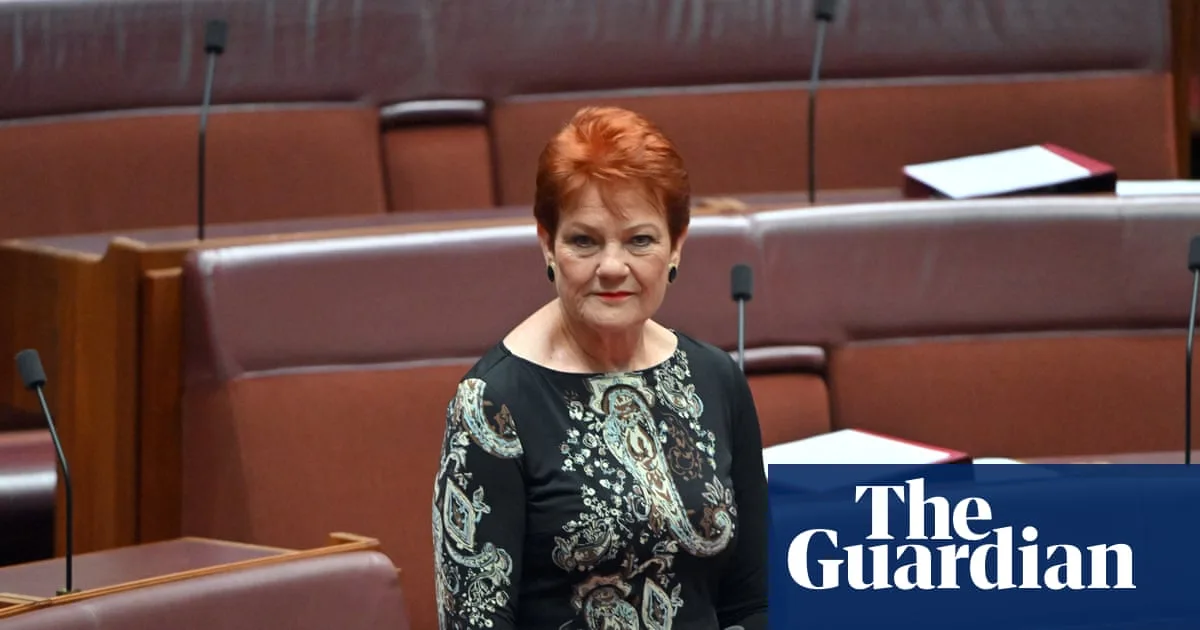
Pauline Hanson Faces Police Investigation Under New Hate Speech Legislation
One Nation leader Pauline Hanson has been formally referred to law enforcement authorities under Australia's recently enacted hate speech laws. The referral stems from inflammatory remarks made by Hanson during a media interview where she claimed there are 'no good Muslims' in Australia.
Australian Federal Police Confirm Investigation
The Australian Federal Police confirmed last week that they had received multiple reports concerning potential criminal activity related to Hanson's controversial statements about Muslim communities. While the identity of those filing the reports remains undisclosed, Hanson has publicly accused her political opponents of orchestrating the referral as a deliberate attempt to 'put her back in jail.'
This reference to incarceration relates to Hanson's brief imprisonment in 2003 for election fraud convictions that were later successfully appealed, resulting in her spending 78 days in Brisbane Women's Correctional Facility before her release.
Hanson's Response and Subsequent Comments
In a defiant social media post addressing the situation, Hanson declared: 'Let me send a very clear message to those within Labor and the left side of politics. Stop gaslighting the Australian public.' She further warned that 'If Australia doesn't speak up now - our nation will fall victim to the same issues being experienced across Europe, the UK, Canada and other western societies.'
Despite offering a partial apology for her original comments, Hanson later specifically targeted the western Sydney suburb of Lakemba, an area known for its significant Muslim population. She described it as a place where people 'feel unwanted' and 'do not want to be,' further escalating the controversy surrounding her remarks.
Legal Framework and Potential Penalties
The hate speech legislation under which Hanson has been referred was enacted in January 2024 as a direct response to the Bondi Beach terror attack. The laws establish serious criminal consequences for individuals who advocate or threaten violence against targeted groups distinguished by:
- Race
- Religion
- Sex
- Nationality
- Ethnic origin
These offences carry maximum penalties of five years' imprisonment, with potential extensions to seven years if the conduct threatens the peace, order, and good government of the Commonwealth. It is important to note that no suggestion has been made that Hanson has committed these specific offences at this stage of the investigation.
Political and Media Reactions
The controversy has sparked significant debate across Australia's political spectrum and media landscape. Prominent radio host Ben Fordham of 2GB questioned the allocation of police resources, stating: 'Why are we sending in the AFP to investigate a TV interview with a politician? Don't the cops have enough to deal with?' He expressed concern about the potential for criminal law to encroach upon political expression.
Prime Minister Anthony Albanese has maintained that determining whether Hanson's comments breached hate speech laws falls within the jurisdiction of law enforcement agencies, not political leadership.
Cross-Party Criticism of Hanson's Remarks
Hanson's comments have drawn condemnation from diverse political figures, including Canterbury-Bankstown Mayor Bilal El-Hayek, who told the ABC: 'It's an open and shut case. What she said was highly inflammatory... clearly, her target was clearly the Muslim people. And I have no doubt that her remarks will incite someone.'
Nationals senator Matt Canavan described Hanson's statements as 'divisive, inflammatory and un-Australian' and called for her resignation as One Nation leader. Former One Nation candidate Emma Eros also criticized Hanson, accusing her of dividing Australians and embarrassing party supporters through poorly articulated views.
Legal Context and Enforcement Statistics
While the Albanese Government ultimately removed provisions criminalizing incitement of racial hatred from the final legislation, Hanson's comments remain subject to review by jurisdictions where they were broadcast. In New South Wales specifically, criminal offences exist for publicly threatening or inciting violence against groups based on religious beliefs, as well as for publicly inciting racial hatred.
An AFP spokesperson confirmed awareness of Hanson's media interview comments and indicated that further statements would be made at an appropriate time. Since the establishment of National Security Investigations teams in September, law enforcement authorities have charged twenty-one individuals targeting groups and individuals deemed to cause significant harm to Australia's social cohesion.






