Helen Pankhurst's Urgent Plea: Global Women's Rights Face Alarming Rollback
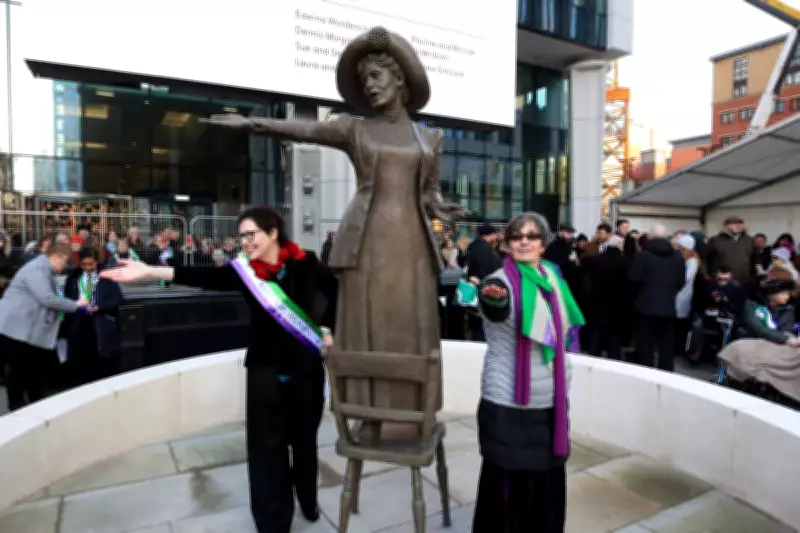
In a poignant letter marking International Women's Day, Dr Helen Pankhurst addresses her suffragist great-grandmother Emmeline Pankhurst, highlighting a disturbing global trend: the hard-won rights for which Emmeline fought are now being systematically eroded. With one in four countries actively pulling back on women's rights and a mere seven parliaments worldwide having achieved true gender parity, the progress of the past century appears increasingly fragile.
The Unfinished Legacy of Suffragist Struggle
Emmeline Pankhurst endured imprisonment and cruelty so that women could gain citizenship, vote, stand for office, and shape the laws governing their lives. As leader of the suffragette movement, she championed a radical vision that women's freedom must transcend national borders. "The bond of sisterhood is stronger than the bond of nationality," she famously declared, arguing that British women could never be fully liberated while women elsewhere remained oppressed.
For Emmeline, the vote was not the culmination of the struggle but merely the beginning. More than a century later, Helen Pankhurst finds herself questioning what has become of that global bond and international solidarity. The principles that guided the suffragettes remain as relevant today as they were in the early 20th century.

Mixed Progress and Persistent Inequality
International Women's Day should be a celebration of achievements, and in some respects, it is. Thanks to generations of activists, the United Kingdom has seen three female prime ministers and currently boasts 264 women in parliament, representing 41 per cent of seats—the highest proportion in the nation's history. However, this still falls short of equal representation, prompting campaigns like Centenary Action to push for a truly gender-equal parliament.
Globally, the situation is far more precarious. Only 22 countries, a mere 11 per cent, are led by women. Just seven parliaments worldwide have reached gender parity. Progress has not only slowed and stalled but has begun to reverse in many regions. The United Nations reports that one in four countries is experiencing a significant backlash against women's rights.
Economic Disparities and Safety Crises
Economically, women continue to face stark inequalities, earning just 52 cents for every dollar earned by men. When unpaid labour is accounted for, this figure drops to a shocking 32 cents. Meanwhile, a small group of unaccountable tech billionaires are concentrating power, fuelling misogyny, amplifying inequality, and weakening democratic norms across the globe.
Women's safety has reached crisis levels. One in three women globally will experience physical or sexual violence in her lifetime. In 2024 alone, 50,000 women were killed by current or former partners or family members—equivalent to one woman every 10 minutes. These are not isolated tragedies but symptoms of a structurally unequal world where political choices often entrench rather than challenge systemic inequality.
The UK's Role in Weakening International Solidarity
The United Kingdom is not exempt from responsibility in this global regression. By cutting overseas aid for programmes supporting women and girls to a generational low, Britain is actively undermining the international feminist solidarity that Emmeline Pankhurst deemed essential. Evidence from CARE International UK demonstrates that when such cuts occur, women and girls bear the brunt of the consequences.
- Sexual and reproductive health clinics close
- Services for survivors of violence disappear
- Grassroots women's organisations, often first responders in crises, are forced to shut their doors
Progress does not protect itself. Women's rights cannot survive on words alone; they require sustained government funding, diplomatic defence, and leadership that confronts the systems leaving women most vulnerable to poverty, conflict, and violence.

A Call to Action for International Women's Day
A century ago, Emmeline Pankhurst demonstrated that rights are never gifted—they are won and must be vigorously defended. This lesson feels painfully relevant today. Helen Pankhurst wishes she could report that the arc of history is bending reliably toward justice, but instead, women's rights campaigners worldwide are witnessing the opposite: a growing sense that doors are closing rather than opening.
Therefore, this International Women's Day must transcend mere commemoration. It must represent a refusal to be complacent, a commitment to hold the line against rollback, and an insistence that women's rights expand rather than contract. Inequality persists everywhere we look, demanding renewed vigilance and action.
In 1912, during a lecture tour of the United States, Emmeline Pankhurst proclaimed: "Women of the world are awakening, and coming together in a great movement for freedom." That movement remains alive today, but it requires backing, not betrayal. Now, as then, the choice is clear: we rise together, or we do not rise at all.