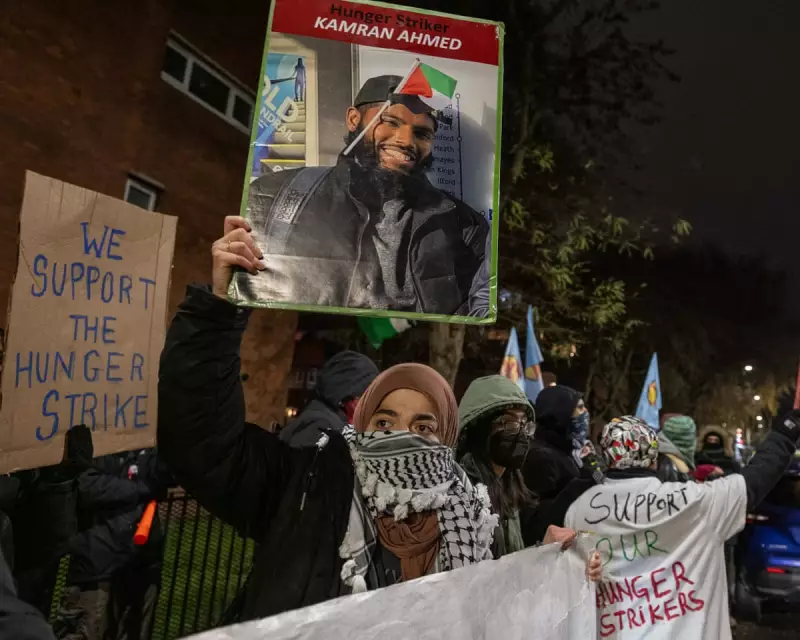
Three activists affiliated with the pro-Palestinian group Palestine Action have ended a prolonged hunger strike after 73 days, a campaign that drew international attention and influenced a significant government defence contract, though several of their core demands remain unmet.
The End of a Gruelling Protest
On Wednesday, the support group Prisoners for Palestine announced that Heba Muraisi, Kamran Ahmed, and Lewie Chiaramello were ceasing their refusal of food. Muraisi had reached day 73 of her strike, matching the duration survived by Irish republican hunger striker Kieran Doherty in 1981. Four other strikers, who were on a temporary pause, also ended their action.
Shahmina Alam, sister of Kamran Ahmed, expressed profound relief. "For the first time I woke up today not afraid," she said, while acknowledging ongoing fears about the dangerous re-feeding process. The decision to stop followed intense pressure from the strikers' families and supporters, with Ahmed reportedly feeling "deflated" earlier in the week due to perceived lack of progress.

Partial Victories and Unmet Demands
The campaigners declared a major victory in the government's decision not to award a £2 billion Ministry of Defence contract to Elbit Systems UK, a subsidiary of Israel's largest arms manufacturer. This was one of five key demands, specifically calling for a halt to UK contracts with Elbit. Francesca Nadin of Prisoners for Palestine credited the hunger strike, alongside other activism, for shifting public discourse and impacting the decision.
However, other central demands were not achieved:
- Immediate bail was not granted for the prisoners, none of whom have been convicted and all of whom face over a year in pre-trial detention.
- The government has not de-proscribed Palestine Action, which was banned as a terrorist group, though a judicial review on this matter is pending.
The group did secure smaller concessions, including the agreed transfer of Heba Muraisi back to HMP Bronzefield near her family, and an end to the censorship of some prisoner mail.
Legacy and Wider Impact
While the strikers did not achieve all their goals, their action galvanised support and highlighted issues within the justice system. The campaign garnered intervention from UN experts, coverage in international media, and a social media post from US Congresswoman Rashida Tlaib. Prisoners for Palestine reported a surge in engagement, with 500 people recently signing up for direct action.
Francesca Nadin reflected that the primary aim was a rallying cry to the public. "Demands were kind of secondary to all that, we know what the government's like," she stated. Shahmina Alam noted the raised public awareness: "People are very aware of Elbit Systems now and a lot of that is due to the hunger strike."
The end of the strike averts a potential tragedy, with the health of the participants having suffered enormously. The action's legacy, while unlikely to match the historical scale of the Irish hunger strikes it referenced, has undoubtedly intensified scrutiny on UK arms deals with Israel and the treatment of activist prisoners.