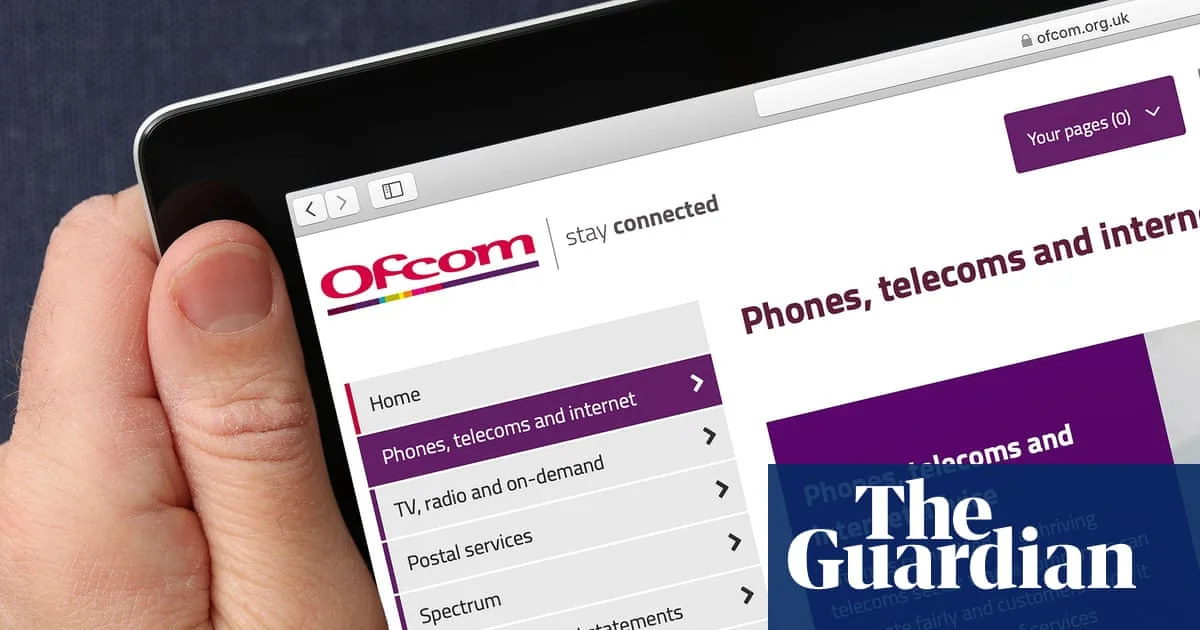
Ofcom Accused of 'Orwellian' Assault on Free Speech After Climate Comment U-Turn
The media regulator Ofcom has been accused of launching an 'Orwellian' assault on free speech after it dramatically reversed its decision not to investigate alleged climate-sceptic comments on television. This marks the first time in nearly a decade that the broadcasting watchdog has opened probes into such remarks, following intense lobbying by the activist campaign group the Good Law Project.
Regulator's Surprising Reversal After Activist Pressure
Initially, Ofcom had decided against investigating complaints regarding climate change comments made on two programmes aired by the TV channel Talk last year. However, in a significant U-turn, the regulator announced it would now launch investigations after being lobbied by the Good Law Project, a pro-transgender rights and climate activist organisation. The group wrote to Ofcom in January demanding justification for the initial ruling, prompting the regulator to reconsider its position.
Ofcom stated that potential breaches of the broadcasting code concerning 'due impartiality' and 'material misleadingness' required re-examination. This decision has ignited a fierce debate about free speech and regulatory overreach in media broadcasting.
Details of the Complaints Under Investigation
The complaints centre on comments made during Talk TV programmes in November and December of last year. In one instance, a guest claimed that climate change 'was a deliberate effort to create fake anxiety… out of something that is false'. Another guest criticised Labour's energy policies as 'suicidal', 'driven by pseudoscience in many cases', and 'a kind of cultish behaviour'.
One programme discussed a UK Health Security Agency report on the mental health impacts of climate concerns alongside government messaging, while the other focused on the potential effects of climate change and Net Zero policies on the UK population. Additionally, Ofcom has launched a probe into a new complaint regarding comments about Labour's energy and Net Zero policies on the 'Morning Glory with Jeremy Kyle' programme in December.
First Probes Into Climate-Sceptic Comments Since 2017
These three investigations represent the first time since 2017 that Ofcom has initiated probes into alleged climate-sceptic comments on television and radio. Despite this shift, the regulator has maintained its decision not to investigate complaints about climate-related remarks on three other programmes, indicating a selective approach to the issue.
According to reports, Ofcom has received 1,221 complaints related to climate change since January 2020, with none resulting in a ruling that the broadcasting code was breached. This context highlights the unusual nature of the current investigations.
Free Speech Advocates Condemn Ofcom's Actions
Lord Young of Acton, head of the Free Speech Union, expressed astonishment at Ofcom's U-turn, accusing climate activists of weaponising the regulator to silence opposing viewpoints. He argued that the pretence of settled science on global warming is a tactic used by alarmists to stifle dissent and urged Ofcom to dismiss the complaints as vexatious, as it had done since 2017.
Tory peer Lord Mackinlay of Richborough warned that Ofcom risks becoming an 'Orwellian Ministry of Truth', a dangerous development in a democratic society. He emphasised that all science evolves and requires free space for discussion, noting that even the BBC is reviewing its climate reporting due to concerns over excessive alarmism. As a libertarian Conservative, he advocated for personal choice in media consumption, suggesting that viewers simply turn off content they dislike rather than relying on regulatory intervention.
Good Law Project's Role and Broader Campaigns
The Good Law Project, founded by Jolyon Maugham KC, has been instrumental in pushing for these investigations. The not-for-profit campaign organisation has previously criticised the Labour Government's climate and Net Zero policies for not going far enough, threatening legal action over what it terms 'climate failure'. In an online post, the group claimed that Keir Starmer's climate framework breaches the right to family life due to its perceived inadequacies.
Beyond climate issues, the GLP has also attempted to challenge a Supreme Court ruling on the definitions of 'woman' and 'sex' in the Equality Act 2010, arguing they refer to biological women. It unsuccessfully contested guidance from the Equality and Human Rights Commission that trans women should not use women's facilities in workplaces or public services.
A spokesman for the Good Law Project welcomed Ofcom's decision, stating that right-wing channels have been allowed to spread 'dangerous climate lies' unchecked for too long. They warned that if Ofcom fails to take action against Talk's misinformation, the group will hold the regulator accountable, urging it to stop fossil fuel propaganda from dominating media coverage.
Responses from Ofcom and Talk TV
An Ofcom spokesman explained that re-examining the programmes led to the conclusion that they raise potentially substantive issues under the broadcasting code, warranting investigation into breaches of rules on due impartiality and material misleadingness. A Talk spokesman responded by affirming the channel's cooperation with Ofcom in these matters, as it always would.
This controversy underscores the ongoing tension between regulatory oversight and free speech in the media landscape, with significant implications for how climate discourse is managed in broadcasting.






